
There are a lot of options to weigh when it comes to choosing an apartment vs. a house in NYC for families, and which makes more sense depends entirely on your family’s priorities, budget, and how you actually plan to live. Whether you are a first-time buyer or someone upgrading for a growing household, the decision involves more layers than almost anywhere else in the country. Neighborhoods, property types, building rules, school zones, commute times, and long-term value all factor in before you ever sign a contract.
For families specifically, the stakes feel even higher. School districts, outdoor space, safety, community, and the simple need for enough room to actually live all pull in different directions at once. This guide breaks down everything a family needs to understand before deciding between an apartment and a house in NYC, so you can make the choice that actually fits how your family lives.

What’s actually available in the NYC market
New York City’s housing inventory looks nothing like the rest of the country. Single-family homes make up a very small slice of total inventory, particularly in Manhattan and the denser parts of Brooklyn and Queens. Apartments dominate, and within that market, there are important distinctions. Co-ops make up the majority of the city’s apartment stock, with condos accounting for most of the remainder. Understanding what you are actually purchasing in each case matters enormously, especially for families thinking about flexibility, resale, and long-term stability.
When you buy a co-op, you are not buying real property. You are purchasing shares in a corporation that owns the building, and those shares entitle you to occupy a unit. Boards have significant power over who can buy, how much financing you can use, and whether you can sublet. Condos give you true ownership of your unit as real property, with more flexible rules and no board approval required to sell. Houses, including brownstones, townhouses, and single-family homes, are far more common in the outer boroughs than in Manhattan and come with an entirely different set of financial realities.
The real cost comparison for homes and apartments
Cost is almost always the first thing families want to understand, and it is more nuanced than a simple price-per-square-foot comparison. Here is how the major factors break down:
- Purchase price: Houses generally carry a significant price premium compared to apartments of similar square footage, particularly in Manhattan and sought-after Brooklyn neighborhoods. Co-ops often offer the most square footage per dollar, largely because board restrictions limit the buyer pool.
- Down payment and board requirements: Co-ops typically require a down payment of 20 to 25 percent or more, along with strict debt-to-income ratios and liquid asset requirements. Condos follow more standard mortgage guidelines. Houses use conventional financing with no board involved.
- Monthly carrying costs:
- Co-ops: One monthly maintenance charge covers property taxes, building expenses, and the building’s underlying mortgage, all bundled together.
- Condos: A separate common charge covers building expenses, while property taxes are paid individually.
- Houses: Mortgage, property taxes, insurance, and all maintenance costs are paid separately by the owner, with no shared building infrastructure to offset any of it.
- Closing costs: Condos and houses carry higher closing costs than co-ops, including attorney fees, title insurance, transfer taxes, and the mansion tax for higher-priced purchases.
- Property taxes and abatements: New condo developments sometimes benefit from tax abatement programs that significantly reduce the property tax burden for a set number of years. Houses qualify for STAR exemptions for primary residents.
- Long-term equity: Both property types have historically appreciated in NYC. Condos and houses generally offer more liquidity and exit flexibility than co-ops, which require board approval even at resale.
Space, layout, and what families need
Square footage matters, but layout and function matter just as much. A three-bedroom apartment with a galley kitchen and no outdoor space lives very differently than a three-bedroom house with a yard, a basement, and room to grow. Houses offer private outdoor space, multiple levels, more storage, and the freedom to renovate without anyone’s approval. For families with multiple children, those advantages are real and significant, but they come with trade-offs in maintenance, cost, and complexity.
Well-designed condo buildings can close much of that gap. When thinking about buying an apartment with kids in NYC and what amenities matter most, the list consistently includes dedicated children’s play areas, secure building access, shared outdoor space, and proximity to other families. Buildings with those features give children structured space for play and social development while giving parents meaningful peace of mind. The safety infrastructure of a well-run condo building — secured entry, intercom systems, and on-site staff — offers a layer of daily reassurance that standalone houses require families to replicate on their own.
Multi-generational families may find a different answer entirely. Townhouses and two-family homes in the outer boroughs can accommodate extended family under one roof while preserving privacy, often more cost-effectively than maintaining two separate apartments.
Where you live shapes how you live
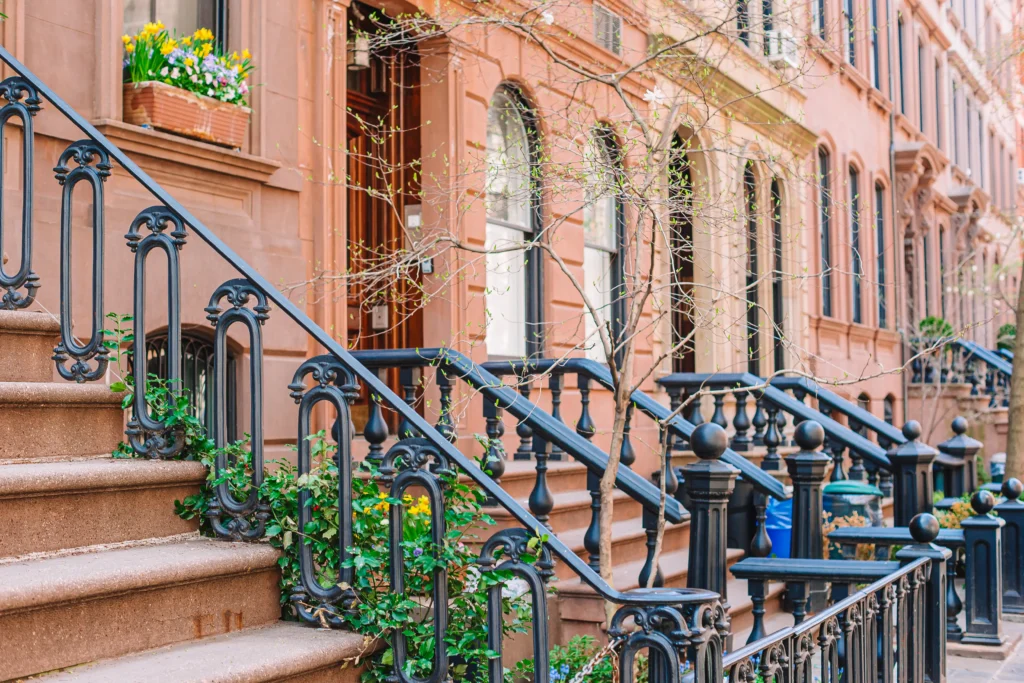
- Manhattan is overwhelmingly apartment-dominated. Families looking for houses will primarily focus on Brooklyn, Queens, and Staten Island, where residential neighborhoods with actual single-family and multi-family homes exist at a range of price points.
- School district zoning is tied directly to your address. For families prioritizing public school quality, the choice between an apartment and a house may ultimately hinge on which side of a zoning line a specific address falls on. Research this before you fall in love with a property.
- Neighborhoods like Park Slope, Carroll Gardens, Astoria, Forest Hills, and Bay Ridge each have distinct mixes of apartment and house inventory, different school reputations, and different price points. None is right for every family.
- Denser, apartment-heavy neighborhoods tend to offer better walkability to parks, playgrounds, libraries, and pediatric services. House-heavy neighborhoods often trade some of that walkability for private outdoor space and quieter streets.
- Apartment buildings tend to foster community in ways that benefit families. Neighbors who know each other’s children, shared spaces that create regular contact, and the cultural diversity that comes with concentrated urban living can meaningfully enrich children’s social development.
Family Living Meets the beach, and the city.
Knowing whether to buy or rent in New York City can seem to be a difficult choice, especially for a family. Experience the best of both with the properties at Lighthouse Beach Sixty-Seventh.
Commute, transit, and daily logistics
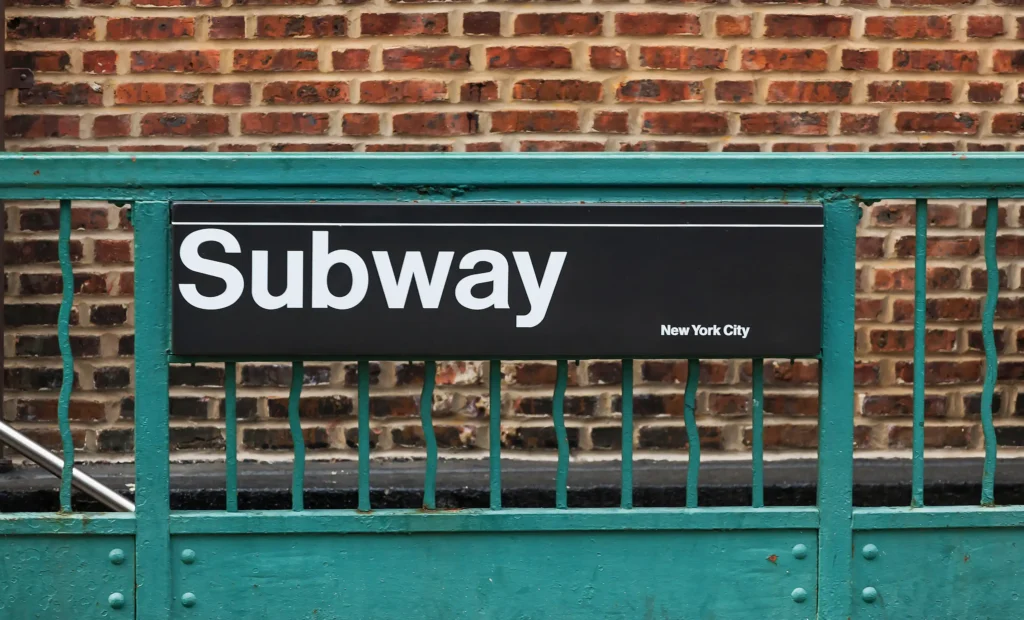
Transit access is one of the defining factors in quality of life for NYC families. Buildings in transit-rich parts of Manhattan, Brooklyn, and Queens put subway stations, buses, and ferry connections within walking distance, which for families with two working parents and school-age children is not a luxury but a practical necessity.
Outer borough neighborhoods with more house inventory are not automatically transit-poor, though. Some of the most transit-connected communities in the city happen to be in Queens and Staten Island, where dedicated subway stops, ferry routes, and bus lines bring residents within comfortable reach of Manhattan even from genuinely residential neighborhoods. The trade-off is usually time: more square footage and a private yard in exchange for a longer commute. Parking is also worth factoring in. Houses typically include a driveway or garage, while apartment owners in most NYC neighborhoods either pay for parking separately or do without a car entirely.
Maintenance and the time vs. money trade-off
In a co-op or condo, structural and exterior maintenance falls to building management. A leaking roof or failed boiler is someone else’s problem to solve, at no direct out-of-pocket cost beyond what your monthly charges already cover. House ownership transfers that entire burden to you: roof, foundation, HVAC, plumbing, electrical, and landscaping all require either your time, your money, or both. For families already managing demanding schedules, the unpredictability of house maintenance costs can be genuinely disruptive. The monthly predictability of a condo common charge is not glamorous, but it is a budget line you can actually plan around.
Investment, resale, and long-term thinking
- Both apartments and houses have historically appreciated in NYC, though the pace varies considerably by property type, borough, and market timing.
- Condos and houses offer cleaner exit strategies, with no board approval required and no restrictions on who can buy.
- Co-ops introduce friction at every stage, including resale, which can slow the process and limit your buyer pool.
- Subletting flexibility matters more than buyers often initially realize. Condos and houses allow much greater rental latitude than co-ops, which is valuable if your circumstances change.
- A house with a rentable unit can help meaningfully offset carrying costs, which matters for families stretching their budget.
- Think about how your space needs will evolve as children grow and family situations change. The property type that lets you adapt without penalty is worth weighing against the one that simply offers the most room today.
Who is this decision really for?
- Young families with an urban lifestyle: A well-appointed condo with a children’s playroom, outdoor space, and proximity to parks often offers the best balance of city convenience and family comfort without taking on the maintenance of a full house.
- Families who need room to spread out: A townhouse, brownstone, or multi-family home in Brooklyn or Queens gives the square footage, storage, and private outdoor space that most apartment units simply cannot match.
- Multi-generational households: A two-family home or large townhouse in the outer boroughs can bring extended family under one roof while preserving separate living spaces, often more cost-effectively than two Manhattan apartments.
- Families prioritizing community and security: A condo in a well-run building with strong amenities and attentive management can deliver the lifestyle many families want without the demands of house ownership.
- Families who need flexibility: Those anticipating career changes or potential relocation will generally find that condos offer better resale liquidity and subletting options than co-ops.
Key questions to ask before you decide
The apartment vs. house in NYC for families question is rarely straightforward, but working through the right questions brings real clarity. Before committing, answer these honestly:
- How long do you realistically plan to stay? Buying only makes financial sense if you plan to hold for several years at minimum.
- How important is private outdoor space versus shared building amenities for how your family actually lives?
- Are you prepared, financially and logistically, for ongoing house maintenance?
- Does your family’s commute align better with a transit-dense apartment neighborhood or a more residential outer-borough neighborhood?
- How much flexibility do you need to sublet, renovate, or sell without board involvement?
- Have you confirmed the exact school zone for the address you are considering, not just the general neighborhood?
- Have you modeled the full monthly cost, including mortgage, taxes, fees, insurance, and reserves, for each option?
- Is this a long-term purchase, or a stepping-stone you may need to sell or rent out within five to seven years?
Common mistakes NYC family buyers make
- Underestimating monthly carrying costs: The mortgage is only one part of the picture. Co-op maintenance charges, condo common charges, property taxes, insurance, and reserves can add substantially to your monthly outlay. Model the full number before you commit.
- Ignoring the co-op approval process: Boards reject buyers, sometimes for opaque reasons. This affects purchase timelines and certainty of close, particularly for buyers with non-traditional income or assets held in non-liquid form.
- Skipping the home inspection: For houses especially, this is non-negotiable. Deferred maintenance on a brownstone or older single-family home can mean significant repair bills within the first years of ownership.
- Treating school zoning as a secondary consideration: Zoning lines can split a single block. Confirm the district assignment for the specific address before making an offer.
- Overweighting space per dollar: The home with the most square footage for your budget is not automatically the best choice. How a space actually functions for your family’s daily routines often matters more than the raw numbers.
Working with the right team
Buying in NYC requires professionals who actually know this market. A real estate attorney is not optional here — New York requires one by law, and the right attorney will catch board restrictions, review co-op financial statements, and flag issues in a purchase contract before they become your problem. A buyer’s agent with specific co-op and condo experience matters too; the approval process, board package requirements, and deal timelines are different enough from standard residential transactions that general experience does not substitute. Round out the team with a mortgage broker familiar with co-op financing and the financial documentation condos require — they will save time and prevent the kind of last-minute financing surprises that derail deals in this market.

The best of both worlds at Lighthouse Beach Sixty-Seventh
For families who want the low-maintenance ease and community feel of condo living but also want genuine outdoor space, natural light, and breathing room, there is a third path worth considering. Lighthouse Beach Sixty-Seventh in Arverne by the Sea, Queens, is a new oceanfront condominium development designed by Ismael Leyva Architects. With floor-to-ceiling walls of glass, Dekton and Silestone countertops, Bosch appliances, Kohler fixtures, and finishes that draw from the palette of sand and sea, the residences here are built with a level of craftsmanship and attention to detail that stands apart from typical new construction. The building was designed to feel genuinely connected to its waterfront setting, and the result is a living experience unlike anything else along the Rockaway shores. For buyers who have weighed the average rent in NYC against the long-term value of ownership, the incredibly low property taxes here— supported by a special tax abatement for owner-occupants —combined with new-construction quality, change the financial picture in meaningful ways.

The amenities at Lighthouse Beach Sixty-Seventh speak directly to what families prioritize: a children’s playroom, an elevated beachfront pool and sundeck, a state-of-the-art fitness center, private workspaces, a conference room, a lounge, and a game room. The location is also genuinely transit-connected, with the Beach 67th Street A train station steps away, multiple MTA bus lines serving the area, and New York Waterway ferry access to Brooklyn and Lower Manhattan. JFK International Airport is only 11 miles away. The boardwalk, Locals Collective Café, the Rockaway Tiki Bar, Pilot House, and a surf culture anchored by Breakwater Surf Co. give this community a sense of place that New York City homes in denser neighborhoods rarely offer.
The right property type matters as much as the right location. Arverne by the Sea is also among the lowest-crime communities in Queens — a meaningful factor for families evaluating where to put down roots. For families looking for a primary residence with room to grow, new-construction craftsmanship, and a true community setting, Lighthouse Beach Sixty-Seventh is worth a serious look. Learn more about the properties available.