
November 11, 2026 | Sasha Jones, New York City
Before there were the Hamptons, there were the Rockaways.
In the 19th century, the Vanderbilts and the Astors would haul out to the 11-mile strip on the southwestern edge of Queens to summer. Women in Gilded Age dresses piled into bathing machines — enclosed horse-drawn carts — and were carried out into the ocean to swim. Roller coasters, restaurants and luxury hotels dotted the boardwalk running along the shore.
The Rockaways of those days have been lost to time and disinvestment, but a slew of new developments could bring a new golden age to the peninsula.
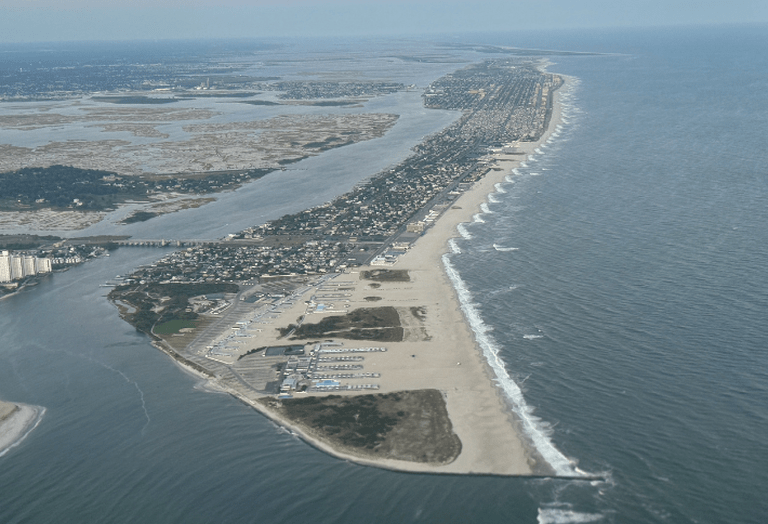
Wikimedia Commons/Oleg Yunakov

The Rockaway Peninsula in Queens, New York
“I’ve seen it evolve over the last two decades in a way that, if I was a betting person, I would have said no way,” Brisa Builders Development Managing Member Ericka Keller said.
Between 2010 and 2025, Rockaway added nearly 4,500 new housing units, 3,000 of which are income-restricted. In April, a group of developers broke ground on the third phase of Arverne East, a $278M affordable mixed-use project. In May, Phipps completed the final phase of Rockaway Village, an eight-building complex. In June, The Beechwood Organization started construction on Rockaway’s first condo tower with million-plus-dollar units.
But the new construction comes after decades of broken promises.
Under the oversight of “power broker” Robert Moses, more families began driving past Rockaway to Long Island’s beaches. The area’s 7,000 bungalows, ill-equipped for year-round living, were abandoned by vacationers.
When Moses — an urban planner who was considered one of the most influential individuals in New York City’s history, despite never being elected to any office — began bulldozing the city’s slums, he turned to the coastlines as a “dumping ground” for the poor. More than half of Queens’ public housing was built in Rockaway.
Residents who moved into the New York City Housing Authority developments, including the Hammel, Edgemere and Redfern Houses, found themselves cut off from the rest of the five boroughs — and the jobs and resources located there. They were further blocked off by the defunded railway system and tolled bridges.
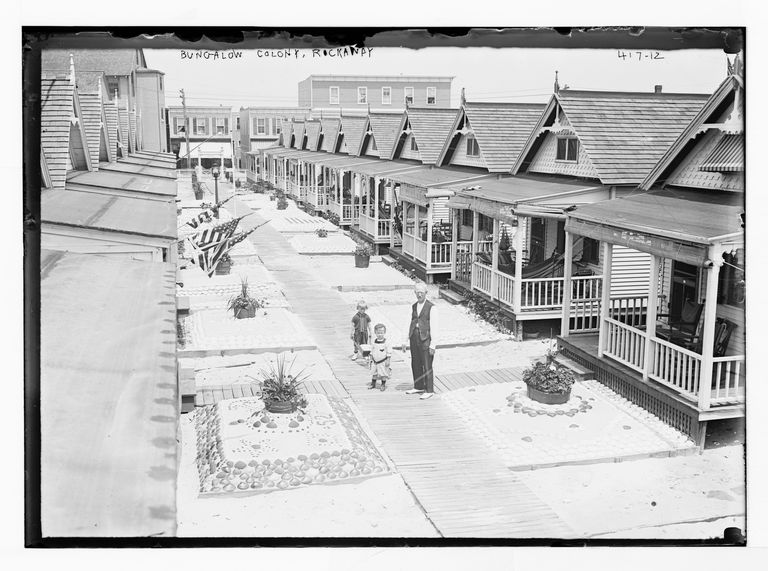
Wikimedia Commons/Library of Congress/Bain News Service

Bungalows in the Rockaways, which served as vacation homes in the 19th century
Moses attempted to introduce other development to the area, demolishing large stretches of bungalows in Arverne and Edgemere. Instead, those lots sat vacant for decades. Today, there are fewer than 400 historic bungalows in the Rockaways.
Arverne, spanning 300 acres, was razed in the late 1960s, with plans to build 6,500 apartments. It wasn’t until 2002 that a development team of Beechwood and Benjamin Development Co. broke ground on a 120-acre master plan.
“Arverne-by-the-Sea straddles two census tracts that, when we started, were among the poorest, highest-crime and highest-drug-use census tracts in all of New York City,” Beechwood principal and President Steven Dubb said. “Twenty years later, they don’t qualify as distressed census tracts anymore.”
Construction is ongoing, with 1,700 of the originally proposed 2,300 residential units built. The development also brought a YMCA and new retail, including one of the first major grocery store chains to open in the Rockaways.
The developers were also required to build neighborhood infrastructure, from roads and sewers to gas and electric utilities. They raised the site’s elevation by several feet and fortified the dunes along the property’s oceanfront. Those actions aided Arverne’s recovery in the aftermath of Superstorm Sandy and made it a rehabilitation hub for other parts of the peninsula.
“There’s been this outward ripple effect,” Dubb said. “Seeing the success of Arverne has given smaller developers the confidence to go ahead with [projects] around Rockaway.”
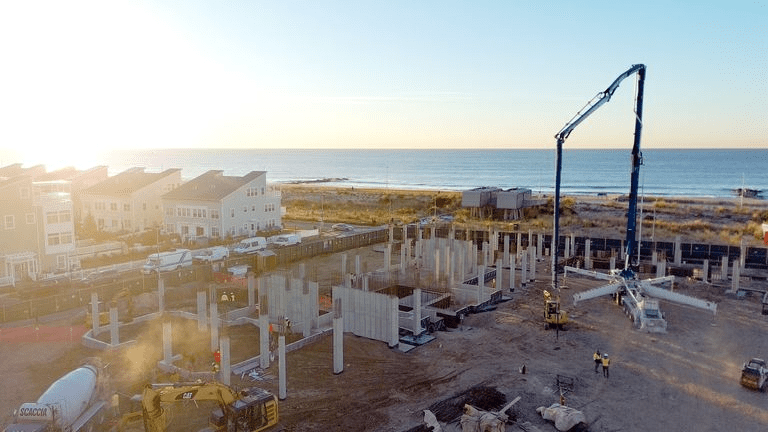
Courtesy of The Beechwood Organization
Construction in progress on Lighthouse Beach Sixty-Seventh, a 12-story luxury condo development that is part of The Beechwood Organization’s Arverne master plan
In other areas, investment stalled for much longer. In 2016, a coalition of advocates led by then-Council Member Donovan Richards wrote to Mayor Bill de Blasio, requesting the city help in revitalizing Downtown Far Rockaway.
“We ask that the City activate long-vacant sites, bring new housing and retail opportunities to the Downtown, and help this area realize its potential as the commercial hub of the peninsula,” the working group wrote.
Among its recommendations were building new retail and mixed-income housing on vacant sites, improving community services and increasing service for the A train and Long Island Railroad.
In September 2017, the city council approved a 22-block rezoning and development plan for the district, which included building more than 3,000 affordable housing units on city-owned land.
Keller worked in Far Rockaway as a school principal before joining her family’s development firm. Brisa Builders, which she founded in 2016, now has three different projects on the peninsula, including in the rezoned area.
“Donovan really has a vision for development,” Keller said. “That Downtown Far Rockaway rezone has now manifested itself into development at a scale that maybe he envisioned, maybe he didn’t envision, but definitely at a large scale.”
As part of the Downtown Far Rockaway development plan, the city helped finance Far Rockaway Village. The project transformed a dilapidated 9-acre strip mall into 1,700 affordable housing units and 125K SF of commercial and community facility space.
A small portion of the property is in the 100-year flood plain. To mitigate storm surges and rising sea levels, Phipps elevated all of the apartments, incorporated solar panels to supplement power, and used Passive House guidance in the development process, according to Phipps Vice President and Chief of Staff Matthew Washington.
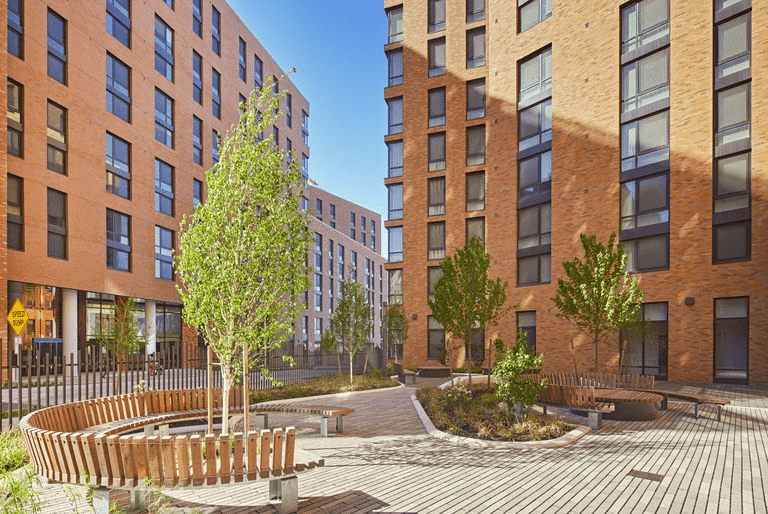
Courtesy of L-INES Photos/Phipps
Phipps’ Rockaway Village, a 1,700-unit complex completed earlier this year
Two of the campus’s streets, Elaine Short Way and Dr. Ed Williams Way, are named after champions of the community that helped spur investment.
“For every single lottery that we’ve done, we’ve received no less than 50,000 applications, and we’ve done five lotteries throughout this process,” Washington said. “There were certainly parts of the Rockaways that families wanted to move away from, but this has been a place that people are drawn to.”
Additional affordable housing is being delivered through Tishman Speyer’s Edgemere Commons, which will ultimately bring more than 2,000 units to a 9-acre site. The 11 buildings replace the former Peninsula Hospital, which permanently closed following difficulties caused by Superstorm Sandy.
Like other developments on the peninsula, the project will support coastal and flood resilience plans, Tishman Speyer Affordable Housing and Residential Alternatives Managing Director August Doyle said in a statement.
Although public and private investments have helped improve Rockaway’s infrastructure, there is still a long way to go, developers said.
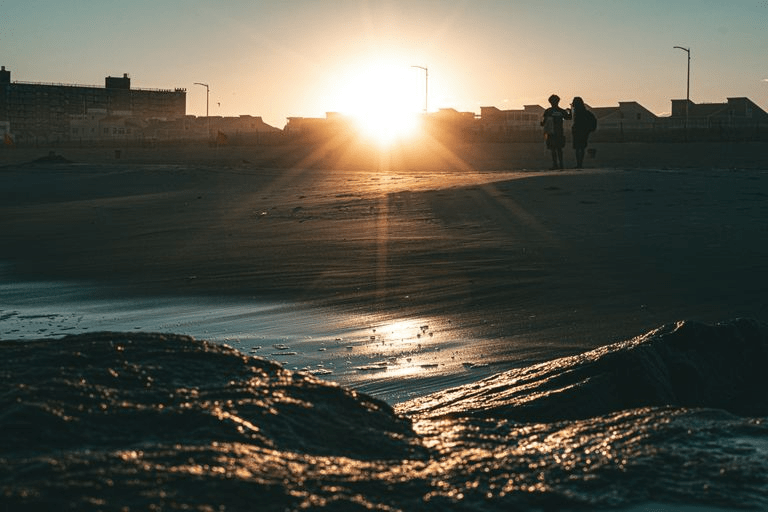
Some vulnerabilities were highlighted by Sandy, which shredded the peninsula. Nearly half of the homes were damaged, and 31% of the buildings suffered flood heights at the first-floor level over 4 feet, according to a city study.
Transportation is still lacking. The average commute time for residents is 49.7 minutes, the longest of any neighborhood in the five boroughs.
Although the city expanded ferry service to the Rockaways in 2017, the service mainly caters to visitors. The A train is subject to the oldest signal equipment in the subway system, and the Metropolitan Transportation Authority’s maintenance projects have caused severe disruptions.
“One of the challenges with the less-than-robust transportation infrastructure is that people need to find more of what they need for their daily life locally,” Public Works Partners co-founder and CEO Celeste Frye said. “It’s not like when you’re living in Manhattan, where you could easily hop a subway to get to where you want to go.”
Rockaway has also grown significantly, especially after the pandemic pushed residents farther into the outer boroughs. The population was nearly 130,000 in 2024, adding more than 20,000 residents since the early 2000s, according to the Furman Center.
That growth supports economic development but puts additional strain on already poor infrastructure. The area does worse than the city averages when it comes to food insecurity, rent burden, and health and disease.
Frye, who is advising the Aqueduct community master plan in nearby South Ozone Park, said that to drive additional development, addressing those issues will be critical.
“If you are a developer and you’re looking at trying to develop either market-rate or affordable housing or mixed-use facilities, you’re looking for that infrastructure,” Frye said. “There’s a lot of opportunity to build on the assets that this part of the city has to create an appropriately dense and vibrant community all along the A train.”
Contact Sasha Jones at sasha.jones@bisnow.com