
Key takeaways
- All three neighborhoods offer waterfront living, but they serve very different buyers. LIC is for commuters who want luxury and speed. Brighton Beach is for buyers who want beach access with a real Brooklyn neighborhood around them. Rockaway is for buyers who want the ocean to be part of daily life.
- Commute is the biggest practical differentiator. LIC has the fastest Manhattan access, Brighton Beach sits in the middle, and Rockaway requires the most flexibility.
- Rockaway has the most approachable pricing of the three, but a lower price alone is not a good reason to buy there. The lifestyle has to fit.
- Coastal buyers in Rockaway and Brighton Beach need to factor in flood zones, building elevation, storm risk, and insurance costs as part of their purchase decision.
- The right neighborhood is the one that matches how you actually want to spend your days, not just which one looks best on a spreadsheet.
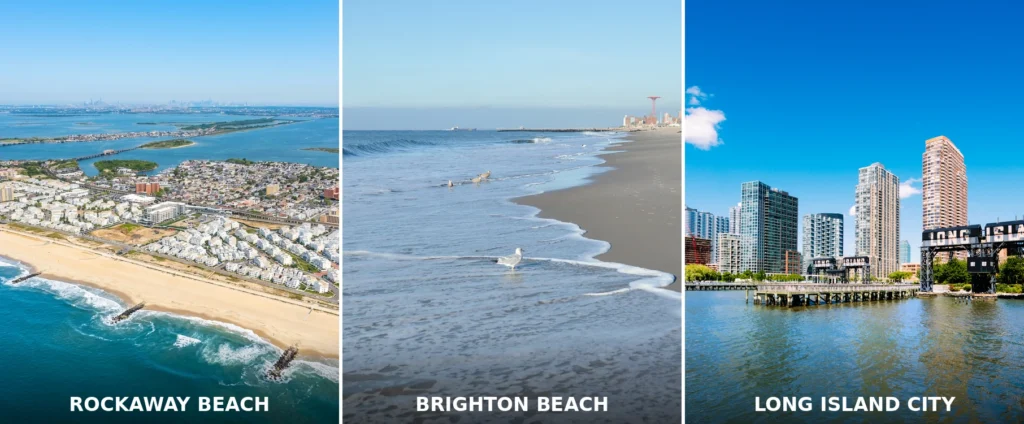
Rockaway Beach vs. Brighton Beach vs. Long Island City at a Glance
If you’re comparing Rockaway Beach, Brighton Beach, and Long Island City as places to buy, you’re probably weighing lifestyle, commute, price, and long-term value. All three neighborhoods offer waterfront or beach-adjacent living, but they represent very different decisions as a buyer. Rockaway Beach is the most beach-forward of the three: a coastal, surf-centered community with a more relaxed pace and generally more approachable pricing. Brighton Beach is an established Brooklyn neighborhood with strong cultural roots, boardwalk access, and a denser urban feel. Long Island City is a premium high-rise market built around Manhattan proximity and luxury amenities.
| Rockaway Beach | Brighton Beach | Long Island City | |
| Primary lifestyle | Coastal, surf culture, boardwalk to Rockaway | Boardwalk neighborhood | Urban waterfront |
| Typical housing stock | Luxury high-rise condos, Condos, townhomes, some co-ops | Co-ops, older buildings, some oceanfront condos | Luxury high-rise condos |
| Relative price point | More approachable | Moderate | Premium |
| Commute to Manhattan | Longer (A train, ferry) | Moderate (B/Q train) | Fastest (E, 7, N, W trains) |
| Beach or waterfront access | Direct ocean access, boardwalk to Rockaway | Boardwalk and ocean | Waterfront parks, river views |
| Best-fit buyer | Lifestyle-first, remote/hybrid | Beach access + Brooklyn feel | Commuter, luxury buyer |

Rockaway Beach: Best for buyers who want a true beach lifestyle in NYC
Of the three neighborhoods, Rockaway Beach is the one where the ocean genuinely shapes daily life. You’re not just near the water; you’re in a community built around it. The surf culture is real, with local shops, surf schools, and a boardwalk lined with restaurants and casual spots that set the tone year-round. The pace is slower, the streets are quieter outside of summer, and there’s a sense of place that feels distinct from other parts of the city.
For buyers, that lifestyle has concrete advantages. You get more outdoor access, more space for the price compared to premium NYC waterfront markets, and a community that feels more coastal than traditionally urban. Rockaway also ranks as one of the lowest crime areas in New York City, which is worth noting for buyers who are weighing safety alongside lifestyle. Rockaway has seen new development and growing buyer interest, with new businesses and residents who have come specifically for the lifestyle.
The trade-offs are worth understanding before you buy. The commute to Midtown Manhattan is longer than from LIC and Brighton Beach, relying on the A train, the NYC Ferry, express buses, or a car, depending on where you’re headed. Summers bring crowds, beach traffic, and parking pressure. Winters can feel considerably quieter. And because this is a coastal neighborhood, flooding risk, storm exposure, insurance costs, and building elevation all need to be part of your research before you sign anything.

Brighton Beach: Best for buyers who want beach access with an established Brooklyn neighborhood feel
Brighton Beach offers a very different version of coastal living than Rockaway. It’s not a surf town but a dense, established Brooklyn neighborhood with boardwalk and ocean access, and that distinction matters a lot depending on what you’re looking for.
The neighborhood has a strong cultural identity rooted in its Eastern European community, with restaurants, markets, and a local energy built over decades. The boardwalk connects directly to Coney Island, giving residents walkable beach access alongside a year-round neighborhood that doesn’t slow down much in winter. The B and Q trains provide reliable access to central Brooklyn and Manhattan, making the commute more practical than Rockaway for most buyers. Housing ranges from older co-ops to select oceanfront condos, with pricing that generally sits in the moderate range. The lifestyle here leans more toward boardwalk walks and weekend swims than surfing or a quieter coastal pace, and for buyers who want beach access without giving up the fabric of Brooklyn, that’s exactly the point.
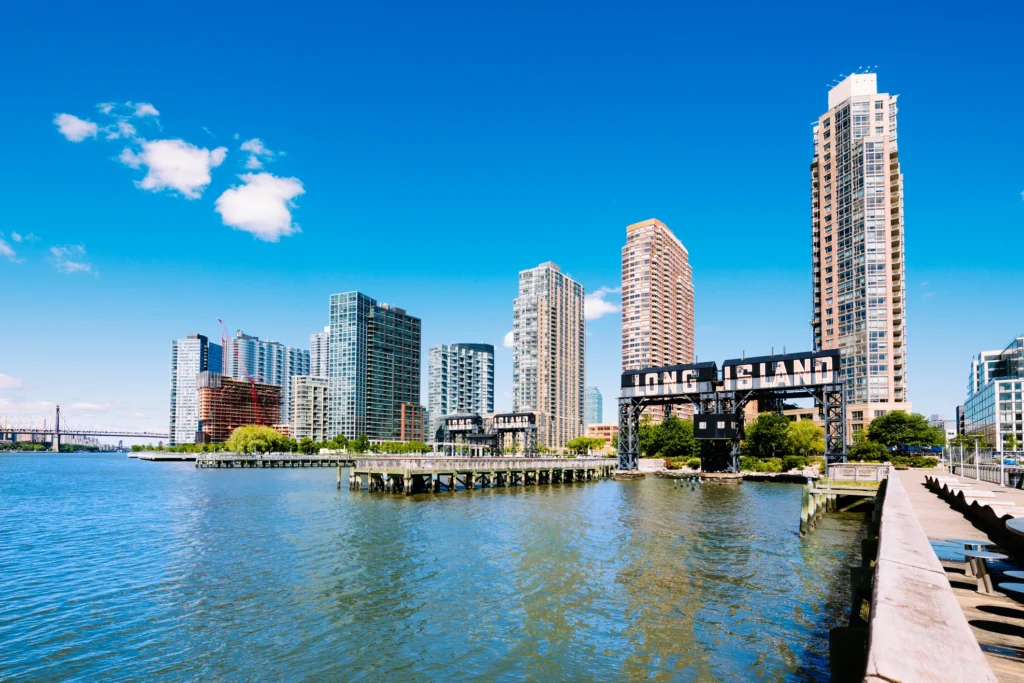
Long Island City: Best for buyers who want luxury, transit, and Manhattan proximity
Long Island City is the outlier here. It’s not a beach neighborhood but a premium urban waterfront market built around convenience, luxury, and proximity to Midtown. If you’re comparing LIC to Rockaway and Brighton Beach, you’re essentially weighing a fast-commute, high-rise lifestyle against neighborhoods where the ocean is actually part of the daily experience.
The subway access is some of the best in the outer boroughs, with the E, 7, N, and W trains putting you in Midtown in minutes. The buildings are newer, with full amenity packages, polished lobbies, and skyline views that justify the price. There are good restaurants, cultural venues, and a professional energy that suits buyers who prioritize urban convenience above everything else. The trade-off is pricing: LIC commands a significant premium over both Rockaway and Brighton Beach, with higher monthly carrying costs to match. If you genuinely want to live near the ocean, LIC is probably not the right fit. But if proximity and convenience are what you’re after, it’s a strong market with consistent demand.

Compare the commute before you compare the price
Commute time is one of the most important factors in this comparison, especially given the price differences between these neighborhoods:
1. Long Island City has the clearest commute advantage
LIC offers some of the fastest subway access to Midtown Manhattan of any outer-borough neighborhood, and for buyers who commute frequently, that speed can make higher prices feel worthwhile. It’s one of the main reasons LIC commands a premium compared to similar square footage in other waterfront areas.
2. Brighton Beach offers a more balanced commute
The B and Q trains make Brighton Beach reasonably accessible to central Brooklyn and Manhattan. It’s not as fast as LIC, but it’s significantly more connected than Rockaway for most riders. For buyers who want beach access but can’t work around a long commute, Brighton Beach sits in a more practical middle position.
3. Rockaway Beach requires more commute flexibility
The A train, NYC Ferry, express buses, and car access all provide options, but the trip is longer, especially for anyone headed to Midtown or other boroughs. Rockaway works best for remote workers, hybrid schedules, or buyers who have placed the beach above commute speed. The ferry can make the route more scenic for trips to Lower Manhattan, but it requires planning and works best when timing and conditions cooperate.

Compare the lifestyle: Beach town, boardwalk neighborhood, or urban waterfront?
Each neighborhood offers a different daily experience, and that’s ultimately what matters most in this decision.
1. Choose Rockaway Beach for outdoor culture and ocean access
Surfing, swimming, beach walks, boardwalk dining, biking, and a quieter coastal pace make Rockaway feel like a beach community that happens to be inside city limits. If you want your daily routine to center around the ocean rather than just occasional waterfront views, Rockaway is the clearest choice of the three.
2. Choose Brighton Beach for cultural depth and everyday convenience
Restaurants, markets, boardwalk access, and a dense neighborhood environment make Brighton Beach a strong option for buyers who want beach proximity without giving up the feeling of an established Brooklyn neighborhood. It has a strong local identity and year-round activity that Rockaway can’t always match outside of summer.
3. Choose Long Island City for convenience and city energy
Skyline views, waterfront parks, restaurants, museums, and luxury buildings define the LIC experience. It’s a better fit for buyers who want an urban lifestyle than for those who want genuine beach access. The right choice depends less on which neighborhood is objectively “best” and more on which trade-off fits the way you want to live day to day.
Buying costs and long-term value: What to keep in mind
Purchase price is only part of the equation. Monthly carrying costs, property taxes, insurance, common charges, and long-term resale potential all factor into whether a neighborhood makes financial sense, and they look quite different across these three markets.
LIC sits at the highest price point, driven by its transit access and luxury condo market. Brighton Beach offers more moderate pricing with a mix of co-ops, older buildings, and select oceanfront condos. Rockaway Beach is generally the most approachable of the three, with potential upside tied to new development and growing demand for coastal living in the outer boroughs. From an investment standpoint, Rockaway may appeal to buyers who see long-term value in outer-borough waterfront growth. Brighton Beach suits buyers who want a more established neighborhood with consistent local demand. LIC appeals to buyers focused on Manhattan proximity and luxury resale demand. One consideration that can’t be overlooked: owning in Rockaway or Brighton Beach means paying close attention to flood zone designation, building elevation, storm resiliency, and insurance costs. These should be part of your due diligence before closing, not an afterthought.
Rockaway Beach pros and cons for apartment buyers
Here’s a look at what Rockaway offers and where it asks you to make trade-offs:
Pros:
- True beach lifestyle within New York City
- More approachable pricing compared to many luxury waterfront neighborhoods
- Surfing, swimming, boardwalk access, and outdoor recreation
- Ferry, A train, an express bus, and car access create multiple transportation options
- Growing neighborhood interest, new businesses, and development momentum
- One of the lowest crime areas in New York City
Cons:
- Longer commute to Manhattan and other central NYC areas
- Winters can feel quieter and more isolated
- Summer congestion, beach crowds, parking pressure, and ferry demand can increase
- Coastal risk, flooding, storms, and insurance should be part of the buying decision
Rockaway makes the most sense for buyers who genuinely want the lifestyle, not just a lower purchase price.
So, which neighborhood should you choose?
Choose Long Island City if:
- You want the shortest commute to Manhattan
- You prefer luxury high-rises and urban convenience
- You are comfortable with premium pricing and higher carrying costs
Choose Brighton Beach if:
- You want beach access with a more established Brooklyn neighborhood feel
- You value cultural depth, restaurants, markets, and boardwalk access
- You want a middle-ground option between urban convenience and coastal living
Choose Rockaway Beach if:
- You want true oceanfront living, surf culture, and a more relaxed pace
- You work remotely or have a flexible commute schedule
- You want a more lifestyle-driven apartment purchase within NYC
Buyers should think about where they want their everyday life to happen, not just where the price looks best.
For buyers drawn to Rockaway, Lighthouse brings oceanfront ownership into focus
After weighing Rockaway Beach, Brighton Beach, and Long Island City, buyers who keep coming back to Rockaway are usually looking for something specific: true beachfront living without leaving New York City. Lighthouse Beach Sixty-Seventh is a collection of oceanfront condominiums now selling in Arverne, Queens, and it’s one of the clearest expressions of what Rockaway ownership can actually look like.
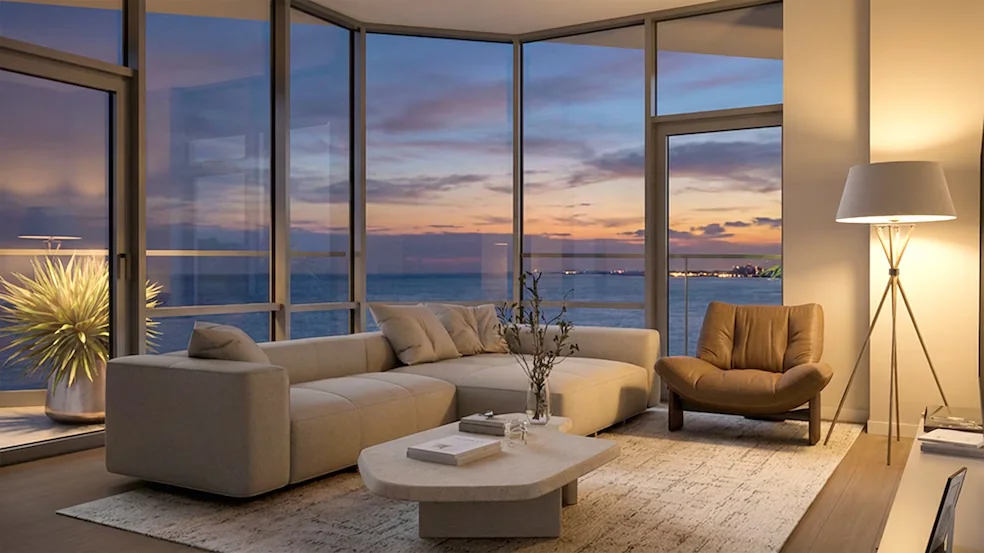
The location puts residents directly on the Atlantic, with walls of glass facing the ocean, designed by Ismael Leyva Architects to reflect the character of the shoreline. The Beach 67 St A Train station is right across the street, 24/7 and ADA-accessible, and NYC Ferry access connects to Brooklyn and Lower Manhattan. An elevated beachfront pool and sundeck, fitness center, workspaces, conference room, lounge, game room, and children’s playroom make up the full amenities package. Residences include Dekton and Silestone countertops, Bosch appliances, and Kohler fixtures, and owner-occupants benefit from a special tax abatement. Lighthouse is built by Beechwood, with more than 10,000 homes built since 1985.
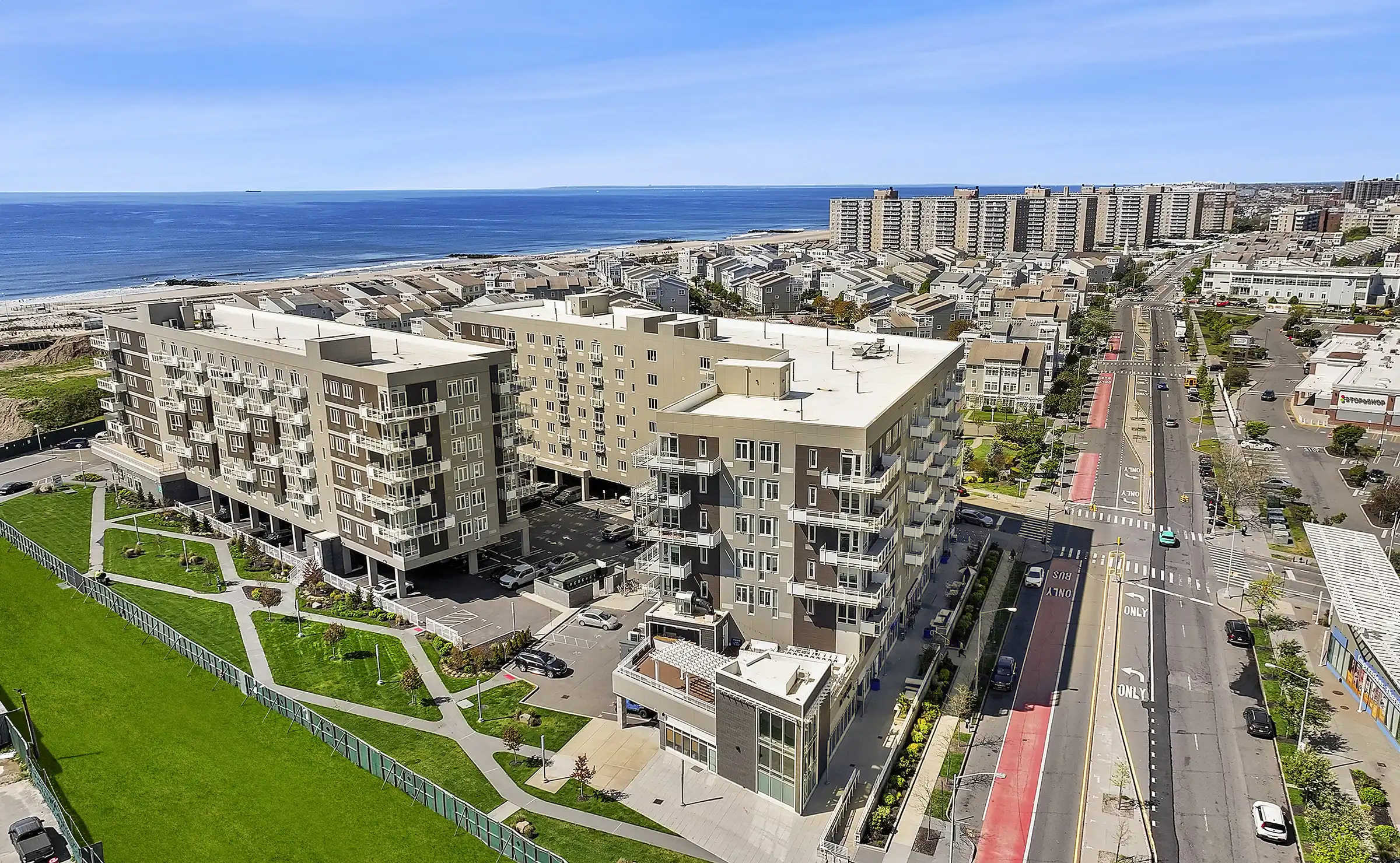
For readers drawn to Rockaway’s beachfront lifestyle who aren’t ready to buy yet, The Tides offers ocean-view rentals in Arverne with studios to three bedrooms, a rooftop pool and sundeck, surfboard and bike storage, workspaces, fitness, lounge spaces, and A train access across the street. See their full amenities for details.
If you’ve decided that Rockaway’s oceanfront lifestyle, transit access, and neighborhood potential fit what you want from apartment ownership, Lighthouse is a natural next step. Contact us to learn more about Lighthouse, or contact us about The Tides.