
What makes an NYC waterfront neighborhood worth buying into
Buying waterfront property in New York City means something different depending on where you look. You could be comparing a converted loft in DUMBO with Manhattan Bridge views to a brand-new oceanfront condo on the Rockaway Peninsula. Same city, completely different lifestyle. Before narrowing down your search, it helps to understand what actually drives value and livability in these neighborhoods: commute to Manhattan, housing stock type (co-op vs. condo), flood risk and insurance costs, and proximity to the water itself. Waterfront properties often carry higher monthly maintenance or HOA fees and may require separate flood insurance, so the total cost of ownership matters as much as the list price, and in a city where subway access can make or break a daily routine, transit options deserve real weight.
Key takeaways
- NYC waterfront real estate spans dramatically different price points, property types, and commute realities; borough matters as much as neighborhood.
- Co-ops offer more affordability but come with board approval and subletting restrictions; condos offer flexibility at a higher cost.
- Flood insurance is a real line item in coastal areas like the Rockaways, so model those costs before you commit.
- First-time buyers often find better value and negotiating power in Queens and Staten Island than in Brooklyn or Manhattan waterfront markets.
Brooklyn waterfront neighborhoods
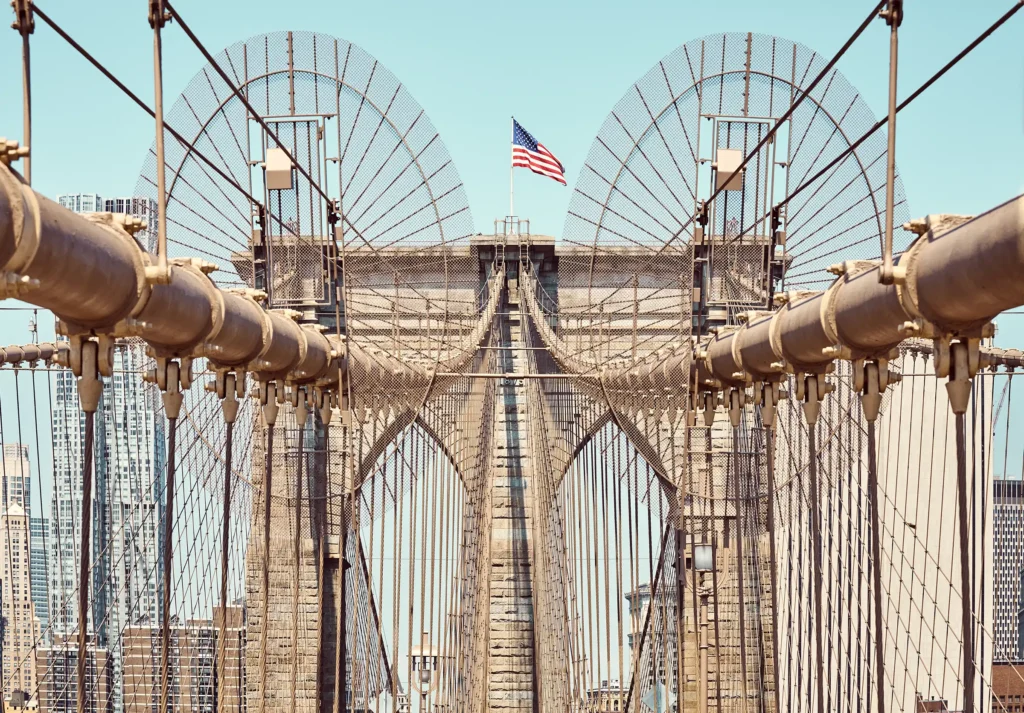
Brooklyn’s waterfront stretches from the historic brownstone blocks of Brooklyn Heights down to the family-friendly shores of Bay Ridge, with some of the city’s most sought-after real estate in between. The range is wide, both in price and in character.
DUMBO
DUMBO has come a long way from its industrial roots. The neighborhood is now one of Brooklyn’s most coveted addresses, defined by cobblestone streets, converted brick lofts, and high-end condos with direct East River and Manhattan Bridge views. Brooklyn Bridge Park runs right along the water, giving residents access to lawns, playgrounds, a carousel, and waterfront scenery that rarely gets old. Housing stock skews toward luxury condos and loft conversions, and the price-per-square-foot reflects it: buyers here tend to be targeting long-term appreciation and turnkey luxury rather than entry-level value.
Williamsburg
Williamsburg sits at the intersection of high-energy city living and premium waterfront real estate. Developments like One Domino Square have set a new bar for amenity-rich high-rise living along the East River, with concierge services, East River skyline views, and a dining and nightlife scene right outside the door. It skews younger and more lifestyle-driven than some of its Brooklyn neighbors, and the price tags reflect the demand.
Brooklyn Heights
Brooklyn Heights doesn’t need to try hard. The iconic Promenade, with its sweeping views of Lower Manhattan and the harbor, has made it one of the most recognizable residential stretches in the city. Housing stock is mostly pre-war co-ops and classic brownstones, which attracts buyers looking for stable, long-term real estate. Listing prices have cooled in recent years, making a historically out-of-reach neighborhood a bit more accessible than it used to be. It’s quiet, prestigious, and best suited for buyers who want character and stability over nightlife.
Greenpoint
Greenpoint has a personality that’s hard to replicate: low-rise streets, a distinct Polish-bakery-meets-boutique character, and a stretch of East River waterfront that’s been steadily developing. Newer construction right along the water commands a premium, but blocks just inland offer a steadier flow of boutique condos and loft conversions that work well for first-time buyers. Transmitter Park and other green spaces give residents genuine waterfront access without the density of Williamsburg or DUMBO. The commute relies on the G train (no direct Manhattan service) or the NYC Ferry, a trade-off worth thinking through carefully.
Bay Ridge
Bay Ridge sits at the southwestern edge of Brooklyn with a feel that’s more neighborhood than nightlife. Shore Road Park runs for miles along New York Harbor directly beneath the Verrazzano-Narrows Bridge, and the co-op inventory along Shore Road is among the most affordable waterfront housing in the borough. StreetEasy has noted Bay Ridge as a strong buyer’s market, and you get more space for the money here than almost anywhere else with legitimate water access in Brooklyn. The R train to Lower Manhattan takes about 45 to 50 minutes, though the NYC Ferry offers a faster and genuinely scenic alternative.
Manhattan waterfront neighborhoods
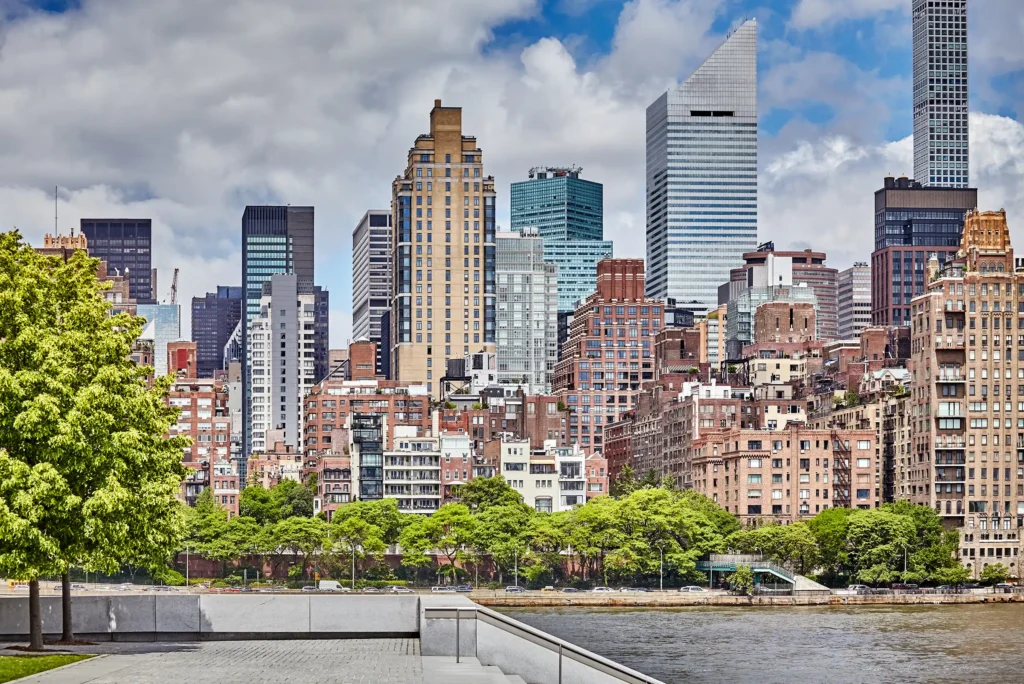
Manhattan’s waterfront options are fewer than Brooklyn’s, but they cover a wide range, from one of the quietest residential enclaves in the city to one of its best transit hubs.
Battery Park City
Battery Park City is a master-planned district along the Hudson River that doesn’t quite feel like the rest of Manhattan. The streets are quieter, the parks are well-maintained, and the full-service high-rises give residents a calm, almost resort-like quality of daily life. It also offers some of the most direct access to Lower Manhattan of any neighborhood in the city, with virtually every major downtown subway line within easy reach.
Chelsea and the West Village
Chelsea and the West Village represent the upper tier of Manhattan waterfront living. Both sit along Hudson River Park and the High Line, with boutique condos, architectural standouts, world-class dining, and galleries that draw buyers from across the city. These aren’t value-focused neighborhoods; they’re for buyers who have made a deliberate choice to prioritize design, walkability, and prestige, and the price-per-square-foot reflects that.
Financial District (FiDi)
FiDi has a split personality that works in the buyers’ favor. By day, it’s one of the busiest commercial districts in the world; by night, it’s surprisingly quiet and residential, with waterfront access on both sides: Hudson River paths to the west and the historic Seaport District to the east. A wave of office-to-condo conversions has increased inventory and cooled prices, creating a real value opportunity for buyers who want Manhattan without paying Midtown or West Village prices. Nearly every major subway line passes through Downtown Manhattan, making FiDi one of the most transit-connected addresses in the city.
Queens waterfront neighborhoods
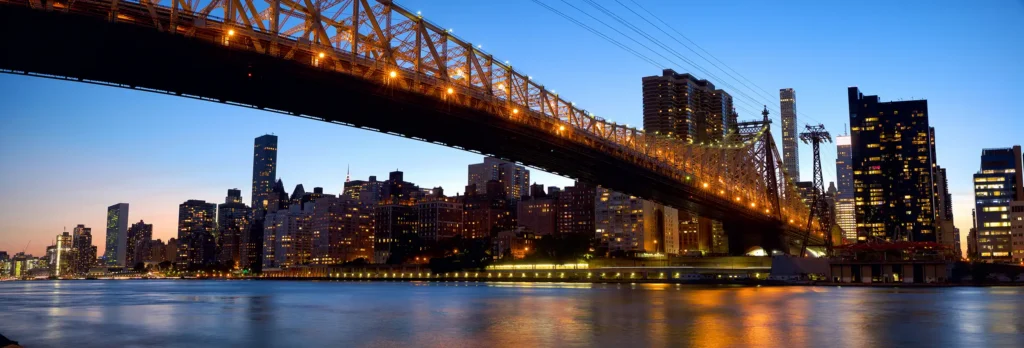
Queens offers two very different takes on waterfront living: the urban riverfront energy of Astoria and Long Island City, and the Atlantic Ocean beachfront of the Rockaway Peninsula. Both are worth understanding on their own terms.
Astoria
Astoria has been a first-time buyer favorite for years, and for good reason. The neighborhood is energetic and walkable, with one of the best dining scenes in the outer boroughs concentrated along 30th Avenue. Astoria Park anchors the waterfront, offering sweeping views of the Hell Gate Bridge, a running track, and one of the few outdoor public pools in the city. The housing stock is predominantly pre-war co-ops, which means spacious floor plans at prices per square foot that would be hard to find in Manhattan or trendy Brooklyn. The N and W trains get you into Midtown in roughly 15 to 20 minutes, one of the strongest commutes available outside of Manhattan.
Long Island City (LIC)
Long Island City has built an identity around glass towers, skyline views, and a well-manicured waterfront esplanade. Hunter’s Point South Park offers some of the best unobstructed views of the Midtown Manhattan skyline in the city, and the surge in new development has given buyers real negotiating leverage and a wide selection of turnkey condos with full-service amenities. A single stop on the 7 train puts you at Grand Central Terminal, and the neighborhood is also served by the E, M, R, F, G, N, and W trains plus the NYC Ferry. It’s the right fit for buyers who want new construction, strong transit, and a front-row seat to the Manhattan skyline.
Queens Beach neighborhoods: buying on the Rockaway Peninsula
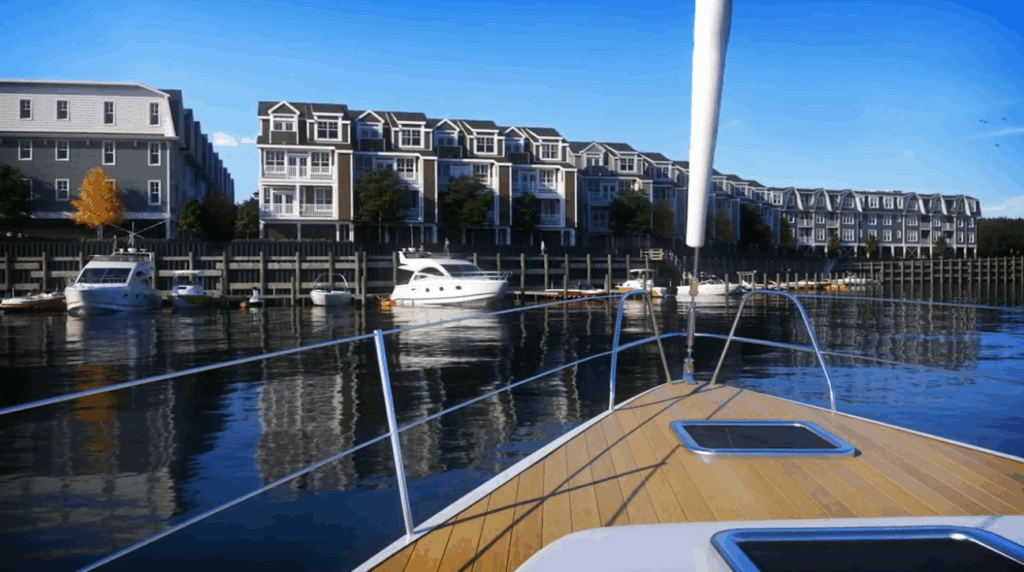
If you’re specifically searching for a beach apartment in Queens, the Rockaway Peninsula is where your search belongs. It’s the only part of Queens, and one of the very few parts of New York City, where you can buy a home and walk directly to the Atlantic Ocean. The trade-off is commute time and coastal weather risk, both of which deserve honest consideration.
Rockaway Beach and Rockaway Park
Rockaway Beach and Rockaway Park form the heart of the peninsula’s multi-family housing market. The mix of older mid-rise co-ops and newer luxury condos along Shore Front Parkway gives buyers a range of entry points, and the summer scene (food concessions, surf culture, boardwalk access) draws people who genuinely want to feel like they’re somewhere other than New York City. The A train and the NYC Ferry both connect directly to Manhattan in roughly 60 minutes. Best for buyers who want a lively beach-town atmosphere and some flexibility on housing type.
Arverne
Arverne is the Rockaway neighborhood that has changed the most over the past two decades. The Arverne by the Sea master-planned development brought modern condos and townhomes to the peninsula, along with retail, a supermarket, and direct beach access. Looking ahead, Arverne East is an upcoming net-zero, mixed-use community that will add new apartments, nature preserves, and retail to the area when complete.
Median condo listings range from roughly $564,000 to $799,000, depending on the unit, with a price-per-square-foot of around $410, notably lower than what you’d pay in Astoria or Long Island City for far less beach access. The A train to Downtown Manhattan takes approximately 60 to 75 minutes, making it one of the longer average commutes in the city.
Flood and weather risk is a real factor. Superstorm Sandy hit the Rockaway Peninsula hard, and buyers shouldn’t gloss over that history. Newer developments feature elevated pilings and 14-foot flood barriers, and Arverne East is being built above 500-year flood elevations, but flood insurance costs should still be factored into your monthly budget. If oceanfront living, newer construction, and relative affordability are your priorities and you’re comfortable with the commute, Arverne is worth a serious look.
Breezy Point
Breezy Point sits at the westernmost tip of the peninsula and operates by its own rules. It’s a private, gated cooperative community of mostly single-family beach bungalows, more New England fishing village than New York City apartment building. For buyers looking for apartment-style inventory, options are limited, and the co-op board approval process has historically been strict. It’s a strong fit for buyers who want an unusually private and tight-knit beach community, but not for those who need urban convenience or a standard condo purchase process.
Oceanfront living in NYC, reimagined
New construction, resort amenities, and the Atlantic Ocean at your door, at Lighthouse Beach Sixty-Seventh in Arverne by the Sea.
Other Queens coastal options beyond the Rockaways
Not every Queens waterfront neighborhood is on the ocean. If you want coastal access with a calmer, more bay-facing character, a few neighborhoods are worth considering:
Howard Beach
Located on Jamaica Bay, Howard Beach is best known for its single-family waterfront homes with private boat slips, but co-op and condo complexes do exist near Rockwood Park and the Howard Beach–JFK AirTrain station. It’s a strong fit for boating enthusiasts. The A train gets you to Manhattan in approximately 45 minutes.
Bayside
Borders Little Neck Bay on the North Shore, with garden apartments and high-rise co-ops near the Bay Terrace shopping complex offering bay and Long Island Sound views. The atmosphere is suburban and marina-adjacent. The LIRR puts you in Manhattan in roughly 30 minutes.
Bayswater
A quieter, park-like coastal setting on the eastern edge of Jamaica Bay, just north of Far Rockaway. Apartment inventory is sparse compared to Rockaway Beach, but it has a genuinely hidden-gem quality for buyers who want waterfront access without the peninsula crowds.
Staten Island: the most affordable waterfront option in NYC
If your primary goal is maximizing space and water access per dollar, Staten Island, specifically St. George on the North Shore, is worth taking seriously. Median property prices here track hundreds of thousands of dollars below comparable waterfront neighborhoods in Brooklyn or Queens, and the views from the Esplanade are legitimately spectacular: unobstructed sightlines to the Statue of Liberty and the Downtown Manhattan skyline. The housing stock includes historic homes, mid-rise buildings, and a growing wave of new development as the neighborhood continues to attract buyers priced out of other boroughs. The commute runs through the free, 24/7 Staten Island Ferry, which reaches Lower Manhattan in about 25 minutes; the Fast Ferry is also an option. The main trade-off is that you’re fully ferry-dependent rather than subway-connected, which doesn’t work for everyone’s routine but suits plenty of buyers just fine.
Comparing NYC waterfront neighborhoods at a glance
Here’s how the major waterfront neighborhoods stack up across the key factors buyers care about most:
| Neighborhood | Borough | Primary water body | Housing stock | Commute to Manhattan | Best for |
| DUMBO | Brooklyn | East River | Luxury lofts and condos | 15–20 min (A/C/F) | Luxury buyers, investment potential |
| Williamsburg | Brooklyn | East River | High-rise condos | 15–20 min (L/J/M/Z) | Amenity-seekers, younger buyers |
| Brooklyn Heights | Brooklyn | East River / Harbor | Brownstones, pre-war co-ops | 15–20 min (2/3/4/5/A/C) | Historic charm, stable value |
| Greenpoint | Brooklyn | East River | Boutique condos, lofts | Moderate (G train, Ferry) | Community-focused buyers |
| Bay Ridge | Brooklyn | New York Harbor | Co-ops, houses | 45–50 min (R train) | Families, affordability |
| Battery Park City | Manhattan | Hudson River | Luxury condos, co-ops | 10 min (Downtown) | Quiet urban living |
| Financial District | Manhattan | Hudson River / East River | Office-to-condo conversions | Elite (all major lines) | Value hunters in Manhattan |
| Long Island City | Queens | East River | Glass tower condos | 10–15 min (7 train) | New construction, skyline views |
| Astoria | Queens | East River | Pre-war co-ops | 15–20 min (N/W) | First-time buyers value |
| Arverne | Queens | Atlantic Ocean | Modern condos, townhomes | 60–75 min (A train) | Beach lifestyle, relative affordability |
| St. George | Staten Island | New York Harbor | Mid-rises, historic homes | ~25 min (Ferry) | Maximum space per dollar |
What to know before you buy waterfront in NYC
Flood insurance is the factor that catches the most buyers off guard. In oceanfront areas like the Rockaways, standard homeowners coverage won’t cover flood damage; you’ll need a separate policy, and in high-risk zones, that cost can be substantial. Superstorm Sandy made it clear how serious coastal exposure in New York can be, and while newer developments in Arverne and similar areas have made significant investments in flood-resilient construction (elevated pilings, 14-foot flood barriers, units built above 500-year flood elevations), the insurance line item still needs to be part of your budget math. The type of ownership structure matters just as much. Many of the most affordable waterfront options in the city are co-ops, which typically require board approval, limit your ability to sublet, and can restrict certain financing arrangements. Condos offer more flexibility, but that flexibility comes with a higher purchase price. First-time buyers in particular should understand what they’re getting into with co-op inventory before they fall in love with a listing.
Beyond the big structural questions, the practical details matter more than most buyers expect. Waterfront properties across the city often carry higher HOA or maintenance fees than comparable inland units, and some buildings carry ongoing assessments for capital improvements that can add meaningfully to monthly carrying costs. Those numbers belong in your budget alongside the mortgage payment, not as an afterthought. And before you commit to any neighborhood, especially one as commute-dependent as Arverne or as transit-varied as Bay Ridge, it’s worth visiting on a weekday morning to test the actual commute and again on a weekend to get a feel for what the neighborhood is like when people aren’t rushing to work. The two experiences are often pretty different, and both tell you something important. The area also ranks among the lowest-crime neighborhoods in New York City — an often-overlooked point for buyers who assume beachfront areas trade safety for scenery.
If you want oceanfront living in NYC without the trade-offs
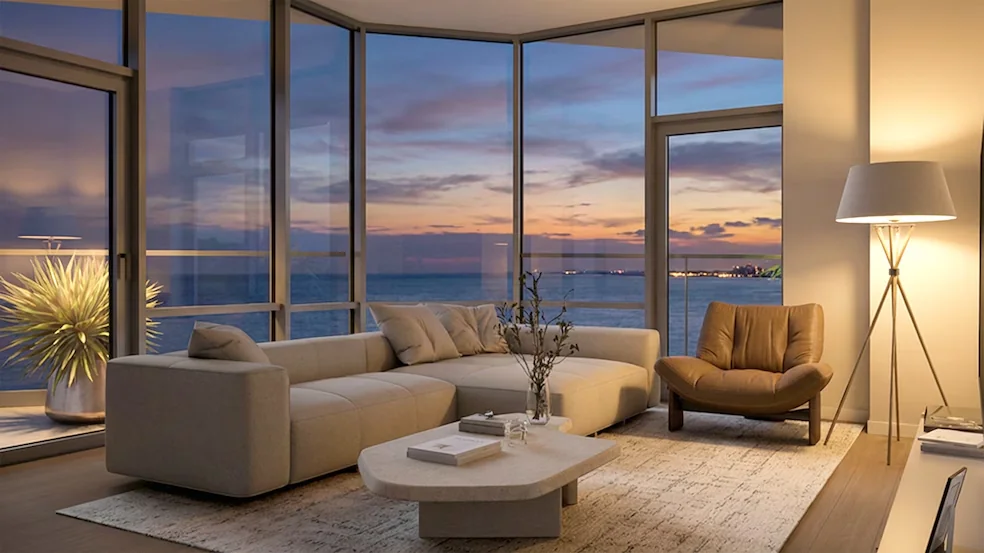
Most oceanfront properties in New York City ask you to give something up, whether that’s the commute, the age of the building, limited on-site amenities, or flood risk that hasn’t been fully addressed in the construction. Lighthouse Beach Sixty-Seventh is a luxury oceanfront condominium in Arverne by the Sea — a protected, planned community — that was designed with those trade-offs specifically in mind. The residences, designed by Ismael Leyva Architects, feature floor-to-ceiling glass walls, Dekton and Silestone countertops, Bosch appliances, Kohler fixtures, and a layout built around the surrounding ocean views. The amenities include an elevated beachfront pool and sundeck positioned directly on the water, a fitness center, a lounge, dedicated workspaces, a conference room, a game room, and a children’s playroom, bringing a resort-quality experience to everyday life without leaving the building. And the location keeps residents connected: the Beach 67 St A train — running 24/7 with ADA-accessible access — is steps away, the NYC Ferry offers a scenic route to Brooklyn and Lower Manhattan, and JFK International Airport is just 11 miles away, so the oceanfront setting doesn’t come at the cost of getting around the city. For buyers who’ve done the research and decided that Arverne by the Sea is where they want to be, Beechwood Homes— with more than 10,000 homes built since 1985 — built Lighthouse to answer the question of what that neighborhood could actually look like at its best. Curious about life at Lighthouse Beach Sixty-Seventh? Get in touch, and we’ll walk you through everything available at Arverne by the Sea.