
What makes Long Island worth exploring
Long Island is one of those places that keeps surprising you. Stretching more than 100 miles into the Atlantic Ocean, it packs an unlikely mix of experiences into a single region such as barrier island beaches, Gilded Age estates, working farms, maritime villages, and some of the best seafood on the East Coast. It runs from the dense suburban communities of Nassau County all the way to the quiet eastern tips of the North and South Forks, with plenty of character in between. And with the Long Island Rail Road connecting Penn Station directly to towns across the island, it’s never been easier to get out here, whether you’re coming for a day or staying for the weekend.
Key takeaways
- Long Island spans over 100 miles and offers beaches, historic estates, wine country, and maritime villages all within one region
- Each area has its own identity: The Gold Coast North Shore, the barrier island South Shore, and the agricultural East End all offer different experiences
- The best time to visit depends on what you want: summer for beaches, fall for vineyards, winter for seal watching
- A car is recommended for getting the most out of the island, though the LIRR makes many destinations reachable without one
- Beechwood Homes offers four communities on Long Island: The Waterways (55+, South Shore waterfront) and Country Pointe Preserve (55+, central Suffolk) for buyers who want to make the island home; The Selby and Vanderbilt in central Nassau for those who prefer luxury rental living steps from Eisenhower Park and easy access to the city
Getting to and around Long Island
The LIRR is your friend, especially if you’re coming from New York City. It runs regularly to destinations like Montauk, the Hamptons, and Port Jefferson, meaning you don’t necessarily need a car to get started. That said, if you want to explore beyond the train-accessible hubs, a car makes a real difference. Many of the island’s best beaches, nature preserves, farm stands, and wineries aren’t within walking distance of any station. One practical note: summer weekends on the Long Island Expressway (I-495) can be genuinely brutal, particularly Friday evenings heading east and Sunday afternoons coming back. Leave early if you can. The island’s linear geography actually works in your favor for planning — you can build a straightforward route from west to east, or zero in on a single region without too much backtracking.
The North Shore: Gold Coast mansions and hidden beaches
The North Shore has a nickname that’s stuck for good reason. Known as the “Gold Coast,” this stretch of coastline was where New York’s wealthiest families built their estates during the Gilded Age, and a surprising number of those properties are still worth visiting today. Caumsett State Park in Lloyd Neck was once the Marshall Field estate, and it now offers miles of hiking trails, freshwater fishing, and sweeping views of Long Island Sound. Old Westbury Gardens is another standout, a preserved English manor house set on 160 acres of formal gardens that open to the public each season.
Beyond the estates, the North Shore has a quieter, less crowded beach scene compared to the South Shore. Long Island Sound beaches tend to have calmer water, which makes them a good pick for a day trip. And if you’re interested in history that goes beyond mansion tours, Garden City’s Museum Row is worth a dedicated stop. The Cradle of Aviation Museum does a genuinely impressive job of telling the story of Long Island’s role in early flight, from the Wright brothers era through Charles Lindbergh’s preparations for his transatlantic crossing and beyond to the Apollo program. It sits alongside the Long Island Children’s Museum and the Nassau County Firefighters Museum, all within the same campus on the former Mitchel Field site — meaning you can spend a full morning or afternoon across several institutions without getting back in the car.
The South Shore: barrier islands and classic beach days
If you picture a classic Long Island beach day, you’re probably picturing the South Shore. This is where a chain of barrier islands sits between the Atlantic Ocean and the Great South Bay, forming one of the most recognizable stretches of coastline in the Northeast. Jones Beach State Park is the anchor of it all — wide white sand, a long boardwalk, and a summer concert venue that draws big names every season. It’s also one of the most visited beaches in the country, so managing your expectations about parking in peak season is worth it.
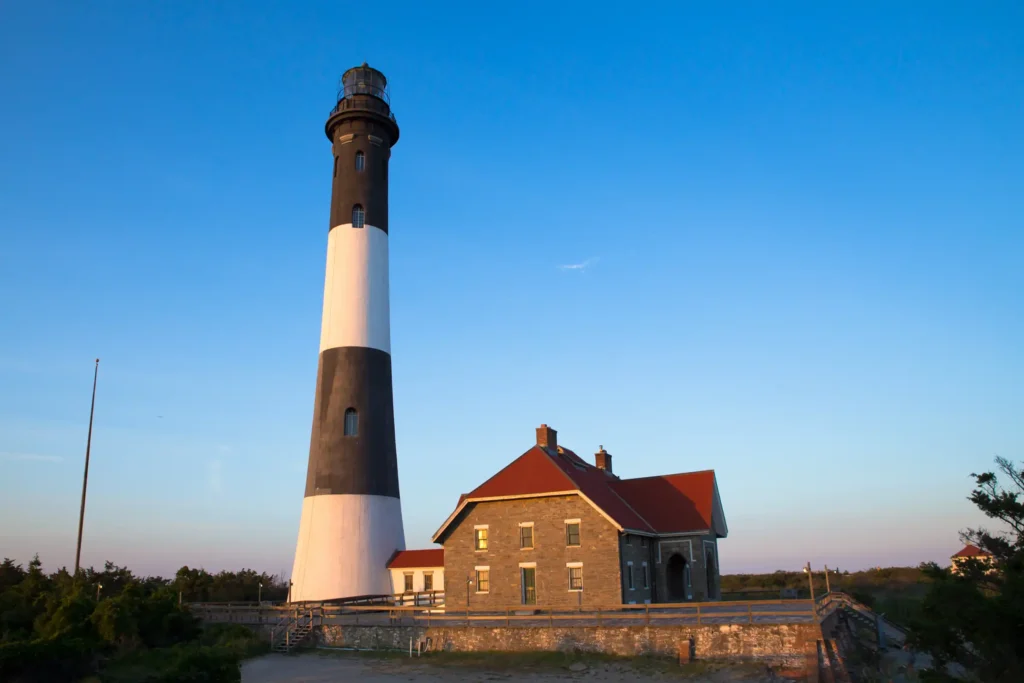
For something a little different, Fire Island National Seashore offers a completely car-free experience. The only way in is by ferry from Bay Shore or Sayville, which immediately changes the atmosphere. Once you’re there, you’ll find pristine beaches, the historic Fire Island Lighthouse, and trails through the Sunken Forest. Back on the mainland, the Great South Bay itself is worth exploring — it’s popular for boating, kayaking, and clamming, and reflects the kind of working waterfront culture that has defined this part of Long Island for generations.
The East End: Hamptons, farmland, and the Forks
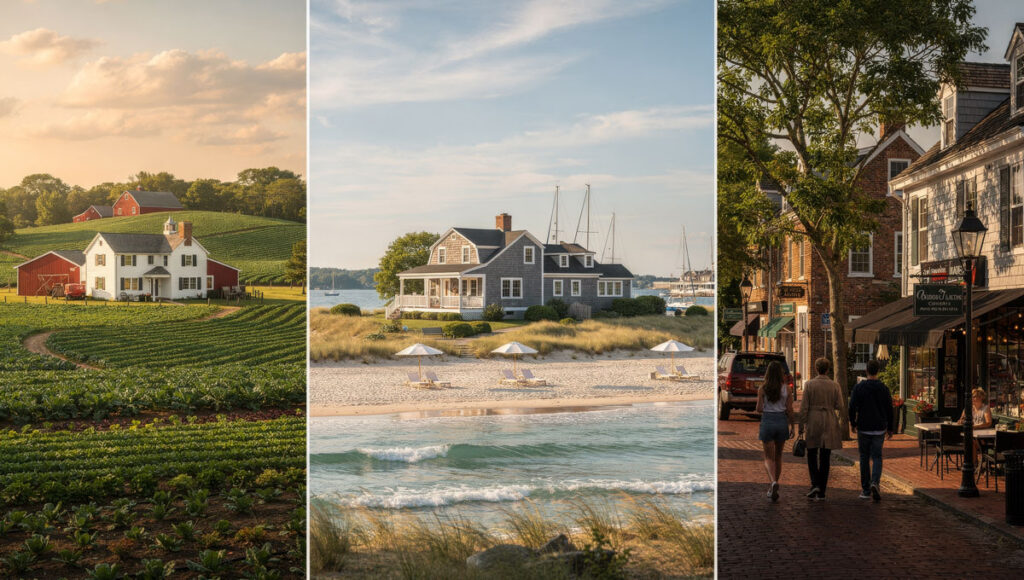
The East End is really three distinct experiences depending on which fork you take.
The Hamptons (South Fork)
- The South Fork is anchored by a string of well-known villages, including Southampton, East Hampton, Bridgehampton, and Sag Harbor — each with its own feel, from polished and resort-like to genuinely historic and walkable.
- Coopers Beach in Southampton consistently earns a spot on national best-beaches lists, and for good reason. The sand is fine, the water is clean, and the setting is hard to beat.
- Sag Harbor is worth a dedicated afternoon: independent bookstores, good restaurants, and a whaling museum that tells the story of the village’s maritime past without feeling like a tourist trap.
Montauk (“The End”)
- Montauk sits at the very tip of the South Fork, and it has always had a different energy than the Hamptons villages — more surf culture, less scene, and a lot more open space.
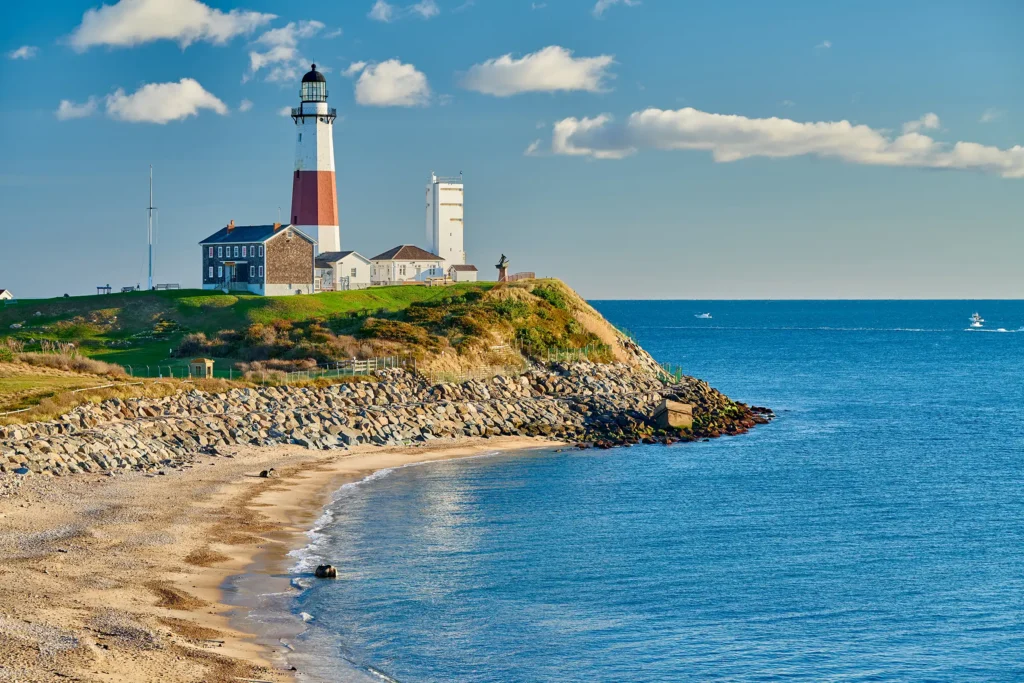
- The Montauk Point Lighthouse, commissioned by George Washington in 1792, is New York State’s oldest lighthouse and worth the drive just for the views from the top.
- Montauk Point State Park wraps around the lighthouse with rugged coastal trails, and in winter it becomes one of the best places on the island to watch seals. Whale-watching boats head out from Montauk Harbor seasonally and regularly spot humpbacks and finbacks.
The North Fork
- The North Fork is quieter and more agricultural than its southern counterpart, with dozens of family-owned wineries running along Route 25 — Long Island’s wine country in the truest sense.
- Fall is the ideal season out here, when the harvest festivals are running, the farm stands are full, and the foliage along the Sound is at its best.
- Greenport is the North Fork’s main town, with a historic carousel on the waterfront, solid dining options, and ferry service over to Shelter Island.
Iconic landmarks you shouldn’t miss
Long Island has no shortage of places that are worth going out of your way for. Here are eight that stand out across the island:
- Montauk Point Lighthouse: Commissioned by George Washington in 1792, this is the oldest lighthouse in New York State. Visitors can climb to the top for panoramic views of the Atlantic and, on clear days, see all the way to Block Island.
- Fire Island Lighthouse: This 168-foot tower sits within the Fire Island National Seashore and is only reachable by ferry. The surrounding seashore offers trails, beaches, and a stretch of protected coastline that feels genuinely removed from the rest of the island.
- Old Westbury Gardens: A well-preserved Gilded Age estate with formal English gardens spread across 160 acres. It opens seasonally and hosts special events throughout the year.
- Cradle of Aviation Museum: Located in Garden City, this museum traces Long Island’s outsized role in aviation history, from early experimental flights through the Apollo program and beyond.
- Long Island Aquarium (Riverhead): Shark exhibits, a coral reef tank, interactive stingray and butterfly encounters — the aquarium is a highlight of Riverhead’s downtown and draws visitors year-round.
- Caumsett State Park: One of the largest undeveloped properties in the New York metropolitan area, the former Marshall Field estate now offers hiking, birdwatching, and freshwater fishing in a setting that feels far removed from suburbia.
- Eisenhower Park: At 930 acres, this East Meadow park is larger than Central Park and one of Nassau County’s most versatile green spaces, with golf, tennis, pickleball, an aquatic center, and an ice skating rink spread across its grounds.
- Bethpage State Park: Home to the Black Course, one of the most celebrated public golf courses in the country and the site of multiple U.S. Opens, Bethpage in Farmingdale is a destination for serious golfers well beyond Long Island. Five courses at varying skill levels make it worth the trip whatever your game.
Family-friendly attractions and educational experiences
When the grandkids come to visit, Long Island has plenty to keep them genuinely occupied. The Long Island Explorium in Port Jefferson is a hands-on science and nature center for children from infants through sixth grade, with interactive exhibits and STEAM programming that kids tend to enjoy rather than just tolerate. In Farmingdale, Adventureland offers classic amusement park rides and games at a pace that doesn’t overwhelm younger children the way larger theme parks can.
For a full day with real educational value, Garden City’s Museum Row is worth planning around. The Long Island Children’s Museum anchors the cluster with hands-on exhibits for toddlers through early teens, and it sits alongside the Cradle of Aviation Museum and the Nassau County Firefighters Museum, making it easy to cover several institutions without getting back in the car. The Long Island Aquarium in Riverhead is another strong option, with live animal encounters and behind-the-scenes tours that give kids a genuine sense of what marine conservation looks like. And if the timing is right, the island’s farm stands offer pick-your-own strawberries in spring and apples and pumpkins in fall — simple outings that are easy to pull off and tend to be a hit across generations.
Food, seafood, and agritourism
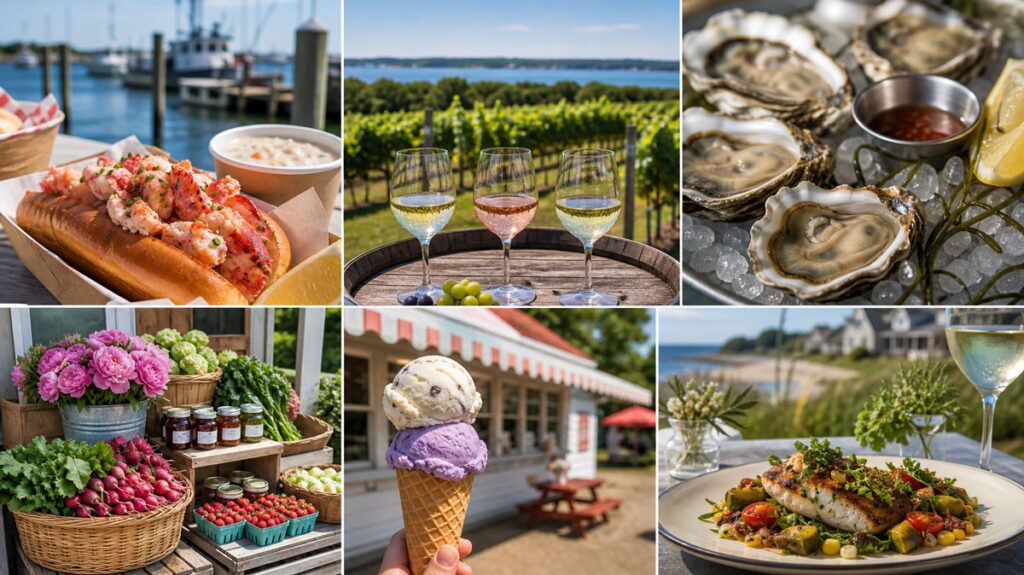
Long Island’s relationship with food is inseparable from its geography. The water shapes everything: fresh lobster rolls, clam chowder, and locally harvested oysters show up on menus from the South Shore to the East End, and the quality is consistently good because the sourcing is local. The casual side of Long Island dining, including roadside seafood shacks, old-school diners, ice cream stands that have been there for decades — is as much a part of the experience as any upscale restaurant, and arguably more authentic.
The North Fork wine region has been gaining serious recognition over the past decade, with whites and rosés from local vineyards earning attention well beyond the island. Most wineries along Route 25 welcome walk-ins for tastings and run seasonal harvest events that are worth planning around. Farm stands run the length of the island from late spring through fall, stocked with locally grown produce, fresh-cut flowers, and homemade preserves. And for those interested in the higher end of the food scene, the Hamptons and Montauk have a strong farm-to-table culture that draws on everything the surrounding land and water has to offer.
Stop exploring. Start living.
Beechwood Homes offers two exclusively 55+ communities in the heart of Long Island.
Best time to visit and seasonal highlights
Long Island genuinely offers something worth visiting for in every season, it just depends on what you’re after.
Summer (June–August)
- Peak beach season, with Jones Beach, Fire Island, and Coopers Beach all at their busiest and best
- Outdoor concerts, water sports, and waterfront dining are in full swing
- Plan around the traffic: Friday evenings eastbound and Sunday afternoons westbound on the LIE can add hours to a trip
Fall (September–November)
- After Labor Day, crowds thin out noticeably and accommodation prices drop across the East End
- North Fork vineyard season peaks in fall, with harvest festivals and pick-your-own farm experiences at their best
- Foliage along the North Shore and East End adds a layer of color that summer doesn’t offer
Winter (December–February)
- Montauk Point State Park becomes one of the best seal-watching spots on the East Coast during the colder months
- The East End quiets down significantly, with many seasonal restaurants and shops closing, but the solitude has its own draw
- Year-round indoor attractions like the Cradle of Aviation and Long Island Aquarium remain fully open
Spring (March–May)
- Old Westbury Gardens starts to bloom, and the North Shore comes back to life before the summer crowds arrive
- Good hiking conditions at Caumsett State Park and Montauk Point State Park
- Whale-watching season picks back up as humpbacks return to feeding grounds off Montauk
Four ways to live the Long Island dream
For some people, a weekend trip to Long Island turns into something more — a realization that this is actually where they want to be. Beechwood Homes offers four distinct communities on the island, from gated 55+ waterfront living to luxury rentals in central Nassau, each built to the same standard of quality that defines everything Beechwood builds.
Properties to Own
Beechwood at The Waterways
Moriches, a quiet hamlet on the South Shore, is one of those places that tends to leave that kind of impression. It has the small-town character, the waterfront access, and the proximity to the Hamptons and East End that make it a genuinely appealing place to retire on Long Island. And for those ready to make that move, Beechwood at The Waterways offers something rare: the chance to own a newly built home in a gated 55+ community right on the shores of Moriches Bay. It’s waterfront living without the compromises that usually come with it, in one of the South Shore’s most sought-after coastal settings.
The location puts you close to everything covered in this guide: pristine ocean beaches, the Hamptons, and the North Fork wine country are all within easy reach. Smith Point Beach is ten minutes away, and the Forge River provides direct access to Moriches Bay for boating, kayaking, and paddleboarding. The community itself is built for an active coastal lifestyle, with a private marina, resort-style waterfront pool and deck, clubhouse, tennis and pickleball courts, bocce, fitness center, and walking trails. Four home designs are currently available — The Andover, The Barclay, The Caldwell, and The Devon — ranging from $660,000 to $825,000.
As a new construction community, The Waterways gives buyers something the existing housing market on Long Island rarely offers: the opportunity to get into a well-designed home in a prime waterfront location, with the ability to personalize it before it’s built. The sales office at 619 Water Way in Moriches is open Thursday through Monday by appointment. You can view the community siteplan online or learn more about the advantages of buying early in a new development before reaching out.
To schedule a tour or connect with the sales team, contact us.
Country Pointe Preserve
For those drawn to Long Island’s wooded interior rather than its waterfront, Country Pointe Preserve in Yaphank offers a different kind of 55+ lifestyle — quieter and more tucked away, but equally well-appointed. Set among mature trees in central Suffolk County, the gated community pairs resort-style amenities with the kind of natural setting that’s harder to find closer to the water. Residents have access to a clubhouse, heated pool with poolside bar, fitness center, all-season indoor/outdoor pickleball pavilion, golf simulator, billiards room, and walking trails — all within a low-maintenance community designed for active adults. On-site at The Boulevard, you’ll also find everyday conveniences including a Walmart, Starbucks, Bagel Boss, and Northwell Urgent Care.
The location works well for anyone who wants access to the full range of Long Island experiences without committing to the South Shore or the East End exclusively. The North Fork wine country, the Hamptons, and the South Shore beaches are all within easy driving distance, and the community sits directly off LIE Exit 68. A new Yaphank train station is slated to open in 2026, adding another transit option to the Ronkonkoma LIRR line already 12 miles away. An extensive range of home designs are available — eight models from $665,000 to $960,000 — each built with the same Beechwood quality and attention to low-maintenance living that defines The Waterways. You can view the community siteplan online or explore available homes and pricing.
Get in touch with the Country Pointe Preserve sales team here.
Properties to Rent
The Selby
For those who want the full Long Island lifestyle without the commitment of a purchase, The Selby in Westbury offers something genuinely uncommon in this market — a hospitality-grade rental building where the finishes and service match what you’d expect from a high-end ownership product. Residences run from studios to three bedrooms starting at $3,800 per month, with Viking appliances, custom cabinetry, oak floors, and brushed brass fixtures throughout.
The building sits close to Eisenhower Park, a 930-acre county park larger than Central Park, with golf, tennis, pickleball, an aquatic center, and skating. Roosevelt Field Mall is minutes away for everyday shopping, and the Westbury LIRR station is about six minutes by car, putting Penn Station roughly 40 minutes out — a real advantage for anyone who still has regular ties to the city. Jones Beach is 18 minutes away, and Bethpage State Park, home to multiple U.S. Opens, is within easy reach for anyone who wants access to some of the best public golf on the East Coast.
The building’s amenities are anchored by a 1,500-square-foot pool terrace, a Tranquility Spa, The Shed Restaurant for all-day dining, a fitness studio, dedicated yoga room, club room, library with fireplace, screening parlor, and a private dog park. For those who want the feel of a well-run hotel alongside the stability of a real home, The Selby is worth a serious look.
Get in touch with the Selby’s sales team here.
The Vanderbilt
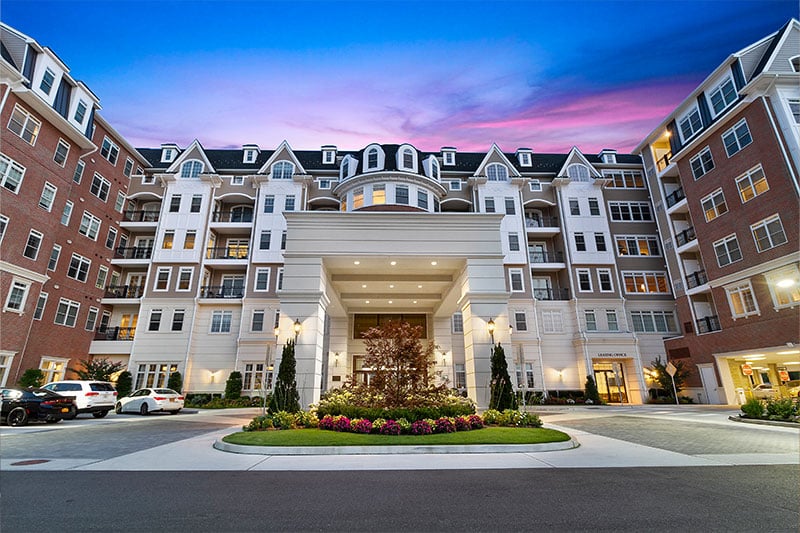
The Vanderbilt occupies a category of its own on Long Island. It’s the only address on the island that combines residential living with a boutique hotel, a full-service restaurant in Juniper, and an on-site social venue in The Comet Club — a combination that changes the day-to-day feel of living here in ways that are hard to replicate elsewhere.
One and two-bedroom residences range from $5,499 to $7,099 per month, with nine-foot ceilings, walnut floors, GE Café appliances, Silestone countertops, and private balconies on select layouts. Covered parking and 24-hour front desk service come standard, and the amenities include a heated outdoor pool with private cabanas, a poolside bar, pickleball and bocce courts, a yoga studio, fitness center, and a screening room.
The central Nassau location puts an impressive range of the island within easy reach. Roosevelt Field Mall is seven minutes away, Eisenhower Park nine, and Jones Beach eighteen. The Westbury LIRR station connects to Manhattan in about 35 minutes, and both JFK and LaGuardia are under 30 minutes by car. For anyone who’s weighed ownership against flexibility and landed somewhere in between, The Vanderbilt makes renting feel like a deliberate choice rather than a compromise.
Get in touch with the Vanderbilt’s sales team here
FAQs
Here are answers to some of the most common questions about Long Island exploration and planning a visit.
- What is Long Island most famous for?
Long Island is best known for its beaches, including Jones Beach, Fire Island, and the Hamptons, as well as the Gold Coast mansions of the North Shore, the Montauk Point Lighthouse, and the East End wine country along the North Fork. - How far is Long Island from New York City?
Long Island begins at the East River, immediately adjacent to Manhattan. Nassau County starts roughly 20 miles from midtown, while Montauk at the eastern tip sits about 120 miles away. Drive times can vary considerably depending on traffic, particularly in summer. - Are there 55+ communities on Long Island near the water?
Yes. Beechwood Homes offers two 55+ communities on Long Island to suit different lifestyles. Beechwood at The Waterways in Moriches is a new construction gated community situated directly along Moriches Bay, with a private marina, resort-style waterfront pool, and easy access to the Hamptons and East End beaches. Country Pointe Preserve in Yaphank offers a wooded, resort-style setting in central Suffolk County, with access to the North Fork wine country, the South Shore beaches, and the Hamptons, all from a quieter, more private enclave. - What are the best beaches on Long Island?
Top options include Coopers Beach in Southampton, Jones Beach State Park in Wantagh, Robert Moses State Park on Fire Island, and the ocean-facing beaches in Montauk. Each one has a distinct character, from wide and lively to quiet and scenic. - When is the best time to visit Long Island?
Summer is the peak season for beaches and outdoor activities. Fall is arguably the most well-rounded time to visit. The weather is mild, the wine country is in harvest season, and the crowds are gone. Winter has its own appeal, particularly for seal-watching at Montauk Point. - Does Beechwood Homes offer rental options on Long Island?
Yes. Beechwood offers two luxury rental buildings in central Nassau. The Selby in Westbury is a hospitality-grade building with studios through three-bedrooms from $3,800 per month, steps from Eisenhower Park and six minutes from the Westbury LIRR. The Vanderbilt combines luxury residences with an on-site boutique hotel, Juniper restaurant, and The Comet Club social venue, with one- and two-bedroom apartments from $5,499 to $7,099 per month. Both are 25 miles from New York City, with JFK and LaGuardia each under 30 minutes away.