Skip to content
The Tides Logo White
  • Residences
    • Studio
    • 1 Bedroom
    • 2 Bedroom
    • 3 Bedroom
    • Availability
  • Community
  • Gallery
  • Amenities
  • News + Media
  • Contact
  • Rent Cafe
    • Tides Residences 1 Login
    • Tides Residences 2 Login
  • Residences
    • Studio
    • 1 Bedroom
    • 2 Bedroom
    • 3 Bedroom
    • Availability
  • Community
  • Gallery
  • Amenities
  • News + Media
  • Contact
  • Rent Cafe
    • Tides Residences 1 Login
    • Tides Residences 2 Login

News + Media

Loading...

Rockaway Beach vs. Brighton Beach vs. Long Island City: Where Should You Buy an Apartment?

Key takeaways All three neighborhoods offer waterfront living, but they serve very different buyers. LIC is for commuters who want luxury and speed. Brighton Beach...
VIEW ARTICLE

Rockaway Beach vs. Brighton Beach vs. Long Island City: Where Should You Buy an Apartment?

Key takeaways

  • All three neighborhoods offer waterfront living, but they serve very different buyers. LIC is for commuters who want luxury and speed. Brighton Beach is for buyers who want beach access with a real Brooklyn neighborhood around them. Rockaway is for buyers who want the ocean to be part of daily life.
  • Commute is the biggest practical differentiator. LIC has the fastest Manhattan access, Brighton Beach sits in the middle, and Rockaway requires the most flexibility.
  • Rockaway has the most approachable pricing of the three, but a lower price alone is not a good reason to buy there. The lifestyle has to fit.
  • Coastal buyers in Rockaway and Brighton Beach need to factor in flood zones, building elevation, storm risk, and insurance costs as part of their purchase decision.
  • The right neighborhood is the one that matches how you actually want to spend your days, not just which one looks best on a spreadsheet.

Images of Rockaway Beach, Brighton Beach, and Long Island City
Rockaway Beach, Brighton Beach, Long Island City (left to right)

Rockaway Beach vs. Brighton Beach vs. Long Island City at a Glance

If you're comparing Rockaway Beach, Brighton Beach, and Long Island City as places to buy, you're probably weighing lifestyle, commute, price, and long-term value. All three neighborhoods offer waterfront or beach-adjacent living, but they represent very different decisions as a buyer. Rockaway Beach is the most beach-forward of the three: a coastal, surf-centered community with a more relaxed pace and generally more approachable pricing. Brighton Beach is an established Brooklyn neighborhood with strong cultural roots, boardwalk access, and a denser urban feel. Long Island City is a premium high-rise market built around Manhattan proximity and luxury amenities.

Rockaway BeachBrighton BeachLong Island City
Primary lifestyleCoastal, surf culture, boardwalk to RockawayBoardwalk neighborhoodUrban waterfront
Typical housing stockLuxury high-rise condos, Condos, townhomes, some co-opsCo-ops, older buildings, some oceanfront condosLuxury high-rise condos
Relative price pointMore approachableModeratePremium
Commute to ManhattanLonger (A train, ferry)Moderate (B/Q train)Fastest (E, 7, N, W trains)
Beach or waterfront accessDirect ocean access, boardwalk to RockawayBoardwalk and oceanWaterfront parks, river views
Best-fit buyerLifestyle-first, remote/hybridBeach access + Brooklyn feelCommuter, luxury buyer
Surfer on the Beach in Arverne by the Sea
Surfer on Rockaway Beach, Arverne by the Sea, NY

Rockaway Beach: Best for buyers who want a true beach lifestyle in NYC

Of the three neighborhoods, Rockaway Beach is the one where the ocean genuinely shapes daily life. You're not just near the water; you're in a community built around it. The surf culture is real, with local shops, surf schools, and a boardwalk lined with restaurants and casual spots that set the tone year-round. The pace is slower, the streets are quieter outside of summer, and there's a sense of place that feels distinct from other parts of the city.

For buyers, that lifestyle has concrete advantages. You get more outdoor access, more space for the price compared to premium NYC waterfront markets, and a community that feels more coastal than traditionally urban. Rockaway also ranks as one of the lowest crime areas in New York City, which is worth noting for buyers who are weighing safety alongside lifestyle. Rockaway has seen new development and growing buyer interest, with new businesses and residents who have come specifically for the lifestyle.

The trade-offs are worth understanding before you buy. The commute to Midtown Manhattan is longer than from LIC and Brighton Beach, relying on the A train, the NYC Ferry, express buses, or a car, depending on where you're headed. Summers bring crowds, beach traffic, and parking pressure. Winters can feel considerably quieter. And because this is a coastal neighborhood, flooding risk, storm exposure, insurance costs, and building elevation all need to be part of your research before you sign anything.

Shoreline of Brighton Beach, Brooklyn, NY

Brighton Beach: Best for buyers who want beach access with an established Brooklyn neighborhood feel

Brighton Beach offers a very different version of coastal living than Rockaway. It's not a surf town but a dense, established Brooklyn neighborhood with boardwalk and ocean access, and that distinction matters a lot depending on what you're looking for.

The neighborhood has a strong cultural identity rooted in its Eastern European community, with restaurants, markets, and a local energy built over decades. The boardwalk connects directly to Coney Island, giving residents walkable beach access alongside a year-round neighborhood that doesn't slow down much in winter. The B and Q trains provide reliable access to central Brooklyn and Manhattan, making the commute more practical than Rockaway for most buyers. Housing ranges from older co-ops to select oceanfront condos, with pricing that generally sits in the moderate range. The lifestyle here leans more toward boardwalk walks and weekend swims than surfing or a quieter coastal pace, and for buyers who want beach access without giving up the fabric of Brooklyn, that's exactly the point.

Long Island City boardwalk in Queens, NY

Long Island City: Best for buyers who want luxury, transit, and Manhattan proximity

Long Island City is the outlier here. It's not a beach neighborhood but a premium urban waterfront market built around convenience, luxury, and proximity to Midtown. If you're comparing LIC to Rockaway and Brighton Beach, you're essentially weighing a fast-commute, high-rise lifestyle against neighborhoods where the ocean is actually part of the daily experience.

The subway access is some of the best in the outer boroughs, with the E, 7, N, and W trains putting you in Midtown in minutes. The buildings are newer, with full amenity packages, polished lobbies, and skyline views that justify the price. There are good restaurants, cultural venues, and a professional energy that suits buyers who prioritize urban convenience above everything else. The trade-off is pricing: LIC commands a significant premium over both Rockaway and Brighton Beach, with higher monthly carrying costs to match. If you genuinely want to live near the ocean, LIC is probably not the right fit. But if proximity and convenience are what you're after, it's a strong market with consistent demand.
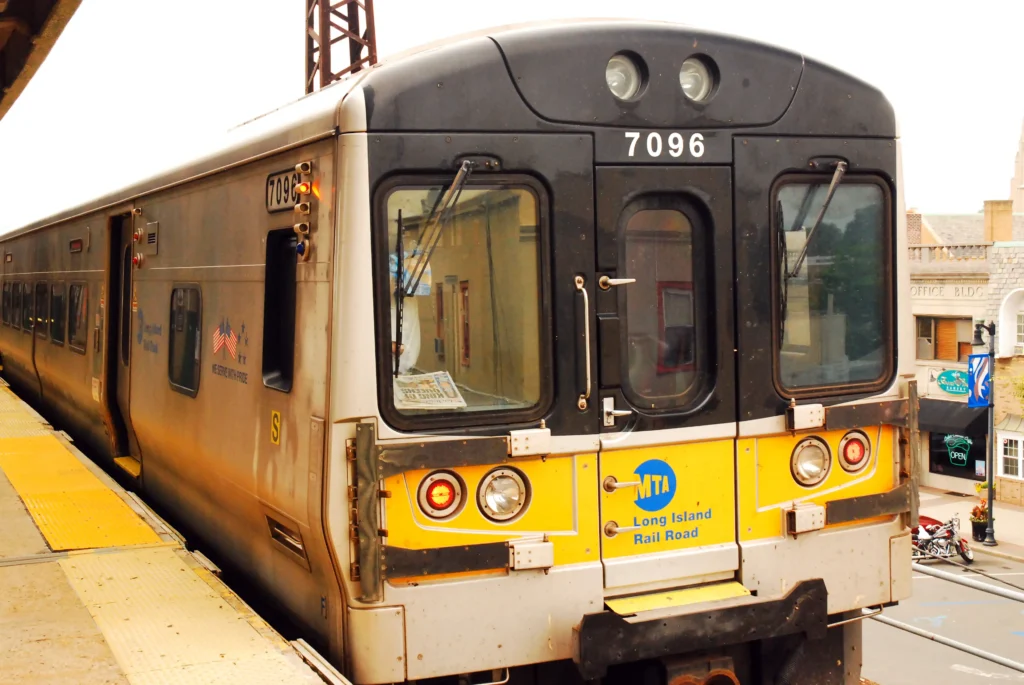
LI Train
Long Island Railroad, NY

Compare the commute before you compare the price

Commute time is one of the most important factors in this comparison, especially given the price differences between these neighborhoods:

1. Long Island City has the clearest commute advantage

LIC offers some of the fastest subway access to Midtown Manhattan of any outer-borough neighborhood, and for buyers who commute frequently, that speed can make higher prices feel worthwhile. It's one of the main reasons LIC commands a premium compared to similar square footage in other waterfront areas.

2. Brighton Beach offers a more balanced commute

The B and Q trains make Brighton Beach reasonably accessible to central Brooklyn and Manhattan. It's not as fast as LIC, but it's significantly more connected than Rockaway for most riders. For buyers who want beach access but can't work around a long commute, Brighton Beach sits in a more practical middle position.

3. Rockaway Beach requires more commute flexibility

The A train, NYC Ferry, express buses, and car access all provide options, but the trip is longer, especially for anyone headed to Midtown or other boroughs. Rockaway works best for remote workers, hybrid schedules, or buyers who have placed the beach above commute speed. The ferry can make the route more scenic for trips to Lower Manhattan, but it requires planning and works best when timing and conditions cooperate.
LI Beach
Long Island Beach

Compare the lifestyle: Beach town, boardwalk neighborhood, or urban waterfront?

Each neighborhood offers a different daily experience, and that's ultimately what matters most in this decision.

1. Choose Rockaway Beach for outdoor culture and ocean access

Surfing, swimming, beach walks, boardwalk dining, biking, and a quieter coastal pace make Rockaway feel like a beach community that happens to be inside city limits. If you want your daily routine to center around the ocean rather than just occasional waterfront views, Rockaway is the clearest choice of the three.

2. Choose Brighton Beach for cultural depth and everyday convenience

Restaurants, markets, boardwalk access, and a dense neighborhood environment make Brighton Beach a strong option for buyers who want beach proximity without giving up the feeling of an established Brooklyn neighborhood. It has a strong local identity and year-round activity that Rockaway can't always match outside of summer.

3. Choose Long Island City for convenience and city energy

Skyline views, waterfront parks, restaurants, museums, and luxury buildings define the LIC experience. It's a better fit for buyers who want an urban lifestyle than for those who want genuine beach access. The right choice depends less on which neighborhood is objectively "best" and more on which trade-off fits the way you want to live day to day.

Lighthouse rendering of interior living room
Lighthouse Beach 67th, a new development coming to the Rockaways

Buying costs and long-term value: What to keep in mind

Purchase price is only part of the equation. Monthly carrying costs, property taxes, insurance, common charges, and long-term resale potential all factor into whether a neighborhood makes financial sense, and they look quite different across these three markets.

LIC sits at the highest price point, driven by its transit access and luxury condo market. Brighton Beach offers more moderate pricing with a mix of co-ops, older buildings, and select oceanfront condos. Rockaway Beach is generally the most approachable of the three, with potential upside tied to new development and growing demand for coastal living in the outer boroughs. From an investment standpoint, Rockaway may appeal to buyers who see long-term value in outer-borough waterfront growth. Brighton Beach suits buyers who want a more established neighborhood with consistent local demand. LIC appeals to buyers focused on Manhattan proximity and luxury resale demand. One consideration that can't be overlooked: owning in Rockaway or Brighton Beach means paying close attention to flood zone designation, building elevation, storm resiliency, and insurance costs. These should be part of your due diligence before closing, not an afterthought.

Rockaway Beach pros and cons for apartment buyers

Here's a look at what Rockaway offers and where it asks you to make trade-offs:

Pros:

  • True beach lifestyle within New York City
  • More approachable pricing compared to many luxury waterfront neighborhoods
  • Surfing, swimming, boardwalk access, and outdoor recreation
  • Ferry, A train, an express bus, and car access create multiple transportation options
  • Growing neighborhood interest, new businesses, and development momentum
  • One of the lowest crime areas in New York City

Cons:

  • Longer commute to Manhattan and other central NYC areas
  • Winters can feel quieter and more isolated
  • Summer congestion, beach crowds, parking pressure, and ferry demand can increase
  • Coastal risk, flooding, storms, and insurance should be part of the buying decision

Rockaway makes the most sense for buyers who genuinely want the lifestyle, not just a lower purchase price.

So, which neighborhood should you choose?

Choose Long Island City if:

  • You want the shortest commute to Manhattan
  • You prefer luxury high-rises and urban convenience
  • You are comfortable with premium pricing and higher carrying costs

Choose Brighton Beach if:

  • You want beach access with a more established Brooklyn neighborhood feel
  • You value cultural depth, restaurants, markets, and boardwalk access
  • You want a middle-ground option between urban convenience and coastal living

Choose Rockaway Beach if:

  • You want true oceanfront living, surf culture, and a more relaxed pace
  • You work remotely or have a flexible commute schedule
  • You want a more lifestyle-driven apartment purchase within NYC

Buyers should think about where they want their everyday life to happen, not just where the price looks best.

For buyers drawn to Rockaway, Lighthouse brings oceanfront ownership into focus

After weighing Rockaway Beach, Brighton Beach, and Long Island City, buyers who keep coming back to Rockaway are usually looking for something specific: true beachfront living without leaving New York City. Lighthouse Beach Sixty-Seventh is a collection of oceanfront condominiums now selling in Arverne, Queens, and it's one of the clearest expressions of what Rockaway ownership can actually look like.

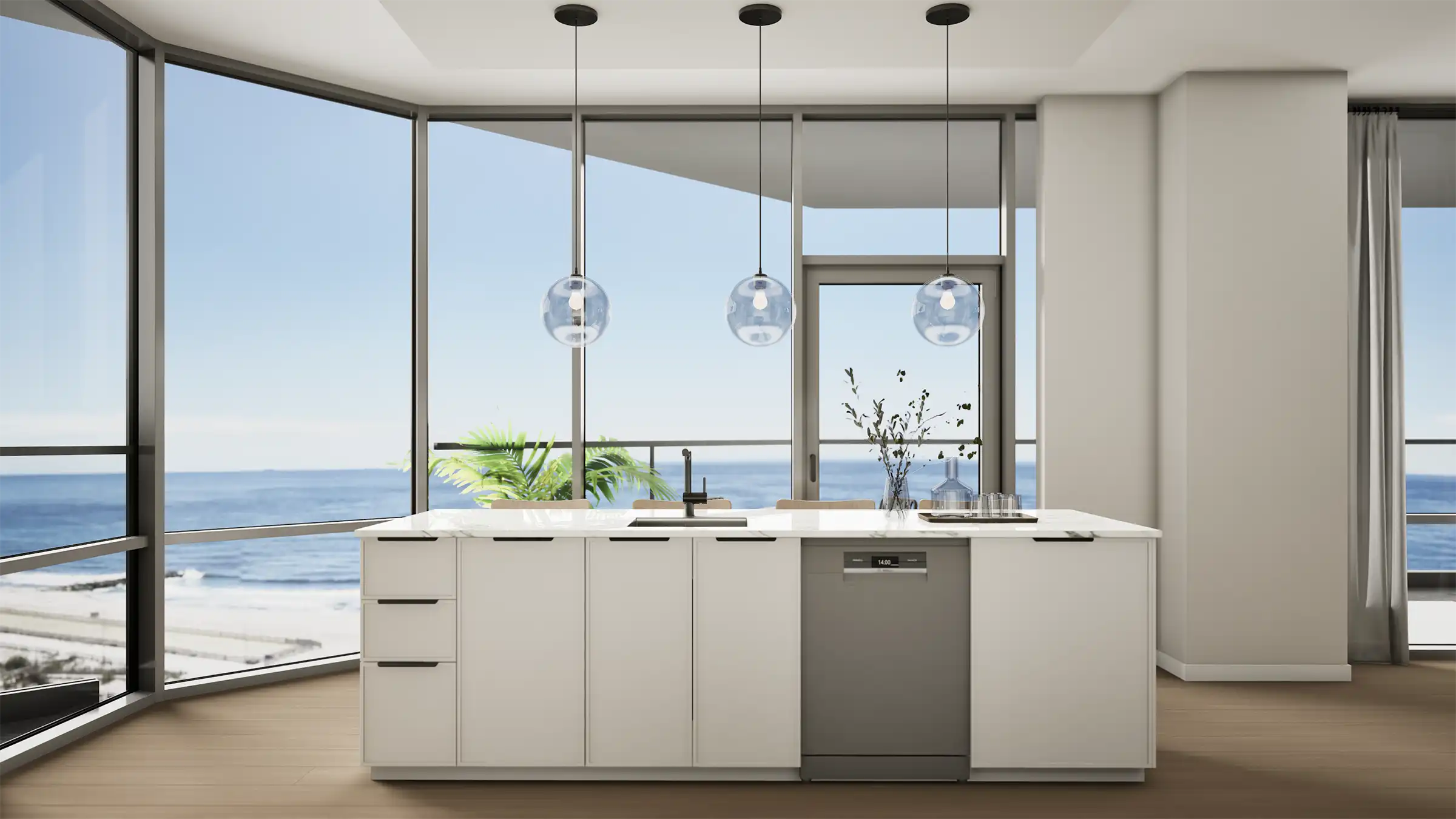
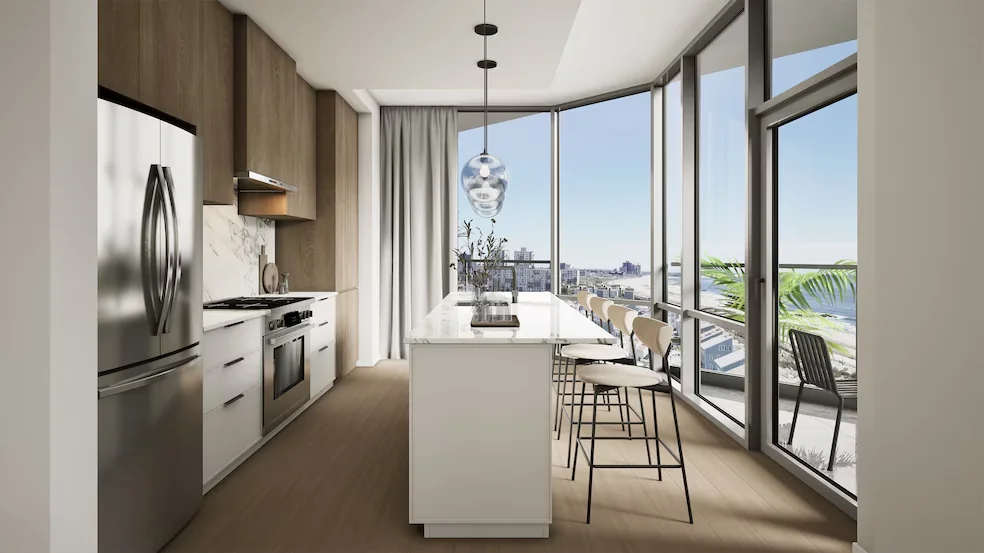
The location puts residents directly on the Atlantic, with walls of glass facing the ocean, designed by Ismael Leyva Architects to reflect the character of the shoreline. The Beach 67 St A Train station is right across the street, 24/7 and ADA-accessible, and NYC Ferry access connects to Brooklyn and Lower Manhattan. An elevated beachfront pool and sundeck, fitness center, workspaces, conference room, lounge, game room, and children's playroom make up the full amenities package. Residences include Dekton and Silestone countertops, Bosch appliances, and Kohler fixtures, and owner-occupants benefit from a special tax abatement. Lighthouse is built by Beechwood, with more than 10,000 homes built since 1985.

Drone Shot of The Tides and Ocean

For readers drawn to Rockaway's beachfront lifestyle who aren't ready to buy yet, The Tides offers ocean-view rentals in Arverne with studios to three bedrooms, a rooftop pool and sundeck, surfboard and bike storage, workspaces, fitness, lounge spaces, and A train access across the street. See their full amenities for details.

If you've decided that Rockaway's oceanfront lifestyle, transit access, and neighborhood potential fit what you want from apartment ownership, Lighthouse is a natural next step. Contact us to learn more about Lighthouse, or contact us about The Tides.


Discover the Urban Beach Town where coastal serenity meets city convenience.

There's a version of New York City where mornings start with ocean air instead of subway steam, where a five-minute walk gets you from your...
VIEW ARTICLE

Discover the Urban Beach Town where coastal serenity meets city convenience.

There's a version of New York City where mornings start with ocean air instead of subway steam, where a five-minute walk gets you from your front door to sand, and where the pace of the day is set by the tide instead of the clock. That neighborhood exists — and it's closer than you think.

Arverne Aerial Shot
Aerial Shot of Arverne by the Sea

Welcome to Arverne by the Sea, one of the Rockaways' most talked-about coastal communities. This is the first stop in our Discover Arverne series, where we're taking a closer look at the people, places, and everyday moments that make this neighborhood so special. Consider it your local's guide — the kind of insider knowledge that usually takes years to pick up, minus the years.

A Morning by the Ocean

Picture this: coffee in hand, boardwalk under your feet, the Atlantic stretching out in front of you before your workday has even started. That's an ordinary Tuesday in Arverne by the Sea.

From Lighthouse Beach Sixty-Seventh, the neighborhood's newest oceanfront address, some of the area's best everyday spots are just a few minutes away on foot — coffee shops, restaurants, a market, even a surf school. It's the rare New York City setup where you genuinely don't need a car to have a full life. 

Discover the neighborhood →

The Tides at Arverne by the Sea Beach
The Beach at Arvene by the Sea

Wellness by the Water

There's a reason "take a walk" is doctor's-office advice as old as time — and here, it's easy to actually follow. The American Heart Association has pointed to walking as one of the simplest ways to support heart and brain health, lower blood pressure, and build lasting energy, largely because it's low-impact and easy to stick with. When the boardwalk is your walking route, that advice stops feeling like a chore and starts feeling like part of the day. (Source: American Heart Association)

For residents who want more structure to their routine, the Rockaway YMCA sits right in Arverne by the Sea, offering indoor swimming, fitness facilities, group exercise, basketball, sauna, and family programming for every age group. It's quickly become one of the neighborhood's quiet anchors — and a big enough part of daily life here that it's getting its own spotlight in an upcoming post. Explore the Rockaway YMCA →

Coffee Culture on the Coast

Every neighborhood has a coffee order that says something about how people live there. In Arverne by the Sea, it's an iced coffee in hand, wetsuit half zipped, on the way to catch a few waves before work.

The Tides at Arverne by the Sea Locals Collective
Locals Collective

Locals Collective NYC captures that energy best — coffee, breakfast, and smoothies served with an easy, surf-community atmosphere that makes it a natural stop before the beach or the start of a workday. Visit Locals Collective →

On weekends, the boardwalk itself becomes part of the routine thanks to the MUGZ Coffee Pop-Up on Beach 67th, a seasonal cold brew stand that pairs perfectly with a morning walk by the water. Visit MUGZ →

And for a slower Sunday, Rockaway Roasters rounds things out with espresso drinks, fresh juices, and breakfast favorites — the kind of spot you linger at rather than rush through. Visit Rockaway Roasters →

Seaside Eats & Drinks

When the sun starts to dip, the neighborhood shifts gears from wetsuits to dinner reservations.

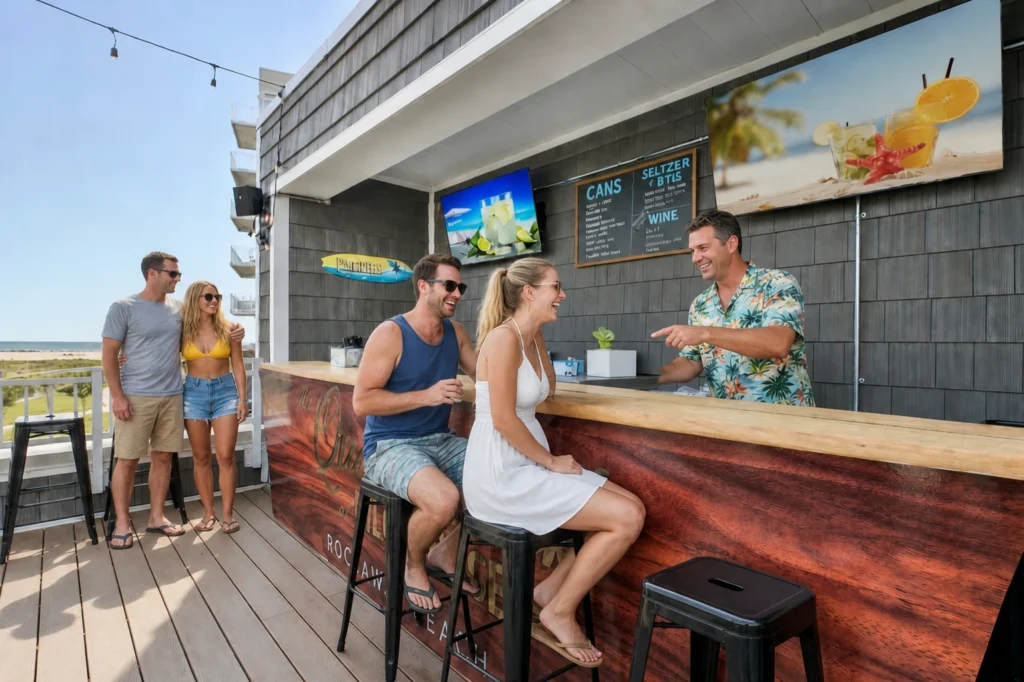
Rooftop View at Pilot House
Rooftop Bar at Pilot House
Pilot House Food
Lunch at Pilot House

Pilot House Bar & Grill has become the go-to gathering place near the waterfront — brunch, casual dinners, drinks, and sports nights that turn into standing weekly plans. Visit Pilot House →

A few minutes' walk away, Batesy's BBQ & Bar serves up wings, burgers, and cocktails for an easy, no-fuss dinner or game night close to home. Visit Batesy's →

And for something more low-key, the Rockaway Tiki Bar is where post-beach drinks and casual date nights happen without ever needing to leave the neighborhood. Visit Rockaway Tiki Bar →

Everyday Essentials, Within Reach

Coastal living sounds idyllic until you factor in the logistics — but Arverne by the Sea has quietly solved for that too. 

  • A full-service Stop & Shop covers the weekly grocery run, while 67 Fresh Market offers fresh produce and prepared foods just minutes from home.
  • For something to pair with dinner, Vino by the Sea is a boutique wine and spirits shop with thoughtfully curated selections from smaller wineries and distilleries.
  • And when the craving is strictly seafood, Fish Town brings the ocean straight to the table, with fresh catches available cooked to order.

It's a short list, but it adds up to something bigger: the everyday errands that usually eat up a weekend in the city can happen here in the time it takes to walk a few blocks.

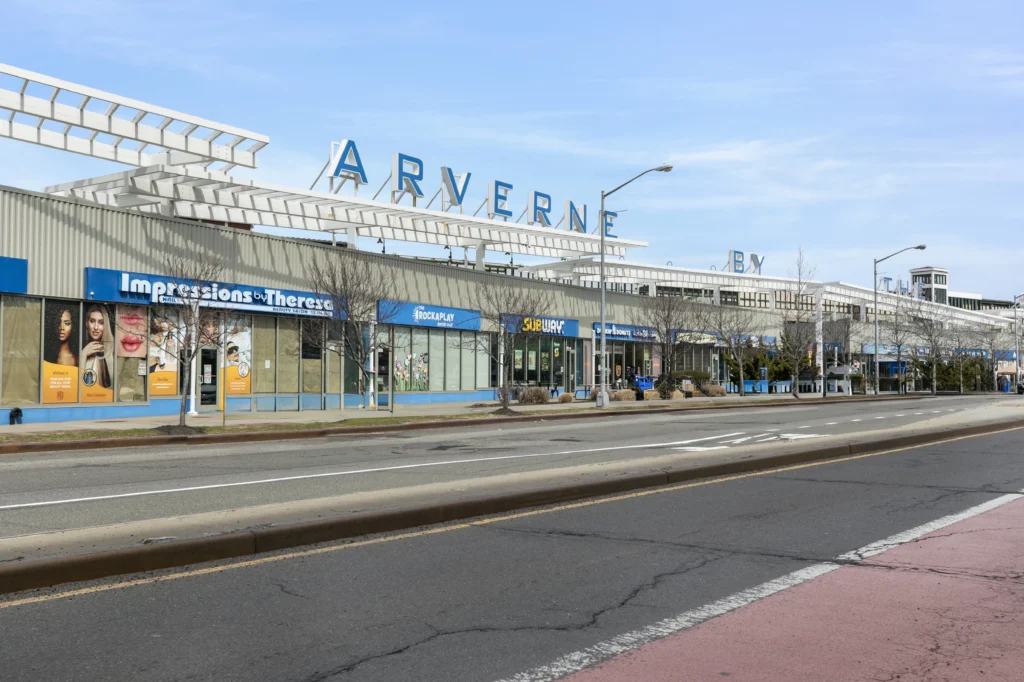
Arverne by the Sea Shops
Shops at Arverne by the Sea

Surf & Beach Life

Living this close to the ocean tends to turn "maybe I'll try surfing someday" into an actual weekend plan. Sierra Surf School and Locals Surf School both offer lessons for every skill level, from total beginners to kids' surf camps.

Surfer on the Beach in Arverne by the Sea
Surfers on the Beach at Arverne by the Sea

Breakwater Surf Co. keeps residents outfitted with boards, wetsuits, and rentals — no need to haul gear in from the city. Whether it becomes a weekly habit or a once-a-summer adventure, the option is always just a few blocks away, which is more than most New York neighborhoods can say.

Coastal Stays for Visiting Friends & Family

Part of what makes a neighborhood feel like home is having somewhere great to send guests when they visit — and Arverne by the Sea delivers there too. The Rockaway Hotel + Spa offers a stylish, resort-style stay just minutes away, complete with rooftop drinks, spa treatments, and pool time for an easy weekend escape.

Coming soon, the Jacob Riis Bathhouse will add a restored, historic oceanfront destination to the mix — blending iconic architecture with dining, gathering spaces, and modern beach-club amenities along the Rockaway shoreline. It's one more sign that this stretch of coastline is only getting more exciting.

Removed from the Noise, Connected to the City

The best-kept secret about Arverne by the Sea might be how easy it is to get to and from. The A train at Beach 67th Street offers direct, fully accessible service toward Queens and Manhattan, with connections across the wider subway system. For a more scenic option, the NYC Ferry Rockaway Route connects the neighborhood to Brooklyn Army Terminal and Wall Street/Pier 11 in Lower Manhattan. And for travel further afield, JFK International Airport is roughly 11 miles away, making business trips, vacations, and airport pickups refreshingly simple.

In other words: the ocean-town pace doesn't come at the cost of the city. You get both.

Two Ways to Call Arverne by the Sea Home

Same beach. Same neighborhood. Two distinct ways to experience it.

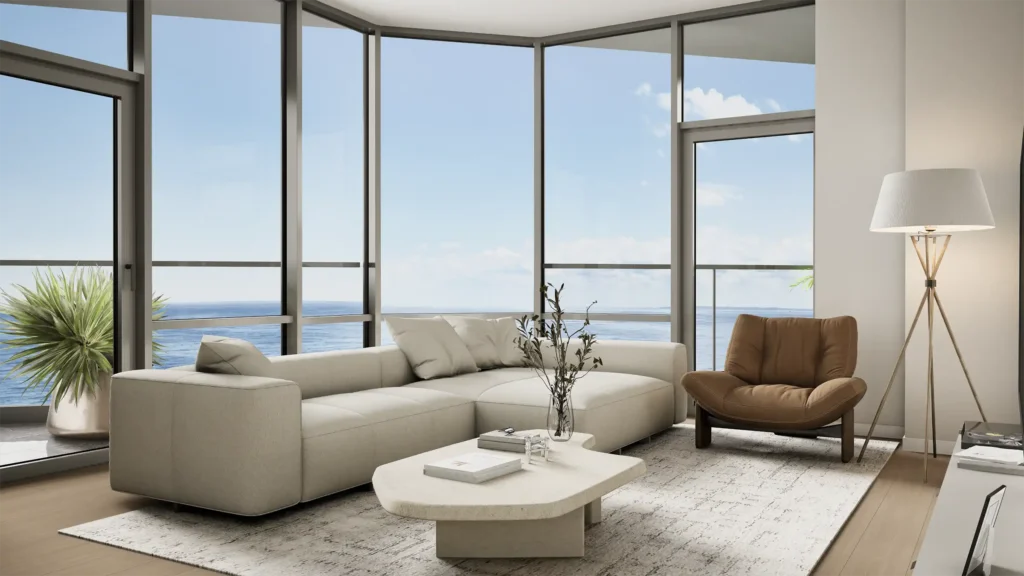
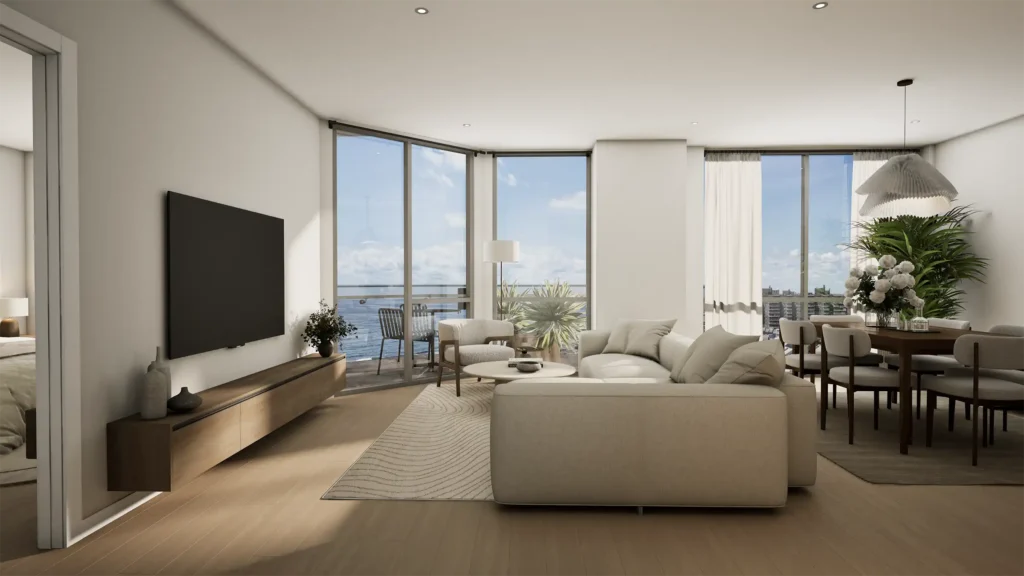
Living Room Rendering Unit 8 at Lighthouse Beach 67th

For those ready to buy, Lighthouse Beach Sixty-Seventh offers oceanfront condominium residences with modern layouts, resort-style amenities, and endless views — all just steps from the water. Explore Lighthouse →

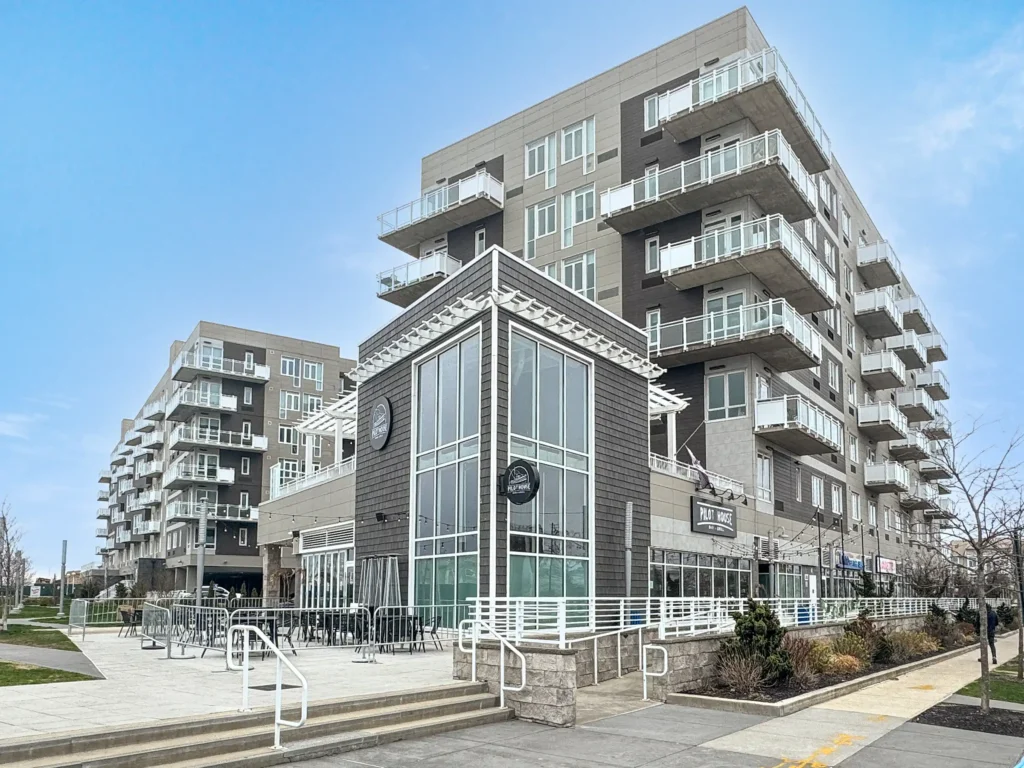
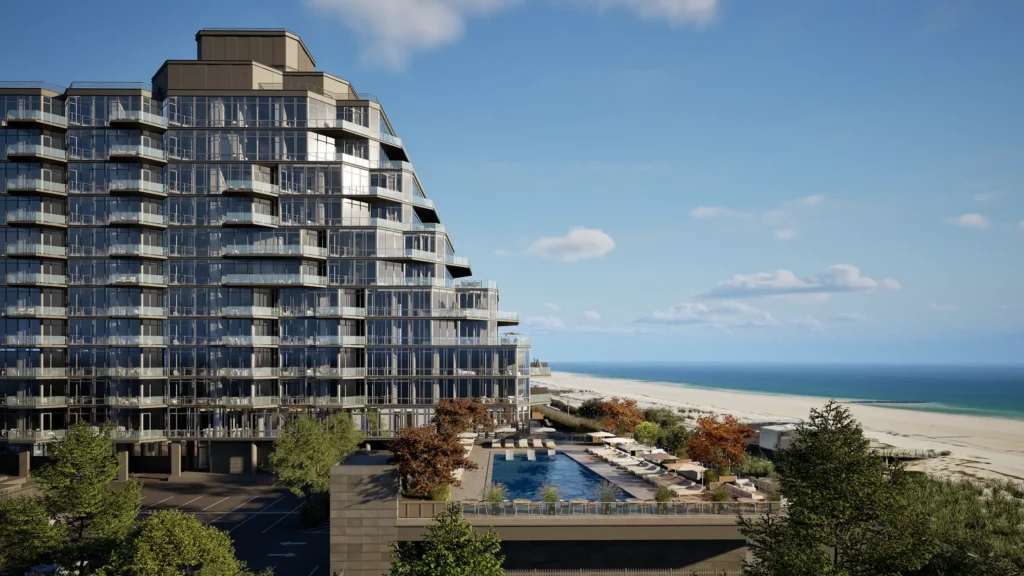
Tides exterior Pilot House

For those looking to lease, The Tides at Arverne by the Sea offers studios through three-bedroom residences with a pool deck, fitness center, game room, and on-site parking, all within the community. See Availability →

More to Discover

This is only the beginning of the Discover Arverne series — up next, we're taking a closer look inside more of the local businesses, seasonal moments, and everyday stories that make this neighborhood what it is.

And later, we're bringing the community together in person, with a blog party celebrating Arverne by the Sea alongside the local vendors who make it feel like home. Stay tuned for details.

In the meantime, if a morning walk on the boardwalk sounds like a better start to your day than a subway platform, come see Arverne by the Sea for yourself.


Save the Date: September 26th
1st Annual Block Party by the Sea
6804 Tides Road | 2–5 PM

Live music, local eats, games, and prizes — we're bringing the Arverne by the Sea community together for a day on the block. Bring the family and join us. See what's in store.

How I conquered Rockaway Beach in a day, surfing and eating along the boardwalk

I was flying. Suspended between the ocean spray and the open sky facing the Rockaway shore line, I managed to stand up on a surfboard...
VIEW ARTICLE

How I conquered Rockaway Beach in a day, surfing and eating along the boardwalk

I was flying. Suspended between the ocean spray and the open sky facing the Rockaway shore line, I managed to stand up on a surfboard for the first time.

"Yeeeeeeehooooo!" yelled my instructor, Kwame LaBassiere, as he watched from the water on a recent Tuesday morning.

Then came the inevitable: I went under, salt burning my nose, the leash yanking the board sideways around my ankle. My hands and feet went numb in the cold Atlantic water, but I dragged myself up, pulled the board back out and went back in.

LaBassiere changed how I looked at the ocean before I even caught a wave. He told me he started surfing here in Rockaway Beach two days after the Sept. 11, 2001, terrorist attacks, trying to process the guilt of missing his scheduled workday at the Twin Towers. The ocean became his sanctuary, the place he could let go. Now he sits on the board of the International Surf Therapy Organization.

Newsday travel writer Carissa Kellman gets a surfing lesson from...
Newsday travel writer Carissa Kellman gets a surfing lesson from head surf instructor Kwame LaBassiere of New York Surf School in Rockaway Beach. Credit: Randee Daddona

Out in the water, listening to his steady cues, paddle, pop up, knees bent, my brain completely cleared. There's no choice: commit or wipe out.

By my fourth try, I was up and riding. For a few fleeting seconds, the entire world narrowed down to that one moving piece of water under my feet.

I was experiencing a century-old feeling. Hawaiian Olympic champion Duke Kahanamoku visited Rockaway after the 1912 Games, sparking its surfing identity. Standing on that board, wobbling, mocked by seagulls, it finally clicked for me. Whatever Kahanamoku felt, whatever Kwame felt paddling out two days after the worst day of his life, I caught a small piece of it too.

You don't need to be good at surfing. You just need to get on a surfboard and into the water to understand why people keep coming back to Rockaway Beach.

Learning to surf

Rockaway is New York City's only legal surfing beach, 7 miles of oceanfront where locals, Manhattanites and visitors alike come to work the break, lounge on the sand and hit the boardwalk for live music, bars and food. It's open to beginner, intermediate and expert surfers, with dedicated zones between Beach 66th and Beach 70th streets, Beach 87th and Beach 92nd streets, and Beach 110th and Beach 111th streets. Kahanamoku's legacy is still recognized today with Beach 38th Street co-named "Duke Kahanamoku Way."

Rockaway is New York City's only legal surfing beach.
Rockaway is New York City's only legal surfing beach. Credit: Randee Daddona

I booked a 1-hour session ($110) with New York Surf School (100 Beach 69th St.; newyorksurfschool.com; 718-916-5359), the city's longest-running. The lesson includes the surfboard and wetsuit. Just wear a bathing suit and show up.

Lessons are available in 1-, 1½- and 2-hour blocks, though LaBassiere notes that most first-timers stand up within an hour, so don't be intimidated. Charging through the breaks is the perfect introduction to Rockaway's vibrant, resilient spirit. Plus, after burning 500 calories in the ocean, my appetite was perfectly primed for the boardwalk food scene.

Walk the boardwalk and eat your way through it

The boardwalk runs 5½ miles from Beach Ninth Street in Far Rockaway out to Beach 126th Street in Rockaway Park. The concessions cluster around the middle stretch between Beach 86th and Beach 106th Street, which is where the spots below are. Public restrooms are spaced out along the boardwalk near the main concession area.

There are plenty of concessions on the boardwalk near Beach...
There are plenty of concessions on the boardwalk near Beach 97th Street. Credit: Randee Daddona

Caracas Arepa Bar

Beach 106th Street; caracasarepabar.com

The pabellĂłn arepa ($15) with shredded beef, beans and plantains is a standout, and the frozen sangrĂ­a ($14.50) is a staple on hot days. Live music Fridays through Sundays adds to the atmosphere.

Fill up on arepas at Caracas Arepa Bar, which also...
Fill up on arepas at Caracas Arepa Bar, which also boasts live music Friday through Sunday. Credit: Randee Daddona

Brothers

Beach 106th Street; instagram.com/brothersrockaway

A lighter option with organic smoothies and sandwiches. The kimchi grilled cheese ($12), smoothies ($13-14) and juices ($8-9) are a good break from heavier beach food.

Rippers

Beach 86th Street; eatrippers.com
A classic boardwalk hangout with double smash cheeseburgers ($12), cheese fries ($10) and beachy cocktails ($12). Picnic tables offer a spot to settle in and enjoy the live music and DJs.

Grab one of the signature burgers at Rippers.
Grab one of the signature burgers at Rippers. Credit: Randee Daddona


Tacoway Beach

3-02 Beach 87th St.; tacowaybeach.com

One of the most popular stops just off the boardwalk and inside nearby Rockaway Beach Surf Club at Beach 87th Street. Fish tacos come two per order ($13) and are topped with cabbage, guacamole and a spiced mayo. Expect a line, especially on weekends, but it moves steadily.

Take a break from the sand

Bungalow Bar

3-77 Beach 92nd St.; bungalowbarny.com; 718-945-2100

For a sit-down meal, this spot is found along Jamaica Bay with waterfront and skyline views. Seafood and American classics, including sriracha oysters ($14) and a creamy seafood pasta ($34), plus a full bar and frozen drinks ($14). Works well for a late lunch or early dinner.

Settle in for a late lunch of creamy seafood pasta and sriracha...
Settle in for a late lunch of creamy seafood pasta and sriracha oysters at Bungalow Bar. Credit: Randee Daddona

End the night like a local

Connolly’s Bar

1-55 Beach 95th St.; connollysrbny.com; 718-474-2374

Off the boardwalk and cash only, Connolly's has been a neighborhood fixture for decades, no frills, filled with regulars. Get the classic piña colada. It's a good look at Rockaway beyond the beach crowd.

For something more polished to close out the night, head to the rooftop at The Rockaway Hotel (108-10 Rockaway Beach Dr.; therockawayhotel.com; 718-474-1216) for sunset drinks and live music with the ocean in view. If you're looking to stay the night, rates start at $275 per night.  

Getting there

If you're driving, expect a 1- to 2-hour trip depending on summer traffic. The Belt Parkway gets you to either the Marine Parkway or Cross Bay Bridge, and both drop you onto the peninsula within minutes.

Parking is competitive through the summer. There's a free lot on Beach 95th Street that tends to fill by 10 a.m., and free street parking along the residential blocks and Beach Channel Drive on a first come basis. You can also park at Jacob Riis Park (157 Rockaway Beach Blvd.) for $20 a day.

To skip traffic entirely, take the Long Island Rail Road to Jamaica, transfer to the Far Rockaway branch, and ride it to the last stop. From there, take the Q22 bus ($2.90) to Beach 90th Street or take the A train straight to the beach.

By Carissa Kellman

carissa.kellman@newsday.com

Newsday travel reporter Carissa Kellman uncovers adventures, bites and hidden spots on Long Island and beyond, with the same drive that once kept her courtside at high school sports games.

Should a Family Buy an Apartment or a House in New York City?

There are a lot of options to weigh when it comes to choosing an apartment vs. a house in NYC for families, and which makes...
VIEW ARTICLE

Should a Family Buy an Apartment or a House in New York City?

There are a lot of options to weigh when it comes to choosing an apartment vs. a house in NYC for families, and which makes more sense depends entirely on your family's priorities, budget, and how you actually plan to live. Whether you are a first-time buyer or someone upgrading for a growing household, the decision involves more layers than almost anywhere else in the country. Neighborhoods, property types, building rules, school zones, commute times, and long-term value all factor in before you ever sign a contract.

For families specifically, the stakes feel even higher. School districts, outdoor space, safety, community, and the simple need for enough room to actually live all pull in different directions at once. This guide breaks down everything a family needs to understand before deciding between an apartment and a house in NYC, so you can make the choice that actually fits how your family lives.

Aerial View of New York at Dusk

What's actually available in the NYC market

New York City's housing inventory looks nothing like the rest of the country. Single-family homes make up a very small slice of total inventory, particularly in Manhattan and the denser parts of Brooklyn and Queens. Apartments dominate, and within that market, there are important distinctions. Co-ops make up the majority of the city's apartment stock, with condos accounting for most of the remainder. Understanding what you are actually purchasing in each case matters enormously, especially for families thinking about flexibility, resale, and long-term stability.

When you buy a co-op, you are not buying real property. You are purchasing shares in a corporation that owns the building, and those shares entitle you to occupy a unit. Boards have significant power over who can buy, how much financing you can use, and whether you can sublet. Condos give you true ownership of your unit as real property, with more flexible rules and no board approval required to sell. Houses, including brownstones, townhouses, and single-family homes, are far more common in the outer boroughs than in Manhattan and come with an entirely different set of financial realities.

The real cost comparison for homes and apartments

Cost is almost always the first thing families want to understand, and it is more nuanced than a simple price-per-square-foot comparison. Here is how the major factors break down:

  • Purchase price: Houses generally carry a significant price premium compared to apartments of similar square footage, particularly in Manhattan and sought-after Brooklyn neighborhoods. Co-ops often offer the most square footage per dollar, largely because board restrictions limit the buyer pool.
  • Down payment and board requirements: Co-ops typically require a down payment of 20 to 25 percent or more, along with strict debt-to-income ratios and liquid asset requirements. Condos follow more standard mortgage guidelines. Houses use conventional financing with no board involved.
  • Monthly carrying costs:
  • Co-ops: One monthly maintenance charge covers property taxes, building expenses, and the building's underlying mortgage, all bundled together.
  • Condos: A separate common charge covers building expenses, while property taxes are paid individually.
  • Houses: Mortgage, property taxes, insurance, and all maintenance costs are paid separately by the owner, with no shared building infrastructure to offset any of it.
  • Closing costs: Condos and houses carry higher closing costs than co-ops, including attorney fees, title insurance, transfer taxes, and the mansion tax for higher-priced purchases.
  • Property taxes and abatements: New condo developments sometimes benefit from tax abatement programs that significantly reduce the property tax burden for a set number of years. Houses qualify for STAR exemptions for primary residents.
  • Long-term equity: Both property types have historically appreciated in NYC. Condos and houses generally offer more liquidity and exit flexibility than co-ops, which require board approval even at resale.
Empty streets in West Village at New York Manhattan, USA

Space, layout, and what families need

Square footage matters, but layout and function matter just as much. A three-bedroom apartment with a galley kitchen and no outdoor space lives very differently than a three-bedroom house with a yard, a basement, and room to grow. Houses offer private outdoor space, multiple levels, more storage, and the freedom to renovate without anyone's approval. For families with multiple children, those advantages are real and significant, but they come with trade-offs in maintenance, cost, and complexity.

Well-designed condo buildings can close much of that gap. When thinking about buying an apartment with kids in NYC and what amenities matter most, the list consistently includes dedicated children's play areas, secure building access, shared outdoor space, and proximity to other families. Buildings with those features give children structured space for play and social development while giving parents meaningful peace of mind. The safety infrastructure of a well-run condo building — secured entry, intercom systems, and on-site staff — offers a layer of daily reassurance that standalone houses require families to replicate on their own.

Multi-generational families may find a different answer entirely. Townhouses and two-family homes in the outer boroughs can accommodate extended family under one roof while preserving privacy, often more cost-effectively than maintaining two separate apartments.

Where you live shapes how you live

  • Manhattan is overwhelmingly apartment-dominated. Families looking for houses will primarily focus on Brooklyn, Queens, and Staten Island, where residential neighborhoods with actual single-family and multi-family homes exist at a range of price points.
  • School district zoning is tied directly to your address. For families prioritizing public school quality, the choice between an apartment and a house may ultimately hinge on which side of a zoning line a specific address falls on. Research this before you fall in love with a property.
  • Neighborhoods like Park Slope, Carroll Gardens, Astoria, Forest Hills, and Bay Ridge each have distinct mixes of apartment and house inventory, different school reputations, and different price points. None is right for every family.
  • Denser, apartment-heavy neighborhoods tend to offer better walkability to parks, playgrounds, libraries, and pediatric services. House-heavy neighborhoods often trade some of that walkability for private outdoor space and quieter streets.
  • Apartment buildings tend to foster community in ways that benefit families. Neighbors who know each other's children, shared spaces that create regular contact, and the cultural diversity that comes with concentrated urban living can meaningfully enrich children's social development.

Family Living Meets the beach, and the city.

Knowing whether to buy or rent in New York City can seem to be a difficult choice, especially for a family. Experience the best of both with the properties at Lighthouse Beach Sixty-Seventh. 

Explore Lighthouse Properties
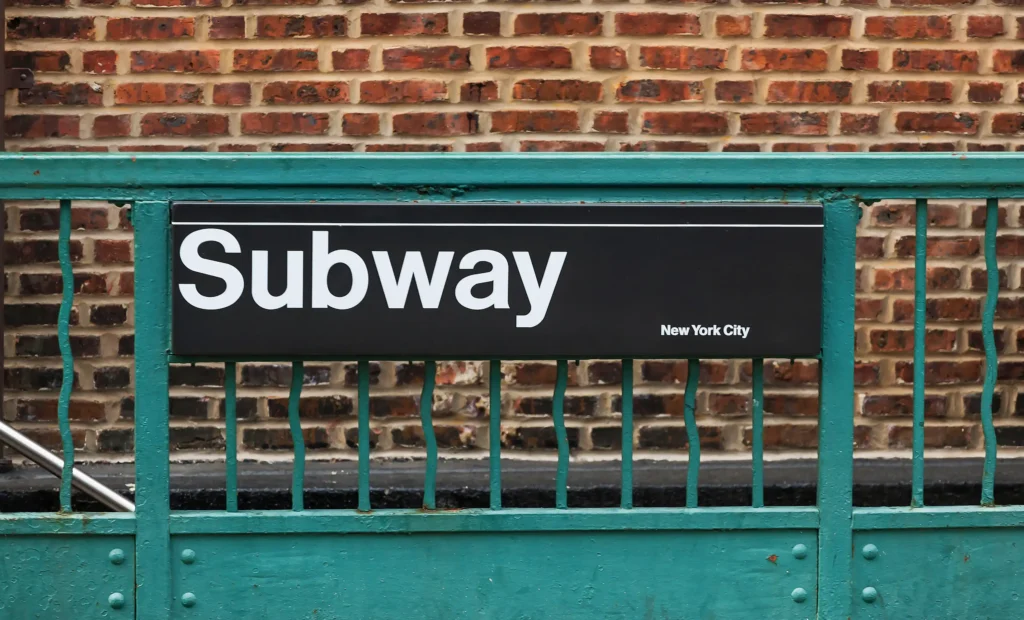
Subway sign in New York City

Commute, transit, and daily logistics

Transit access is one of the defining factors in quality of life for NYC families. Buildings in transit-rich parts of Manhattan, Brooklyn, and Queens put subway stations, buses, and ferry connections within walking distance, which for families with two working parents and school-age children is not a luxury but a practical necessity.

Outer borough neighborhoods with more house inventory are not automatically transit-poor, though. Some of the most transit-connected communities in the city happen to be in Queens and Staten Island, where dedicated subway stops, ferry routes, and bus lines bring residents within comfortable reach of Manhattan even from genuinely residential neighborhoods. The trade-off is usually time: more square footage and a private yard in exchange for a longer commute. Parking is also worth factoring in. Houses typically include a driveway or garage, while apartment owners in most NYC neighborhoods either pay for parking separately or do without a car entirely.

Maintenance and the time vs. money trade-off

In a co-op or condo, structural and exterior maintenance falls to building management. A leaking roof or failed boiler is someone else's problem to solve, at no direct out-of-pocket cost beyond what your monthly charges already cover. House ownership transfers that entire burden to you: roof, foundation, HVAC, plumbing, electrical, and landscaping all require either your time, your money, or both. For families already managing demanding schedules, the unpredictability of house maintenance costs can be genuinely disruptive. The monthly predictability of a condo common charge is not glamorous, but it is a budget line you can actually plan around.

Investment, resale, and long-term thinking

  • Both apartments and houses have historically appreciated in NYC, though the pace varies considerably by property type, borough, and market timing.
  • Condos and houses offer cleaner exit strategies, with no board approval required and no restrictions on who can buy.
  • Co-ops introduce friction at every stage, including resale, which can slow the process and limit your buyer pool.
  • Subletting flexibility matters more than buyers often initially realize. Condos and houses allow much greater rental latitude than co-ops, which is valuable if your circumstances change.
  • A house with a rentable unit can help meaningfully offset carrying costs, which matters for families stretching their budget.
  • Think about how your space needs will evolve as children grow and family situations change. The property type that lets you adapt without penalty is worth weighing against the one that simply offers the most room today.

Who is this decision really for?

  1. Young families with an urban lifestyle: A well-appointed condo with a children's playroom, outdoor space, and proximity to parks often offers the best balance of city convenience and family comfort without taking on the maintenance of a full house.
  1. Families who need room to spread out: A townhouse, brownstone, or multi-family home in Brooklyn or Queens gives the square footage, storage, and private outdoor space that most apartment units simply cannot match.
  1. Multi-generational households: A two-family home or large townhouse in the outer boroughs can bring extended family under one roof while preserving separate living spaces, often more cost-effectively than two Manhattan apartments.
  1. Families prioritizing community and security: A condo in a well-run building with strong amenities and attentive management can deliver the lifestyle many families want without the demands of house ownership.
  1. Families who need flexibility: Those anticipating career changes or potential relocation will generally find that condos offer better resale liquidity and subletting options than co-ops.

Key questions to ask before you decide

The apartment vs. house in NYC for families question is rarely straightforward, but working through the right questions brings real clarity. Before committing, answer these honestly:

  1. How long do you realistically plan to stay? Buying only makes financial sense if you plan to hold for several years at minimum.
  2. How important is private outdoor space versus shared building amenities for how your family actually lives?
  3. Are you prepared, financially and logistically, for ongoing house maintenance?
  4. Does your family's commute align better with a transit-dense apartment neighborhood or a more residential outer-borough neighborhood?
  5. How much flexibility do you need to sublet, renovate, or sell without board involvement?
  6. Have you confirmed the exact school zone for the address you are considering, not just the general neighborhood?
  7. Have you modeled the full monthly cost, including mortgage, taxes, fees, insurance, and reserves, for each option?
  8. Is this a long-term purchase, or a stepping-stone you may need to sell or rent out within five to seven years?

Common mistakes NYC family buyers make

  • Underestimating monthly carrying costs: The mortgage is only one part of the picture. Co-op maintenance charges, condo common charges, property taxes, insurance, and reserves can add substantially to your monthly outlay. Model the full number before you commit.
  • Ignoring the co-op approval process: Boards reject buyers, sometimes for opaque reasons. This affects purchase timelines and certainty of close, particularly for buyers with non-traditional income or assets held in non-liquid form.
  • Skipping the home inspection: For houses especially, this is non-negotiable. Deferred maintenance on a brownstone or older single-family home can mean significant repair bills within the first years of ownership.
  • Treating school zoning as a secondary consideration: Zoning lines can split a single block. Confirm the district assignment for the specific address before making an offer.
  • Overweighting space per dollar: The home with the most square footage for your budget is not automatically the best choice. How a space actually functions for your family's daily routines often matters more than the raw numbers.

Working with the right team

Buying in NYC requires professionals who actually know this market. A real estate attorney is not optional here — New York requires one by law, and the right attorney will catch board restrictions, review co-op financial statements, and flag issues in a purchase contract before they become your problem. A buyer's agent with specific co-op and condo experience matters too; the approval process, board package requirements, and deal timelines are different enough from standard residential transactions that general experience does not substitute. Round out the team with a mortgage broker familiar with co-op financing and the financial documentation condos require — they will save time and prevent the kind of last-minute financing surprises that derail deals in this market.

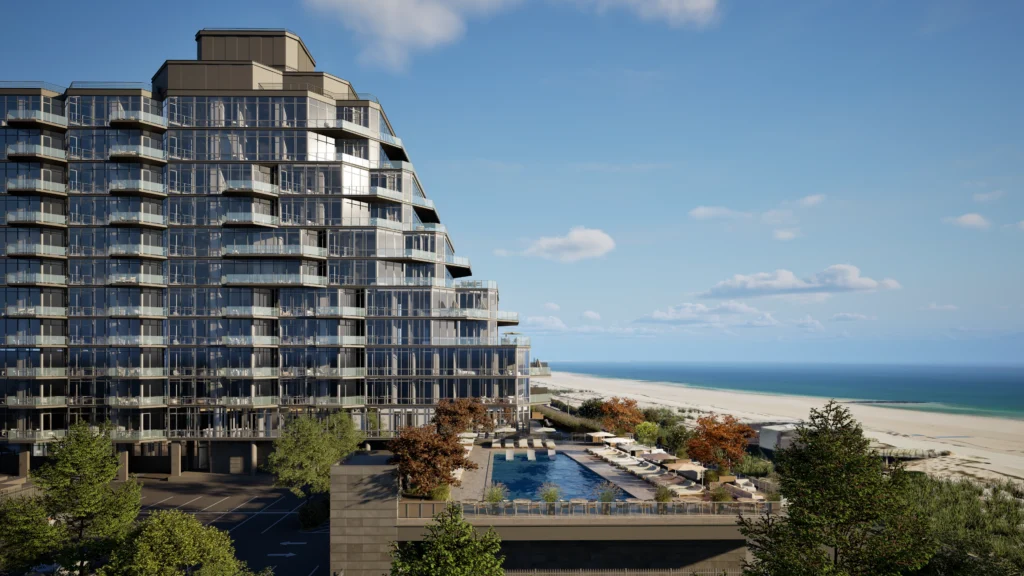
Lighthouse Exterior Hero 1
The Lighthouse

The best of both worlds at Lighthouse Beach Sixty-Seventh

For families who want the low-maintenance ease and community feel of condo living but also want genuine outdoor space, natural light, and breathing room, there is a third path worth considering. Lighthouse Beach Sixty-Seventh in Arverne by the Sea, Queens, is a new oceanfront condominium development designed by Ismael Leyva Architects. With floor-to-ceiling walls of glass, Dekton and Silestone countertops, Bosch appliances, Kohler fixtures, and finishes that draw from the palette of sand and sea, the residences here are built with a level of craftsmanship and attention to detail that stands apart from typical new construction. The building was designed to feel genuinely connected to its waterfront setting, and the result is a living experience unlike anything else along the Rockaway shores. For buyers who have weighed the average rent in NYC against the long-term value of ownership, the incredibly low property taxes here— supported by a special tax abatement for owner-occupants —combined with new-construction quality, change the financial picture in meaningful ways.

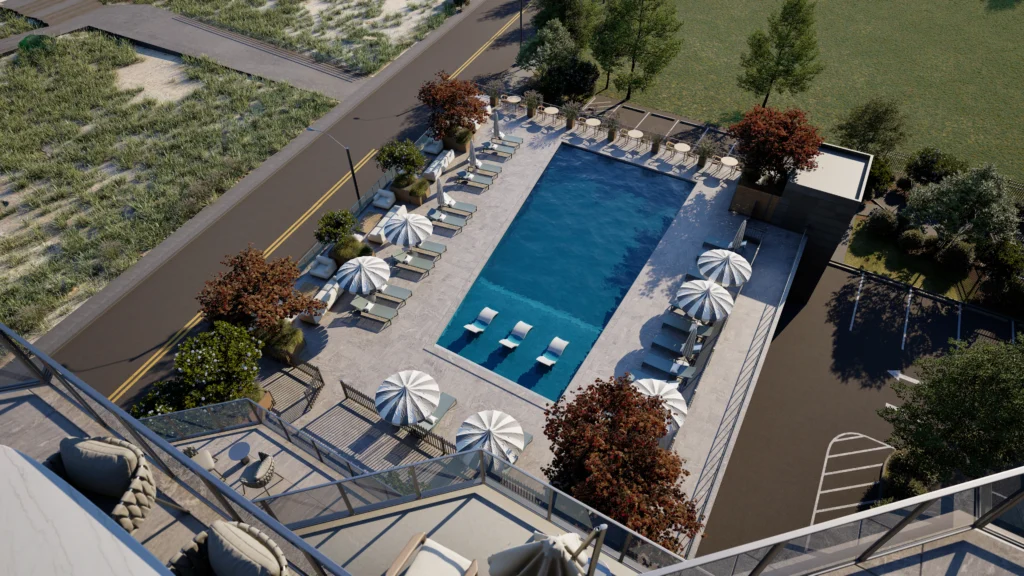
Lighthouse Amentities 15
Pool Deck

The amenities at Lighthouse Beach Sixty-Seventh speak directly to what families prioritize: a children's playroom, an elevated beachfront pool and sundeck, a state-of-the-art fitness center, private workspaces, a conference room, a lounge, and a game room. The location is also genuinely transit-connected, with the Beach 67th Street A train station steps away, multiple MTA bus lines serving the area, and New York Waterway ferry access to Brooklyn and Lower Manhattan. JFK International Airport is only 11 miles away. The boardwalk, Locals Collective Café, the Rockaway Tiki Bar, Pilot House, and a surf culture anchored by Breakwater Surf Co. give this community a sense of place that New York City homes in denser neighborhoods rarely offer.

The right property type matters as much as the right location. Arverne by the Sea is also among the lowest-crime communities in Queens — a meaningful factor for families evaluating where to put down roots. For families looking for a primary residence with room to grow, new-construction craftsmanship, and a true community setting, Lighthouse Beach Sixty-Seventh is worth a serious look. Learn more about the properties available.

Long Island Exploration Guide

What makes Long Island worth exploring Long Island is one of those places that keeps surprising you. Stretching more than 100 miles into the Atlantic...
VIEW ARTICLE

Long Island Exploration Guide

What makes Long Island worth exploring

Long Island is one of those places that keeps surprising you. Stretching more than 100 miles into the Atlantic Ocean, it packs an unlikely mix of experiences into a single region such as barrier island beaches, Gilded Age estates, working farms, maritime villages, and some of the best seafood on the East Coast. It runs from the dense suburban communities of Nassau County all the way to the quiet eastern tips of the North and South Forks, with plenty of character in between. And with the Long Island Rail Road connecting Penn Station directly to towns across the island, it's never been easier to get out here, whether you're coming for a day or staying for the weekend.

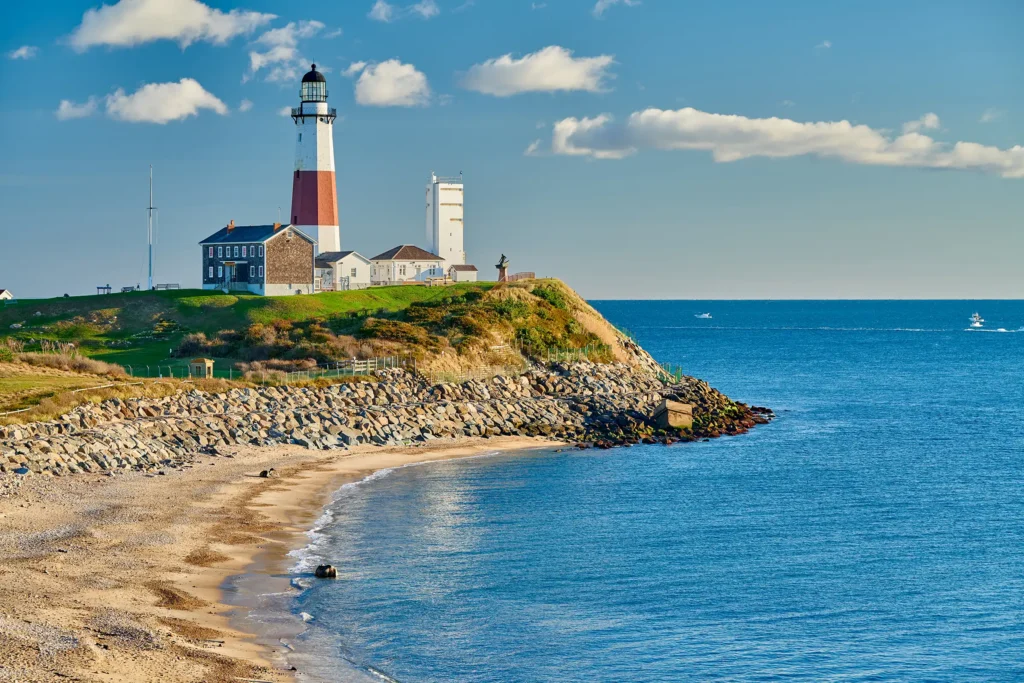
Montauk Lighthouse

Key takeaways

  • Long Island spans over 100 miles and offers beaches, historic estates, wine country, and maritime villages all within one region
  • Each area has its own identity: The Gold Coast North Shore, the barrier island South Shore, and the agricultural East End all offer different experiences
  • The best time to visit depends on what you want: summer for beaches, fall for vineyards, winter for seal watching
  • A car is recommended for getting the most out of the island, though the LIRR makes many destinations reachable without one
  • Beechwood Homes offers four communities on Long Island: The Waterways (55+, South Shore waterfront) and Country Pointe Preserve (55+, central Suffolk) for buyers who want to make the island home; The Selby and Vanderbilt in central Nassau for those who prefer luxury rental living steps from Eisenhower Park and easy access to the city

Getting to and around Long Island

The LIRR is your friend, especially if you're coming from New York City. It runs regularly to destinations like Montauk, the Hamptons, and Port Jefferson, meaning you don't necessarily need a car to get started. That said, if you want to explore beyond the train-accessible hubs, a car makes a real difference. Many of the island's best beaches, nature preserves, farm stands, and wineries aren't within walking distance of any station. One practical note: summer weekends on the Long Island Expressway (I-495) can be genuinely brutal, particularly Friday evenings heading east and Sunday afternoons coming back. Leave early if you can. The island's linear geography actually works in your favor for planning — you can build a straightforward route from west to east, or zero in on a single region without too much backtracking.


The North Shore: Gold Coast mansions and hidden beaches

The North Shore has a nickname that's stuck for good reason. Known as the "Gold Coast," this stretch of coastline was where New York's wealthiest families built their estates during the Gilded Age, and a surprising number of those properties are still worth visiting today. Caumsett State Park in Lloyd Neck was once the Marshall Field estate, and it now offers miles of hiking trails, freshwater fishing, and sweeping views of Long Island Sound. Old Westbury Gardens is another standout, a preserved English manor house set on 160 acres of formal gardens that open to the public each season.

Beyond the estates, the North Shore has a quieter, less crowded beach scene compared to the South Shore. Long Island Sound beaches tend to have calmer water, which makes them a good pick for a day trip. And if you're interested in history that goes beyond mansion tours, Garden City's Museum Row is worth a dedicated stop. The Cradle of Aviation Museum does a genuinely impressive job of telling the story of Long Island's role in early flight, from the Wright brothers era through Charles Lindbergh's preparations for his transatlantic crossing and beyond to the Apollo program. It sits alongside the Long Island Children's Museum and the Nassau County Firefighters Museum, all within the same campus on the former Mitchel Field site — meaning you can spend a full morning or afternoon across several institutions without getting back in the car.


The South Shore: barrier islands and classic beach days

If you picture a classic Long Island beach day, you're probably picturing the South Shore. This is where a chain of barrier islands sits between the Atlantic Ocean and the Great South Bay, forming one of the most recognizable stretches of coastline in the Northeast. Jones Beach State Park is the anchor of it all — wide white sand, a long boardwalk, and a summer concert venue that draws big names every season. It's also one of the most visited beaches in the country, so managing your expectations about parking in peak season is worth it.

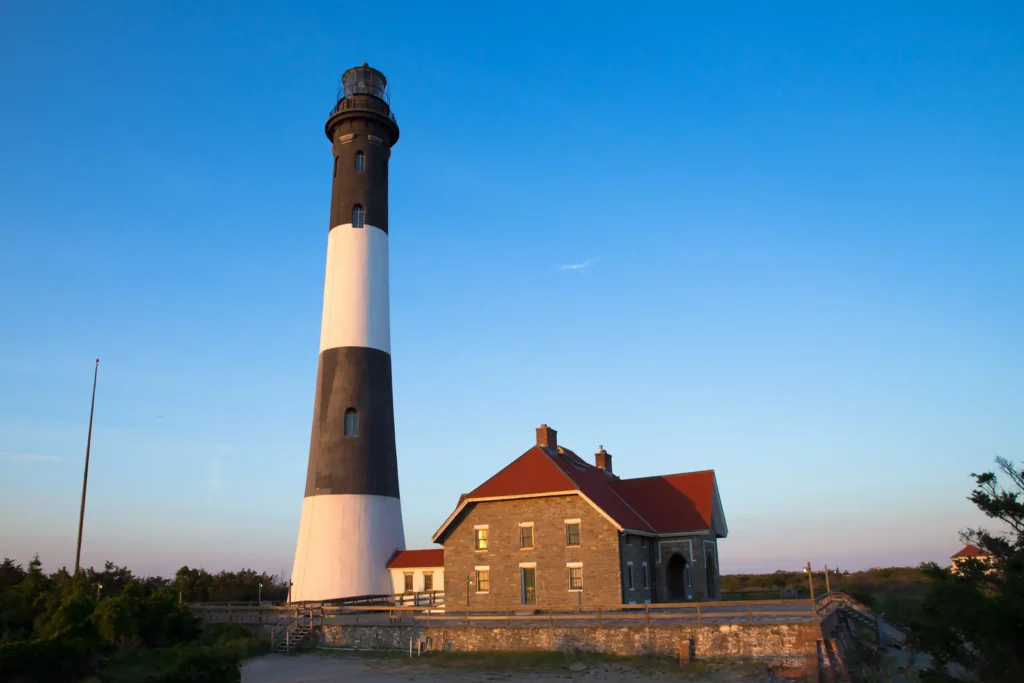
For something a little different, Fire Island National Seashore offers a completely car-free experience. The only way in is by ferry from Bay Shore or Sayville, which immediately changes the atmosphere. Once you're there, you'll find pristine beaches, the historic Fire Island Lighthouse, and trails through the Sunken Forest. Back on the mainland, the Great South Bay itself is worth exploring — it's popular for boating, kayaking, and clamming, and reflects the kind of working waterfront culture that has defined this part of Long Island for generations.


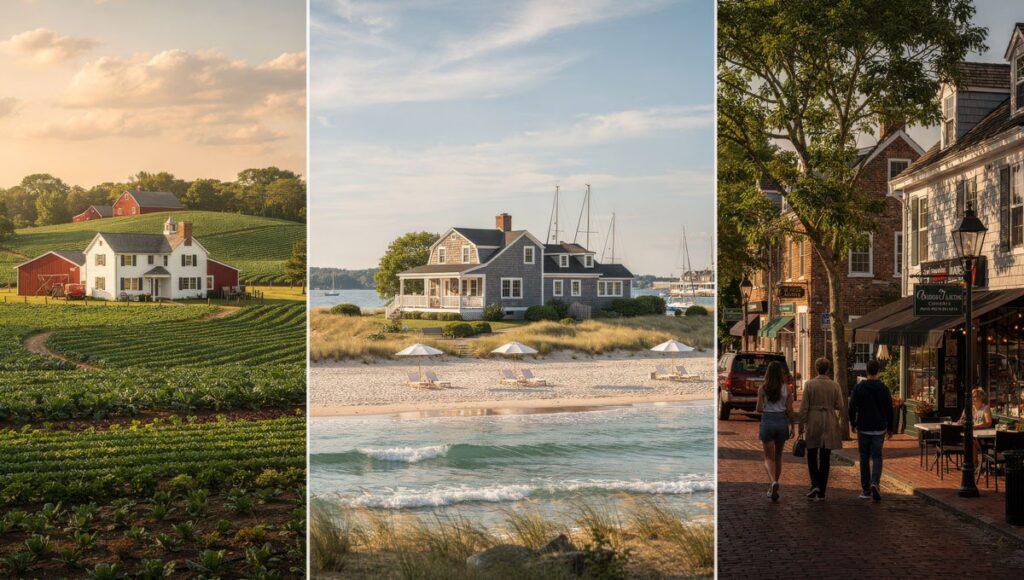
The Hamptons Areas

The East End: Hamptons, farmland, and the Forks

The East End is really three distinct experiences depending on which fork you take.

The Hamptons (South Fork)

  • The South Fork is anchored by a string of well-known villages, including Southampton, East Hampton, Bridgehampton, and Sag Harbor — each with its own feel, from polished and resort-like to genuinely historic and walkable.
  • Coopers Beach in Southampton consistently earns a spot on national best-beaches lists, and for good reason. The sand is fine, the water is clean, and the setting is hard to beat.
  • Sag Harbor is worth a dedicated afternoon: independent bookstores, good restaurants, and a whaling museum that tells the story of the village's maritime past without feeling like a tourist trap.

Montauk ("The End")

  • Montauk sits at the very tip of the South Fork, and it has always had a different energy than the Hamptons villages — more surf culture, less scene, and a lot more open space.
  • The Montauk Point Lighthouse, commissioned by George Washington in 1792, is New York State's oldest lighthouse and worth the drive just for the views from the top.
  • Montauk Point State Park wraps around the lighthouse with rugged coastal trails, and in winter it becomes one of the best places on the island to watch seals. Whale-watching boats head out from Montauk Harbor seasonally and regularly spot humpbacks and finbacks.

The North Fork

  • The North Fork is quieter and more agricultural than its southern counterpart, with dozens of family-owned wineries running along Route 25 — Long Island's wine country in the truest sense.
  • Fall is the ideal season out here, when the harvest festivals are running, the farm stands are full, and the foliage along the Sound is at its best.
  • Greenport is the North Fork's main town, with a historic carousel on the waterfront, solid dining options, and ferry service over to Shelter Island.

Iconic landmarks you shouldn't miss

Long Island has no shortage of places that are worth going out of your way for. Here are eight that stand out across the island:

  1. Montauk Point Lighthouse: Commissioned by George Washington in 1792, this is the oldest lighthouse in New York State. Visitors can climb to the top for panoramic views of the Atlantic and, on clear days, see all the way to Block Island.
  2. Fire Island Lighthouse: This 168-foot tower sits within the Fire Island National Seashore and is only reachable by ferry. The surrounding seashore offers trails, beaches, and a stretch of protected coastline that feels genuinely removed from the rest of the island.
  3. Old Westbury Gardens: A well-preserved Gilded Age estate with formal English gardens spread across 160 acres. It opens seasonally and hosts special events throughout the year.
  4. Cradle of Aviation Museum: Located in Garden City, this museum traces Long Island's outsized role in aviation history, from early experimental flights through the Apollo program and beyond.
  5. Long Island Aquarium (Riverhead): Shark exhibits, a coral reef tank, interactive stingray and butterfly encounters — the aquarium is a highlight of Riverhead's downtown and draws visitors year-round.
  6. Caumsett State Park: One of the largest undeveloped properties in the New York metropolitan area, the former Marshall Field estate now offers hiking, birdwatching, and freshwater fishing in a setting that feels far removed from suburbia.
  7. Eisenhower Park: At 930 acres, this East Meadow park is larger than Central Park and one of Nassau County's most versatile green spaces, with golf, tennis, pickleball, an aquatic center, and an ice skating rink spread across its grounds.
  8. Bethpage State Park: Home to the Black Course, one of the most celebrated public golf courses in the country and the site of multiple U.S. Opens, Bethpage in Farmingdale is a destination for serious golfers well beyond Long Island. Five courses at varying skill levels make it worth the trip whatever your game.
Fire Island Lighthouse

Family-friendly attractions and educational experiences

When the grandkids come to visit, Long Island has plenty to keep them genuinely occupied. The Long Island Explorium in Port Jefferson is a hands-on science and nature center for children from infants through sixth grade, with interactive exhibits and STEAM programming that kids tend to enjoy rather than just tolerate. In Farmingdale, Adventureland offers classic amusement park rides and games at a pace that doesn't overwhelm younger children the way larger theme parks can.

For a full day with real educational value, Garden City's Museum Row is worth planning around. The Long Island Children's Museum anchors the cluster with hands-on exhibits for toddlers through early teens, and it sits alongside the Cradle of Aviation Museum and the Nassau County Firefighters Museum, making it easy to cover several institutions without getting back in the car. The Long Island Aquarium in Riverhead is another strong option, with live animal encounters and behind-the-scenes tours that give kids a genuine sense of what marine conservation looks like. And if the timing is right, the island's farm stands offer pick-your-own strawberries in spring and apples and pumpkins in fall — simple outings that are easy to pull off and tend to be a hit across generations.


Food, seafood, and agritourism

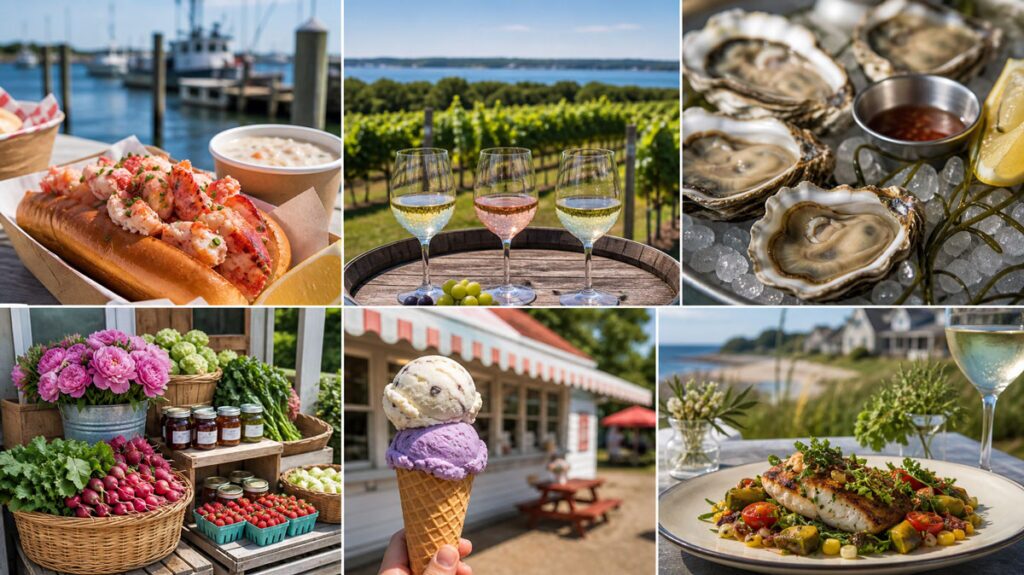
Long Island's relationship with food is inseparable from its geography. The water shapes everything: fresh lobster rolls, clam chowder, and locally harvested oysters show up on menus from the South Shore to the East End, and the quality is consistently good because the sourcing is local. The casual side of Long Island dining, including roadside seafood shacks, old-school diners, ice cream stands that have been there for decades — is as much a part of the experience as any upscale restaurant, and arguably more authentic.

The North Fork wine region has been gaining serious recognition over the past decade, with whites and rosés from local vineyards earning attention well beyond the island. Most wineries along Route 25 welcome walk-ins for tastings and run seasonal harvest events that are worth planning around. Farm stands run the length of the island from late spring through fall, stocked with locally grown produce, fresh-cut flowers, and homemade preserves. And for those interested in the higher end of the food scene, the Hamptons and Montauk have a strong farm-to-table culture that draws on everything the surrounding land and water has to offer.

Long Island Foods

Stop exploring. Start living.

Beechwood Homes offers two exclusively 55+ communities in the heart of Long Island.

Explore 55+ Communities

Best time to visit and seasonal highlights

Long Island genuinely offers something worth visiting for in every season, it just depends on what you're after.

Summer (June–August)

  • Peak beach season, with Jones Beach, Fire Island, and Coopers Beach all at their busiest and best
  • Outdoor concerts, water sports, and waterfront dining are in full swing
  • Plan around the traffic: Friday evenings eastbound and Sunday afternoons westbound on the LIE can add hours to a trip

Fall (September–November)

  • After Labor Day, crowds thin out noticeably and accommodation prices drop across the East End
  • North Fork vineyard season peaks in fall, with harvest festivals and pick-your-own farm experiences at their best
  • Foliage along the North Shore and East End adds a layer of color that summer doesn't offer

Winter (December–February)

  • Montauk Point State Park becomes one of the best seal-watching spots on the East Coast during the colder months
  • The East End quiets down significantly, with many seasonal restaurants and shops closing, but the solitude has its own draw
  • Year-round indoor attractions like the Cradle of Aviation and Long Island Aquarium remain fully open

Spring (March–May)

  • Old Westbury Gardens starts to bloom, and the North Shore comes back to life before the summer crowds arrive
  • Good hiking conditions at Caumsett State Park and Montauk Point State Park
  • Whale-watching season picks back up as humpbacks return to feeding grounds off Montauk

Four ways to live the Long Island dream

For some people, a weekend trip to Long Island turns into something more — a realization that this is actually where they want to be. Beechwood Homes offers four distinct communities on the island, from gated 55+ waterfront living to luxury rentals in central Nassau, each built to the same standard of quality that defines everything Beechwood builds.

Properties to Own

Beechwood at The Waterways

Moriches, a quiet hamlet on the South Shore, is one of those places that tends to leave that kind of impression. It has the small-town character, the waterfront access, and the proximity to the Hamptons and East End that make it a genuinely appealing place to retire on Long Island. And for those ready to make that move, Beechwood at The Waterways offers something rare: the chance to own a newly built home in a gated 55+ community right on the shores of Moriches Bay. It's waterfront living without the compromises that usually come with it, in one of the South Shore's most sought-after coastal settings.

The location puts you close to everything covered in this guide: pristine ocean beaches, the Hamptons, and the North Fork wine country are all within easy reach. Smith Point Beach is ten minutes away, and the Forge River provides direct access to Moriches Bay for boating, kayaking, and paddleboarding. The community itself is built for an active coastal lifestyle, with a private marina, resort-style waterfront pool and deck, clubhouse, tennis and pickleball courts, bocce, fitness center, and walking trails. Four home designs are currently available — The Andover, The Barclay, The Caldwell, and The Devon — ranging from $660,000 to $825,000.

As a new construction community, The Waterways gives buyers something the existing housing market on Long Island rarely offers: the opportunity to get into a well-designed home in a prime waterfront location, with the ability to personalize it before it's built. The sales office at 619 Water Way in Moriches is open Thursday through Monday by appointment. You can view the community siteplan online or learn more about the advantages of buying early in a new development before reaching out.

To schedule a tour or connect with the sales team, contact us.

Country Pointe Preserve

For those drawn to Long Island's wooded interior rather than its waterfront, Country Pointe Preserve in Yaphank offers a different kind of 55+ lifestyle — quieter and more tucked away, but equally well-appointed. Set among mature trees in central Suffolk County, the gated community pairs resort-style amenities with the kind of natural setting that's harder to find closer to the water. Residents have access to a clubhouse, heated pool with poolside bar, fitness center, all-season indoor/outdoor pickleball pavilion, golf simulator, billiards room, and walking trails — all within a low-maintenance community designed for active adults. On-site at The Boulevard, you'll also find everyday conveniences including a Walmart, Starbucks, Bagel Boss, and Northwell Urgent Care.

The location works well for anyone who wants access to the full range of Long Island experiences without committing to the South Shore or the East End exclusively. The North Fork wine country, the Hamptons, and the South Shore beaches are all within easy driving distance, and the community sits directly off LIE Exit 68. A new Yaphank train station is slated to open in 2026, adding another transit option to the Ronkonkoma LIRR line already 12 miles away. An extensive range of home designs are available — eight models from $665,000 to $960,000 — each built with the same Beechwood quality and attention to low-maintenance living that defines The Waterways. You can view the community siteplan online or explore available homes and pricing.

Get in touch with the Country Pointe Preserve sales team here.

Properties to Rent

The Selby

For those who want the full Long Island lifestyle without the commitment of a purchase, The Selby in Westbury offers something genuinely uncommon in this market — a hospitality-grade rental building where the finishes and service match what you'd expect from a high-end ownership product. Residences run from studios to three bedrooms starting at $3,800 per month, with Viking appliances, custom cabinetry, oak floors, and brushed brass fixtures throughout.

The building sits close to Eisenhower Park, a 930-acre county park larger than Central Park, with golf, tennis, pickleball, an aquatic center, and skating. Roosevelt Field Mall is minutes away for everyday shopping, and the Westbury LIRR station is about six minutes by car, putting Penn Station roughly 40 minutes out — a real advantage for anyone who still has regular ties to the city. Jones Beach is 18 minutes away, and Bethpage State Park, home to multiple U.S. Opens, is within easy reach for anyone who wants access to some of the best public golf on the East Coast.

The building's amenities are anchored by a 1,500-square-foot pool terrace, a Tranquility Spa, The Shed Restaurant for all-day dining, a fitness studio, dedicated yoga room, club room, library with fireplace, screening parlor, and a private dog park. For those who want the feel of a well-run hotel alongside the stability of a real home, The Selby is worth a serious look.

Get in touch with the Selby’s sales team here.

The Vanderbilt

The Vanderbilt occupies a category of its own on Long Island. It's the only address on the island that combines residential living with a boutique hotel, a full-service restaurant in Juniper, and an on-site social venue in The Comet Club — a combination that changes the day-to-day feel of living here in ways that are hard to replicate elsewhere.

One and two-bedroom residences range from $5,499 to $7,099 per month, with nine-foot ceilings, walnut floors, GE Café appliances, Silestone countertops, and private balconies on select layouts. Covered parking and 24-hour front desk service come standard, and the amenities include a heated outdoor pool with private cabanas, a poolside bar, pickleball and bocce courts, a yoga studio, fitness center, and a screening room.

The central Nassau location puts an impressive range of the island within easy reach. Roosevelt Field Mall is seven minutes away, Eisenhower Park nine, and Jones Beach eighteen. The Westbury LIRR station connects to Manhattan in about 35 minutes, and both JFK and LaGuardia are under 30 minutes by car. For anyone who's weighed ownership against flexibility and landed somewhere in between, The Vanderbilt makes renting feel like a deliberate choice rather than a compromise.

Get in touch with the Vanderbilt’s sales team here

Vanderbilt 1

FAQs

Here are answers to some of the most common questions about Long Island exploration and planning a visit.

  1. What is Long Island most famous for?
    Long Island is best known for its beaches, including Jones Beach, Fire Island, and the Hamptons, as well as the Gold Coast mansions of the North Shore, the Montauk Point Lighthouse, and the East End wine country along the North Fork.
  2. How far is Long Island from New York City?
    Long Island begins at the East River, immediately adjacent to Manhattan. Nassau County starts roughly 20 miles from midtown, while Montauk at the eastern tip sits about 120 miles away. Drive times can vary considerably depending on traffic, particularly in summer.
  3. Are there 55+ communities on Long Island near the water?
    Yes. Beechwood Homes offers two 55+ communities on Long Island to suit different lifestyles. Beechwood at The Waterways in Moriches is a new construction gated community situated directly along Moriches Bay, with a private marina, resort-style waterfront pool, and easy access to the Hamptons and East End beaches. Country Pointe Preserve in Yaphank offers a wooded, resort-style setting in central Suffolk County, with access to the North Fork wine country, the South Shore beaches, and the Hamptons, all from a quieter, more private enclave.
  4. What are the best beaches on Long Island?
    Top options include Coopers Beach in Southampton, Jones Beach State Park in Wantagh, Robert Moses State Park on Fire Island, and the ocean-facing beaches in Montauk. Each one has a distinct character, from wide and lively to quiet and scenic.
  5. When is the best time to visit Long Island?
    Summer is the peak season for beaches and outdoor activities. Fall is arguably the most well-rounded time to visit. The weather is mild, the wine country is in harvest season, and the crowds are gone. Winter has its own appeal, particularly for seal-watching at Montauk Point.
  6. Does Beechwood Homes offer rental options on Long Island?
    Yes. Beechwood offers two luxury rental buildings in central Nassau. The Selby in Westbury is a hospitality-grade building with studios through three-bedrooms from $3,800 per month, steps from Eisenhower Park and six minutes from the Westbury LIRR. The Vanderbilt combines luxury residences with an on-site boutique hotel, Juniper restaurant, and The Comet Club social venue, with one- and two-bedroom apartments from $5,499 to $7,099 per month. Both are 25 miles from New York City, with JFK and LaGuardia each under 30 minutes away.

Best neighborhoods to buy waterfront property in NYC

What makes an NYC waterfront neighborhood worth buying into Buying waterfront property in New York City means something different depending on where you look. You...
VIEW ARTICLE

Best neighborhoods to buy waterfront property in NYC

What makes an NYC waterfront neighborhood worth buying into

Buying waterfront property in New York City means something different depending on where you look. You could be comparing a converted loft in DUMBO with Manhattan Bridge views to a brand-new oceanfront condo on the Rockaway Peninsula. Same city, completely different lifestyle. Before narrowing down your search, it helps to understand what actually drives value and livability in these neighborhoods: commute to Manhattan, housing stock type (co-op vs. condo), flood risk and insurance costs, and proximity to the water itself. Waterfront properties often carry higher monthly maintenance or HOA fees and may require separate flood insurance, so the total cost of ownership matters as much as the list price, and in a city where subway access can make or break a daily routine, transit options deserve real weight.

Key takeaways

  • NYC waterfront real estate spans dramatically different price points, property types, and commute realities; borough matters as much as neighborhood.
  • Co-ops offer more affordability but come with board approval and subletting restrictions; condos offer flexibility at a higher cost.
  • Flood insurance is a real line item in coastal areas like the Rockaways, so model those costs before you commit.
  • First-time buyers often find better value and negotiating power in Queens and Staten Island than in Brooklyn or Manhattan waterfront markets.

Brooklyn Bridge

Brooklyn waterfront neighborhoods

Brooklyn's waterfront stretches from the historic brownstone blocks of Brooklyn Heights down to the family-friendly shores of Bay Ridge, with some of the city's most sought-after real estate in between. The range is wide, both in price and in character.

DUMBO

DUMBO has come a long way from its industrial roots. The neighborhood is now one of Brooklyn's most coveted addresses, defined by cobblestone streets, converted brick lofts, and high-end condos with direct East River and Manhattan Bridge views. Brooklyn Bridge Park runs right along the water, giving residents access to lawns, playgrounds, a carousel, and waterfront scenery that rarely gets old. Housing stock skews toward luxury condos and loft conversions, and the price-per-square-foot reflects it: buyers here tend to be targeting long-term appreciation and turnkey luxury rather than entry-level value.

Williamsburg

Williamsburg sits at the intersection of high-energy city living and premium waterfront real estate. Developments like One Domino Square have set a new bar for amenity-rich high-rise living along the East River, with concierge services, East River skyline views, and a dining and nightlife scene right outside the door. It skews younger and more lifestyle-driven than some of its Brooklyn neighbors, and the price tags reflect the demand.

Brooklyn Heights

Brooklyn Heights doesn't need to try hard. The iconic Promenade, with its sweeping views of Lower Manhattan and the harbor, has made it one of the most recognizable residential stretches in the city. Housing stock is mostly pre-war co-ops and classic brownstones, which attracts buyers looking for stable, long-term real estate. Listing prices have cooled in recent years, making a historically out-of-reach neighborhood a bit more accessible than it used to be. It's quiet, prestigious, and best suited for buyers who want character and stability over nightlife.

Greenpoint

Greenpoint has a personality that's hard to replicate: low-rise streets, a distinct Polish-bakery-meets-boutique character, and a stretch of East River waterfront that's been steadily developing. Newer construction right along the water commands a premium, but blocks just inland offer a steadier flow of boutique condos and loft conversions that work well for first-time buyers. Transmitter Park and other green spaces give residents genuine waterfront access without the density of Williamsburg or DUMBO. The commute relies on the G train (no direct Manhattan service) or the NYC Ferry, a trade-off worth thinking through carefully.

Bay Ridge

Bay Ridge sits at the southwestern edge of Brooklyn with a feel that's more neighborhood than nightlife. Shore Road Park runs for miles along New York Harbor directly beneath the Verrazzano-Narrows Bridge, and the co-op inventory along Shore Road is among the most affordable waterfront housing in the borough. StreetEasy has noted Bay Ridge as a strong buyer's market, and you get more space for the money here than almost anywhere else with legitimate water access in Brooklyn. The R train to Lower Manhattan takes about 45 to 50 minutes, though the NYC Ferry offers a faster and genuinely scenic alternative.


New York City seen from the Roosevelt Island.

Manhattan waterfront neighborhoods

Manhattan's waterfront options are fewer than Brooklyn's, but they cover a wide range, from one of the quietest residential enclaves in the city to one of its best transit hubs.

Battery Park City

Battery Park City is a master-planned district along the Hudson River that doesn't quite feel like the rest of Manhattan. The streets are quieter, the parks are well-maintained, and the full-service high-rises give residents a calm, almost resort-like quality of daily life. It also offers some of the most direct access to Lower Manhattan of any neighborhood in the city, with virtually every major downtown subway line within easy reach.

Chelsea and the West Village

Chelsea and the West Village represent the upper tier of Manhattan waterfront living. Both sit along Hudson River Park and the High Line, with boutique condos, architectural standouts, world-class dining, and galleries that draw buyers from across the city. These aren't value-focused neighborhoods; they're for buyers who have made a deliberate choice to prioritize design, walkability, and prestige, and the price-per-square-foot reflects that.

Financial District (FiDi)

FiDi has a split personality that works in the buyers' favor. By day, it's one of the busiest commercial districts in the world; by night, it's surprisingly quiet and residential, with waterfront access on both sides: Hudson River paths to the west and the historic Seaport District to the east. A wave of office-to-condo conversions has increased inventory and cooled prices, creating a real value opportunity for buyers who want Manhattan without paying Midtown or West Village prices. Nearly every major subway line passes through Downtown Manhattan, making FiDi one of the most transit-connected addresses in the city.


Manhattan skyline with Queensboro Bridge

Queens waterfront neighborhoods

Queens offers two very different takes on waterfront living: the urban riverfront energy of Astoria and Long Island City, and the Atlantic Ocean beachfront of the Rockaway Peninsula. Both are worth understanding on their own terms.

Astoria

Astoria has been a first-time buyer favorite for years, and for good reason. The neighborhood is energetic and walkable, with one of the best dining scenes in the outer boroughs concentrated along 30th Avenue. Astoria Park anchors the waterfront, offering sweeping views of the Hell Gate Bridge, a running track, and one of the few outdoor public pools in the city. The housing stock is predominantly pre-war co-ops, which means spacious floor plans at prices per square foot that would be hard to find in Manhattan or trendy Brooklyn. The N and W trains get you into Midtown in roughly 15 to 20 minutes, one of the strongest commutes available outside of Manhattan.

Long Island City (LIC)

Long Island City has built an identity around glass towers, skyline views, and a well-manicured waterfront esplanade. Hunter's Point South Park offers some of the best unobstructed views of the Midtown Manhattan skyline in the city, and the surge in new development has given buyers real negotiating leverage and a wide selection of turnkey condos with full-service amenities. A single stop on the 7 train puts you at Grand Central Terminal, and the neighborhood is also served by the E, M, R, F, G, N, and W trains plus the NYC Ferry. It's the right fit for buyers who want new construction, strong transit, and a front-row seat to the Manhattan skyline.


View of Marina Pointe in East Rockaway from the water

Queens Beach neighborhoods: buying on the Rockaway Peninsula

If you're specifically searching for a beach apartment in Queens, the Rockaway Peninsula is where your search belongs. It's the only part of Queens, and one of the very few parts of New York City, where you can buy a home and walk directly to the Atlantic Ocean. The trade-off is commute time and coastal weather risk, both of which deserve honest consideration.

Rockaway Beach and Rockaway Park

Rockaway Beach and Rockaway Park form the heart of the peninsula's multi-family housing market. The mix of older mid-rise co-ops and newer luxury condos along Shore Front Parkway gives buyers a range of entry points, and the summer scene (food concessions, surf culture, boardwalk access) draws people who genuinely want to feel like they're somewhere other than New York City. The A train and the NYC Ferry both connect directly to Manhattan in roughly 60 minutes. Best for buyers who want a lively beach-town atmosphere and some flexibility on housing type.

Arverne

Arverne is the Rockaway neighborhood that has changed the most over the past two decades. The Arverne by the Sea master-planned development brought modern condos and townhomes to the peninsula, along with retail, a supermarket, and direct beach access. Looking ahead, Arverne East is an upcoming net-zero, mixed-use community that will add new apartments, nature preserves, and retail to the area when complete.

Median condo listings range from roughly $564,000 to $799,000, depending on the unit, with a price-per-square-foot of around $410, notably lower than what you'd pay in Astoria or Long Island City for far less beach access. The A train to Downtown Manhattan takes approximately 60 to 75 minutes, making it one of the longer average commutes in the city.

Flood and weather risk is a real factor. Superstorm Sandy hit the Rockaway Peninsula hard, and buyers shouldn't gloss over that history. Newer developments feature elevated pilings and 14-foot flood barriers, and Arverne East is being built above 500-year flood elevations, but flood insurance costs should still be factored into your monthly budget. If oceanfront living, newer construction, and relative affordability are your priorities and you're comfortable with the commute, Arverne is worth a serious look.

Breezy Point

Breezy Point sits at the westernmost tip of the peninsula and operates by its own rules. It's a private, gated cooperative community of mostly single-family beach bungalows, more New England fishing village than New York City apartment building. For buyers looking for apartment-style inventory, options are limited, and the co-op board approval process has historically been strict. It's a strong fit for buyers who want an unusually private and tight-knit beach community, but not for those who need urban convenience or a standard condo purchase process.


Oceanfront living in NYC, reimagined

New construction, resort amenities, and the Atlantic Ocean at your door, at Lighthouse Beach Sixty-Seventh in Arverne by the Sea.

Explore Lighthouse

Other Queens coastal options beyond the Rockaways

Not every Queens waterfront neighborhood is on the ocean. If you want coastal access with a calmer, more bay-facing character, a few neighborhoods are worth considering:

Howard Beach

Located on Jamaica Bay, Howard Beach is best known for its single-family waterfront homes with private boat slips, but co-op and condo complexes do exist near Rockwood Park and the Howard Beach–JFK AirTrain station. It's a strong fit for boating enthusiasts. The A train gets you to Manhattan in approximately 45 minutes.

Bayside

Borders Little Neck Bay on the North Shore, with garden apartments and high-rise co-ops near the Bay Terrace shopping complex offering bay and Long Island Sound views. The atmosphere is suburban and marina-adjacent. The LIRR puts you in Manhattan in roughly 30 minutes.

Bayswater

A quieter, park-like coastal setting on the eastern edge of Jamaica Bay, just north of Far Rockaway. Apartment inventory is sparse compared to Rockaway Beach, but it has a genuinely hidden-gem quality for buyers who want waterfront access without the peninsula crowds.


Staten Island: the most affordable waterfront option in NYC

If your primary goal is maximizing space and water access per dollar, Staten Island, specifically St. George on the North Shore, is worth taking seriously. Median property prices here track hundreds of thousands of dollars below comparable waterfront neighborhoods in Brooklyn or Queens, and the views from the Esplanade are legitimately spectacular: unobstructed sightlines to the Statue of Liberty and the Downtown Manhattan skyline. The housing stock includes historic homes, mid-rise buildings, and a growing wave of new development as the neighborhood continues to attract buyers priced out of other boroughs. The commute runs through the free, 24/7 Staten Island Ferry, which reaches Lower Manhattan in about 25 minutes; the Fast Ferry is also an option. The main trade-off is that you're fully ferry-dependent rather than subway-connected, which doesn't work for everyone's routine but suits plenty of buyers just fine.


Comparing NYC waterfront neighborhoods at a glance

Here's how the major waterfront neighborhoods stack up across the key factors buyers care about most:

NeighborhoodBoroughPrimary water bodyHousing stockCommute to ManhattanBest for
DUMBOBrooklynEast RiverLuxury lofts and condos15–20 min (A/C/F)Luxury buyers, investment potential
WilliamsburgBrooklynEast RiverHigh-rise condos15–20 min (L/J/M/Z)Amenity-seekers, younger buyers
Brooklyn HeightsBrooklynEast River / HarborBrownstones, pre-war co-ops15–20 min (2/3/4/5/A/C)Historic charm, stable value
GreenpointBrooklynEast RiverBoutique condos, loftsModerate (G train, Ferry)Community-focused buyers
Bay RidgeBrooklynNew York HarborCo-ops, houses45–50 min (R train)Families, affordability
Battery Park CityManhattanHudson RiverLuxury condos, co-ops10 min (Downtown)Quiet urban living
Financial DistrictManhattanHudson River / East RiverOffice-to-condo conversionsElite (all major lines)Value hunters in Manhattan
Long Island CityQueensEast RiverGlass tower condos10–15 min (7 train)New construction, skyline views
AstoriaQueensEast RiverPre-war co-ops15–20 min (N/W)First-time buyers value
ArverneQueensAtlantic OceanModern condos, townhomes60–75 min (A train)Beach lifestyle, relative affordability
St. GeorgeStaten IslandNew York HarborMid-rises, historic homes~25 min (Ferry)Maximum space per dollar

What to know before you buy waterfront in NYC

Flood insurance is the factor that catches the most buyers off guard. In oceanfront areas like the Rockaways, standard homeowners coverage won't cover flood damage; you'll need a separate policy, and in high-risk zones, that cost can be substantial. Superstorm Sandy made it clear how serious coastal exposure in New York can be, and while newer developments in Arverne and similar areas have made significant investments in flood-resilient construction (elevated pilings, 14-foot flood barriers, units built above 500-year flood elevations), the insurance line item still needs to be part of your budget math. The type of ownership structure matters just as much. Many of the most affordable waterfront options in the city are co-ops, which typically require board approval, limit your ability to sublet, and can restrict certain financing arrangements. Condos offer more flexibility, but that flexibility comes with a higher purchase price. First-time buyers in particular should understand what they're getting into with co-op inventory before they fall in love with a listing.

Beyond the big structural questions, the practical details matter more than most buyers expect. Waterfront properties across the city often carry higher HOA or maintenance fees than comparable inland units, and some buildings carry ongoing assessments for capital improvements that can add meaningfully to monthly carrying costs. Those numbers belong in your budget alongside the mortgage payment, not as an afterthought. And before you commit to any neighborhood, especially one as commute-dependent as Arverne or as transit-varied as Bay Ridge, it's worth visiting on a weekday morning to test the actual commute and again on a weekend to get a feel for what the neighborhood is like when people aren't rushing to work. The two experiences are often pretty different, and both tell you something important. The area also ranks among the lowest-crime neighborhoods in New York City — an often-overlooked point for buyers who assume beachfront areas trade safety for scenery.


featured lighthouse rendering of interior living room

If you want oceanfront living in NYC without the trade-offs

Most oceanfront properties in New York City ask you to give something up, whether that's the commute, the age of the building, limited on-site amenities, or flood risk that hasn't been fully addressed in the construction. Lighthouse Beach Sixty-Seventh is a luxury oceanfront condominium in Arverne by the Sea — a protected, planned community — that was designed with those trade-offs specifically in mind. The residences, designed by Ismael Leyva Architects, feature floor-to-ceiling glass walls, Dekton and Silestone countertops, Bosch appliances, Kohler fixtures, and a layout built around the surrounding ocean views. The amenities include an elevated beachfront pool and sundeck positioned directly on the water, a fitness center, a lounge, dedicated workspaces, a conference room, a game room, and a children's playroom, bringing a resort-quality experience to everyday life without leaving the building. And the location keeps residents connected: the Beach 67 St A train — running 24/7 with ADA-accessible access — is steps away, the NYC Ferry offers a scenic route to Brooklyn and Lower Manhattan, and JFK International Airport is just 11 miles away, so the oceanfront setting doesn't come at the cost of getting around the city. For buyers who've done the research and decided that Arverne by the Sea is where they want to be, Beechwood Homes— with more than 10,000 homes built since 1985 — built Lighthouse to answer the question of what that neighborhood could actually look like at its best. Curious about life at Lighthouse Beach Sixty-Seventh? Get in touch, and we'll walk you through everything available at Arverne by the Sea.

Beechwood begins $100M condo project in the Rockaways

The Blueprint: Beechwood starts 82-unit condo in Rockaways Residences priced between $645,000 and $3.75 million Designed by Ismael Leyva Architects with oceanfront views Amenities include beachfront pool, fitness...
VIEW ARTICLE

Beechwood begins $100M condo project in the Rockaways

Living Room Rendering at Lighthouse Beach 67th
The Blueprint:
  • Beechwood starts 82-unit condo in Rockaways
  • Residences priced between $645,000 and $3.75 million
  • Designed by Ismael Leyva Architects with oceanfront views
  • Amenities include beachfront pool, fitness center, and co-working spaces

Jericho-based Beechwood Organization is expanding its presence in the Rockaways with a new $100 condominium development within its sprawling Arverne by the Sea master-planned community. 

With construction on the 82-unit condo building just beginning, the developer has already pre-sold 15 percent of the residences, which are currently priced between $645,000 and $3.75 million. 

Called The Lighthouse Beach Sixty-Seventh, the 12-story oceanfront tower will offer a mix of studio to three-bedroom residences ranging from 515 square feet to 1,737 square feet. Amenities will include an elevated beachfront pool and sundeck, fitness center, lounge and game room, children’s game room, co-working spaces and conference rooms, outdoor bar and barbecue areas, 24-hour attended lobby and concierge service, bicycle and surfboard storage, and on-site parking, according to a Beechwood statement. 

“We set out to create homes that feel truly connected to the ocean they rise above while introducing a level of lifestyle and amenities that have not previously existed in the Rockaways,” Steven Dubb, Beechwood principal and president, said in the statement. 

In addition to the 89,000-square-foot residential building, the 109,000-square-foot development will include 4,000 square feet of retail space. The 2.5-acre site is adjacent to the 120-acre Arverne by the Sea, a mixed-use, transit-oriented development with 2,300 for-sale and rental residences created by Beechwood in partnership with The Benjamin Companies. 

The Lighthouse Begins Construction

By The Wave on June 26, 2026 The Beechwood Organization has announced the start of construction and opening of sales for The Lighthouse Beach Sixty-Seventh, an 82-unit luxury...
VIEW ARTICLE

The Lighthouse Begins Construction

By The Wave

on June 26, 2026

The Beechwood Organization has announced the start of construction and opening of sales for The Lighthouse Beach Sixty-Seventh, an 82-unit luxury condominium development at 141 Beach 67th Street in Arverne. 

The 12-story oceanfront tower will offer a diverse mix of studio to three-bedroom residences ranging from 515 square feet to 1,737 square feet. Pricing is from $645,000 to $3.75 million. First occupancy is anticipated for Fall 2028.  

Kitchen Rendering Unit 8 at Lighthouse Beach 67th

Positioned directly along the shoreline within the acclaimed Arverne by the Sea master-planned community, The Lighthouse introduces a new standard of oceanfront condominium living to the  Rockaways.  

Developed by one of Long Island’s most respected residential builders, The Beechwood Organization, the project pairs Beechwood’s signature quality construction with sophisticated contemporary design by internationally recognized Ismael Leyva Architects.  

“We set out to create homes that feel truly connected to the ocean they rise above while introducing a level of lifestyle and amenities that have not previously existed in the Rockaways,” said The Beechwood Organization Principal and President Steven Dubb.

All homes are thoughtfully designed to maximize ocean views and feature floor-to-ceiling windows with private balconies or terraces. Interiors showcase premium finishes inspired by the natural palette of sand and sea. 

Residents will enjoy a comprehensive suite of resort-style amenities, including an elevated beachfront pool and sundeck, fitness center, lounge and game room, children’s game room, co-working spaces and conference rooms, outdoor bar and barbecue areas, 24-hour attended lobby and concierge service, bicycle and surfboard storage, and on-site parking. 

“The Lighthouse Beach Sixty-Seventh is a Rockaway Beach jewel. Residents will have functional and gracious apartment layouts, spectacular and expansive beachfront views, plus an array of indoor and outdoor amenities that are a first for the peninsula,” said FAIA architect Ismael Leyva.

The Lighthouse marks the second collaboration between Beechwood and Ismael Leyva Architects, following The Selby in Westbury, a 237-unit luxury apartment hotel overlooking Eisenhower Park. 

Interior design is by Abby Forbes of Forbes Design Group, who worked with Beechwood on its luxury apartment-hotel properties, The Selby and The Vanderbilt in Westbury. 

In addition to the 89,000-square-foot residential building, the 109,000-square-foot development will include 4,000 square feet of retail space and 90 parking spaces. The 2.5-acre site is adjacent to the  120-acre Arverne by the Sea – a transformative mixed-use, transit-oriented development created by Beechwood in partnership with The Benjamin Companies. Widely regarded as one of the Northeast’s most successful waterfront revitalization efforts, the community of 2,300 residences includes for-sale homes and The Tides, a luxury beachfront rental development also by Beechwood.

The Lighthouse continues the Beechwood legacy of residential development spanning from the metro area and the Hamptons to Saratoga Springs and, more recently, North Carolina. 

“The Rockaways continue to emerge as one of New York City’s most exciting growth corridors,” Dubb added. “We’re proud to build on that momentum with this exceptional new offering.” 

The development’s prime beachfront location offers residents a rare combination of coastal living and urban accessibility, with convenient access to the A train, local bus lines, NYC Ferry service, and JFK  International Airport, located approximately 11 miles away. 

For more information, visit the website beechwoodhomes.com/lighthouse or the on-site sales office at 141 Beach 67th St, Arverne, or call (347) 679-8415. 

Rockaway Beach’s Arverne by the Sea finally gets its missing piece: Oceanfront condos

82-unit tower comes to planned community in Queens, New York By Khristopher J. Brooks Key takeaways An 82-unit condominium tower is coming to the Arverne neighborhood...
VIEW ARTICLE

Rockaway Beach’s Arverne by the Sea finally gets its missing piece: Oceanfront condos

82-unit tower comes to planned community in Queens, New York

By Khristopher J. Brooks

Key takeaways

  • An 82-unit condominium tower is coming to the Arverne neighborhood of Queens, New York.
  • Units inside the Lighthouse Beach Sixty-Seventh will cost between $645,000 and $3.75 million.
  • Condo sales have begun and the first buyers are slated to move in during fall 2028.

The Beechwood Organization — a home builder on Long Island, New York — has started construction on what company officials say will be a new condominium high-rise that offers homebuyers an unobstructed ocean view.

Once completed, the Lighthouse Beach Sixty-Seventh will be a 12-story, 82-unit development built on a 2.5-acre lot in Arverne. The development will feature studio, one-bedroom, two-bedroom and three-bedroom homes ranging from 515 square feet to 1,737 square feet. The units will cost between $645,000 and $3.75 million, Beechwood said.

Company officials also said they began selling units in the development last week and expect the first buyers to move in the fall of 2028. The condo building is to be part of Arverne by the Sea — a 120-acre master planned community in Rockaway Beach.

An architectural rendering shows a living room with ocean views inside the forthcoming Lighthouse Beach Sixty-Seventh. (Beechwood | Lighthouse)

Generations ago, Arverne was a seasonal beach area populated by mostly small bungalows. These days, the neighborhood has more rental buildings and condo towers in its housing stock. The neighborhood sits on a slender peninsula — known locally as the Rockaways — with Jamaica Bay to the north and the Atlantic Ocean directly south.

The master-planned community has its merits, but for decades, the area has been missing a specific type of "resort-style" housing, Beechwood President Steven Dubb said.

'Sought-after' community also offers townhouses, rentals

"Since we started in 2002, Arverne has become one of the most sought-after communities to live in the Rockaways. Yet what has been missing is a condominium building with a ton of amenities so homeowners can enjoy where and how they live without having to worry about maintaining a home."

Units inside the forthcoming building will feature floor-to-ceiling windows and private balconies or terraces so residents and their guests can view the ocean. Amenities inside the building will include a pool, fitness center, children's game room, co-working spaces and outdoor bar and grilling areas. The property will also have 4,000 square feet of retail space and 90 parking spots.

Beechwood is building its 109,000-square-foot property with Ismael Leyva Architects. Beechwood and the architects also built and designed the Selby — a 237-unit apartment on Long Island in Westbury.

A rendering shows the kitchen layout inside a condo at the Lighthouse Beach Sixty-Seventh in Queens. (Beechwood | Lighthouse)

Construction is underway at a time when home prices in the Arverne area have jumped. The average price for one- to three-bedroom homes in Southeast Queens hit $814,254 in the first quarter of 2026, a 2% increase year over year, according to a market report from brokerage Brown Harris Stevens. Boroughwide, Queens saw its average home price for a one-to-three-bedroom property climb 4% to $1.03 million, the brokerage report found.

Construction and sales underway for The Lighthouse Beach Sixty-Seventh in Arverne

Construction has recently begun and sales are now underway for the 82 housing units at the upcoming luxury condominium The Lighthouse Beach Sixty-Seventh at 141 Beach 67th...
VIEW ARTICLE

Construction and sales underway for The Lighthouse Beach Sixty-Seventh in Arverne

Construction has recently begun and sales are now underway for the 82 housing units at the upcoming luxury condominium The Lighthouse Beach Sixty-Seventh at 141 Beach 67th St. in Arverne.

The Lighthouse Beach Sixty-Seventh is being developed by the Beechwood Organization, which announced the start of construction on Thursday, June 18. The 12-story tower was designed by Ismael Leyva Architects.

Housing units will range from studios to three-bedroom units and span anywhere between 515 and 1,737 square feet. Pricing for the units ranges from $645,000 to $3.75 million. Anticipated first occupancy is on track for the fall of 2028.

The Lighthouse Beach Sixty-Seventh will be positioned along the shoreline within the Arverne by the Sea master-planned community.

“We set out to create homes that feel truly connected to the ocean they rise above while introducing a level of lifestyle and amenities that have not previously existed in the Rockaways,” Beechwood Organization Principal and President Steven Dubb said.

Housing units have been designed to maximize ocean views. These homes will also have floor-to-ceiling windows and private balconies or outdoor terraces.

Amenities on the property available to residents include an elevated beachfront pool and sundeck, a fitness center, a lounge, a game room, a children’s game room, co-working spaces, conference rooms, outdoor bar and barbecue areas, a 24-hour attended lobby and concierge service, bicycle and surfboard storage and on-site parking.

The building will span 89,000 square feet. The development it is being built on, which covers 109,000 square feet, will also have 4,000 square feet of retail space and 90 parking spaces.

“The Rockaways continue to emerge as one of New York City’s most exciting growth corridors,” Dubb said. “We’re proud to build on that momentum with this exceptional new offering.”

This building marks the second collaboration between the Beechwood Organization and Ismael Leyva Architects. They had previously worked together to build The Selby in Westbury, a 237-unit luxury apartment hotel overlooking Eisenhower Park.

“The Lighthouse Beach Sixty-Seventh is a Rockaway Beach jewel. Residents will have functional and gracious apartment layouts, spectacular and expansive beachfront views, plus an array of indoor-outdoor amenities that are a first for the peninsula,” Architect Ismael Leyva, FAIA, said.

The Beach 67th Street and Beach 60th Street subway stations are within close proximity to the property, providing service for the A train. There are also bus stops in the area for the Q22, Q52+, QM15 and QM17 lines.

Those interested in learning more about the property can go to the website at beechwoodhomes.com/lighthouse, call (347)-679-8415 or visit the on-site sales office at 141 Beach 67th St., Arverne, NY 11692.

Beechwood Begins First Million-Dollar-Plus Condo Tower in Rockaway

The Beechwood Organization has announced the start of construction and opening of sales for The Lighthouse Beach Sixty-Seventh, an 82-unit luxury condominium development at 141 Beach 67th...
VIEW ARTICLE

Beechwood Begins First Million-Dollar-Plus Condo Tower in Rockaway

The Beechwood Organization has announced the start of construction and opening of sales for The Lighthouse Beach Sixty-Seventh, an 82-unit luxury condominium development at 141 Beach 67th Street in Arverne by the Sea.

The 12-story oceanfront tower will offer a diverse mix of studio to three-bedroom residences ranging from 515 square feet to 1,737 square feet. Pricing is from $645,000 to $3.75 million. First occupancy is anticipated for Fall 2028.

Positioned directly along the shoreline within the acclaimed Arverne by the Sea master-planned community, The Lighthouse introduces a new standard of oceanfront condominium living to the Rockaways. Developed by one of Long Island’s most respected residential builders, The Beechwood Organization, the project pairs Beechwood signature quality construction with sophisticated contemporary design by internationally recognized Ismael Leyva Architects.

“We set out to create homes that feel truly connected to the ocean they rise above while introducing a level of lifestyle and amenities that have not previously existed in the Rockaways,” Steven Dubb, principal and president of The Beechwood Organization said.

Lighthouse Exterior Rendering

All homes are thoughtfully designed to maximize ocean views and feature floor-to-ceiling windows with private balconies or terraces. Interiors showcase premium finishes inspired by the natural palette of sand and sea.

Residents will enjoy a comprehensive suite of resort-style amenities including elevated beachfront pool and sundeck, fitness center, lounge and game room, children’s game room, co-working spaces and conference rooms, outdoor bar and barbecue areas, 24-hour attended lobby and concierge service, bicycle and surfboard storage, and on-site parking.

“The Lighthouse Beach Sixty-Seventh is a Rockaway Beach jewel. Residents will have functional and gracious apartment layouts, spectacular and expansive beachfront views, plus an array of indoor-outdoor amenities that are a first for the peninsula,” architect Ismael Leyva, FAIA said.

The Lighthouse marks the second collaboration between Beechwood and Ismael Leyva Architects following The Selby in Westbury, a 237-unit luxury apartment hotel overlooking Eisenhower Park.

Interior design is by Abby Forbes of Forbes Design Group who worked with Beechwood on its luxury apartment-hotel properties The Selby and The Vanderbilt in Westbury.

In addition to the 89,000-square-foot residential building, the 109,000-square-foot development will include 4,000 square feet of retail space and 90 parking spaces. The 2.5-acre site is adjacent to the 120-acre Arverne by the Sea — a transformative mixed-use, transit-oriented development created by Beechwood in partnership with The Benjamin Companies. Widely regarded as one of the Northeast’s most successful waterfront revitalization efforts, the community of 2,300 residences includes for-sale homes and The Tides, a luxury beachfront rental development also by Beechwood.

The Lighthouse continues the Beechwood legacy of residential development spanning from the metro area and the Hamptons to Saratoga Springs and, more recently, North Carolina.

“The Rockaways continue to emerge as one of New York City’s most exciting growth corridors,” Mr. Dubb said. “We’re proud to build on that momentum with this exceptional new offering.”

The development’s prime beachfront location offers residents a rare combination of coastal living and urban accessibility, with convenient access to the A train, local bus lines, NYC Ferry service, and JFK International Airport, located approximately 11 miles away.

Penthouse asking $3.75M is the priciest-ever condo to list in this beachy corner of Queens

This Rockaways penthouse is asking $3.75 million, an area record for a condominium â€” and it’s part of the peninsula’s first million-dollar-plus condo tower, Gimme Shelter...
VIEW ARTICLE

Penthouse asking $3.75M is the priciest-ever condo to list in this beachy corner of Queens

This Rockaways penthouse is asking $3.75 million, an area record for a condominium â€” and it’s part of the peninsula’s first million-dollar-plus condo tower, Gimme Shelter can reveal.

It’s one of five penthouses at Lighthouse Beach Sixty-Seventh, a 12-story tower with 82 units at 141 Beach 67th St. Designed by Ismael Leyva Architects, the modern tower is slated for a 2028 completion. The Lighthouse condos, which range from one- to three-bedrooms, start at $645,000.

“Lighthouse Beach Sixty-Seventh are the first million-dollar-plus condos in the Rockaways,” said developer Steven Dubb, president and principal of the Beechwood Organization. 

Indeed, the most expensive condo to sell in the Rockaways to date sold for $1.32 million in 2021 at 133 Beach 116th St., according to data provided to Gimme Shelter by the brokerage firm Brown Harris Stevens.

That 1,622-square-foot unit came with three bedrooms and two baths.

1 2 Next »

EXPERIENCE THE TIDES

Fill out the form to receive information on our current leasing availability.

    The Tides offers Spacious, modern, amenity-rich apartments offer beachfront living with all the convenience of the city. Bike, swim, dine, socialize, or just recharge and relax in the heart of this vibrant oasis by the sea. With on-site parking, or walk to subways, express buses and NYC ferry service for an easy commute or night on the town.

    • Leasing Office: 6804 Tides Road Arverne NY 11692
    • 718-550-1894
    • Hours: 10am–5pm, 7 /week
    Reviewed by Accessible360
    Learn More
    NYC Department of Housing Preservation & Development
    Arverne By The Sea
    Facebook-f Instagram

    OTHER
    LOCATIONS

    • About the Builder
    • Contact Us
    • Land Inquiries
    • Terms and Conditions
    • Legal
    • Privacy Policy
    • About the Builder
    • Contact Us
    • Land Inquiries
    • Terms and Conditions
    • Legal
    • Privacy Policy
    Click to go BeechwoodHomes
    Click here to go back to the Beechwood Corporate Site.

    Since 1985, Beechwood has built more than 10,000 homes in 80 communities with new residential and mixed-use developments on the map across New York City, Long Island, Saratoga Springs and North Carolina.
    Facebook-f Instagram Youtube Linkedin

    Follow Us on Social

    Reviewed by Allyant for accessibility

    Read Our Accessibility Statement

    ©2026 Beechwood Homes. 200 Robbins Lane, Suite D1 Jericho, New York 11753 | (516) 935-5555 *Prices are subject to change
    The Tides Logo White

    residences

    Studio
    1 BEDROOM
    2 BEDROOM
    3 BEDROOM
    Availability
    COMMUNITY
    GALLERY
    AMENITIES
    NEWS + MEDIA
    contact

    Leasing office
    6804 Tides Road Arverne NY 11692

    Location Switcher

    NEW YORK

    Long Island

    Beechwood at The Waterways | Moriches
    Country Pointe Preserve | Yaphank
    Country Pointe Meadows | Yaphank
    Lighthouse Beach Sixty-Seventh | Rockaways
    Harbor Cove | Port Jefferson

    Saratoga Springs

    Oak Ridge | Saratoga Springs
    Adelphi Residences | Saratoga Springs

    55+ Communities

    Beechwood at The Waterways | Moriches
    Country Pointe Preserve | Yaphank
    Country Pointe Meadows | Yaphank

    NORTH CAROLINA

    Charlotte

    Ferncliff at Cotswold
    Lakeside Pointe | Lake Norman
    Broadmoor at Marvin
    The Townes at Cottage Park

    Chapel Hill

    South Creek | Chapel Hill

    Luxury Rental Residences

    Vanderbilt | Westbury
    The Tides at Arverne by the Sea | Rockaways
    The Selby | Westbury
    95 Market | Chapel Hill

    Hotel Collection

    Hotel Suites at Vanderbilt | Westbury
    The Selby | Westbury
    The Adelphi Hotel | Saratoga Springs

    Mixed Use Retail

    Country Pointe Plainview Shops | Plainview
    Tides Shops at Arverne by the Sea
    Beechwood Medical Plaza | Lake Grove
    Creekside Commons | Chapel Hill
    The Shoppes at Lakeside Pointe | Lake Norman

    NEW YORK

    Long Island

    Beechwood at The Waterways | Moriches
    Country Pointe Preserve | Yaphank
    Country Pointe Meadows | Yaphank
    Lighthouse Beach Sixty-Seventh | Rockaways
    Harbor Cove | Port Jefferson

    Saratoga Springs

    Oak Ridge | Saratoga Springs
    Adelphi Residences | Saratoga Springs

    55+ Communities

    Beechwood at The Waterways | Moriches
    Country Pointe Preserve | Yaphank
    Country Pointe Meadows | Yaphank

    NORTH CAROLINA

    Charlotte

    Ferncliff at Cotswold
    Lakeside Pointe | Lake Norman
    Broadmoor at Marvin
    The Townes at Cottage Park

    Chapel Hill

    South Creek | Chapel Hill

    Luxury Rental Residences

    Vanderbilt | Westbury
    The Tides at Arverne by the Sea | Rockaways
    The Selby | Westbury
    95 Market | Chapel Hill

    Hotel Collection

    Hotel Suites at Vanderbilt | Westbury
    The Selby | Westbury
    The Adelphi Hotel | Saratoga Springs

    Mixed Use Retail

    Country Pointe Plainview Shops | Plainview
    Tides Shops at Arverne by the Sea
    Beechwood Medical Plaza | Lake Grove
    Creekside Commons | Chapel Hill
    The Shoppes at Lakeside Pointe | Lake Norman